
REVIEW · DESSERT TOURS
Chocolate Farm Private Tour in Medellin: Real Genuine Experience
Picking cacao is the real Medellin souvenir. On a private cacao farm tour, you get hotel pickup, a scenic Andean drive, and a full, step-by-step look at chocolate making, ending with tasting and your own custom chocolate bar. Guides such as Laura and Erika are often praised for making the process easy to follow, even when Spanish is the only language on the farm.
I love the hands-on part, not just watching from a distance. You pick cacao pods, learn how fermentation and drying shape flavor, and then see roasting and grinding done in a more old-school, wood-and-fire way. The second thing I really like is the human side of the day, with farmers welcoming you into their routine, squeezing fresh juice on arrival, and treating the visit like a real family moment.
The main drawback to consider is physical, you will walk on a working farm and parts can be steep. Comfortable shoes matter, and you should bring water, because the higher mountain air can make even a short hike feel like more.
In This Review
- Key points before you go
- Chocolate in Medellin, from pod to your own bar
- Getting to the farm: the 1-hour Andean drive you actually remember
- Stop 1: Welcome in Medellin, then a cocoa lesson before you go hands-on
- Stop 2: Santo Domingo cacao picking, plus a real sense of the farm ecosystem
- Stop 2 continued: Fermentation in wooden containers, then drying in greenhouse or sun
- Stop 3: Roast, hull, grind, and build the flavor bar from scratch
- The hands-on chocolate step: mix ingredients, mold, chill, and eat with a view
- Fair trade take-home and customs: plan your money for purchases
- Price and time: is $129 worth it for Medellin?
- Who this tour fits best, and who might not love it
- Weather and timing: why the farm day can change slightly
- Should you book the Medellin Chocolate Farm Private Tour?
Key points before you go
- Round-trip pickup from El Poblado or Laureles keeps this day smooth and stress-free.
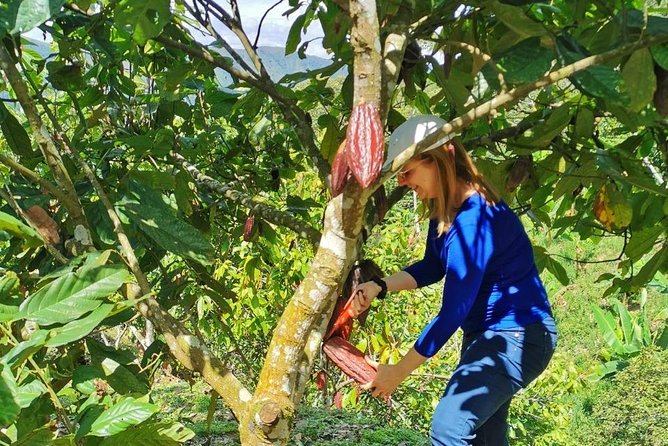
- Pod picking and raw cacao tasting let you understand ripeness and flavor before anything is processed.
- Fermentation timing is part of the lesson, with seeds fermenting in wooden containers for six days.
- Wood-fire roasting and manual hulling show you how small changes affect chocolate aroma.
- You customize chocolate by mixing your own ingredients, then mold and chill it.
- Fair trade chocolate to take home is part of the payoff, and cash planning helps since cards may not work.
Chocolate in Medellin, from pod to your own bar
This is not a one-room chocolate museum. It is a real cacao farm day in the mountains, with you going through the same chain farmers use, from fruit to finished chocolate. The private setup also means your guide can slow down, repeat, or answer questions without herding anyone.
I like that the day has both craft and food. You learn the lifecycle of cacao, but you also get taste moments along the way, including raw fruit sweetness and the fresh hot chocolate finish. It feels like you are learning by doing, not just listening.
The best part is the final step: you mix ingredients into your own creation and get to take it home. That is the moment when chocolate goes from a concept to something you actually understand with your hands and your taste buds.
A few more Medellin plans worth comparing
- Medellin: Colombian Cacao Experience | Chocolate Tour | BOOK NOW!
★ 5.0 · 137 reviews - Coffee & Chocolate Private Tour in Medellin: Genuine Experience
★ 5.0 · 100 reviews - Chocolate tour near Medellin
★ 5.0 · 90 reviews
Getting to the farm: the 1-hour Andean drive you actually remember
Pickup and drop-off are part of the value here. You get an air-conditioned vehicle and round-trip transfers from El Poblado or Laureles, which saves you from figuring out rides for a half-day off the beaten path.
The drive is about one hour on a safe, well-maintained road through Andean mountain scenery. Even if you love cities, this is one of those Medellin days where the outside air helps you shift gears and focus. Many people remember the views as much as the chocolate process.
One practical point: the ride is set up for a longer day, around six hours total. That means you should plan to dress in layers, because farm temperatures can shift from city warmth to mountain cool.
Stop 1: Welcome in Medellin, then a cocoa lesson before you go hands-on
The experience starts at your door with pickup, so you do not waste time. Once you head out, your bilingual guide sets the tone with the story of chocolate and what you will be seeing on the farm.
This early briefing matters more than it sounds. When you learn a bit of history and production basics right away, the farm steps make sense as you go. You can connect the dots between a cacao pod and why fermentation and drying are not optional.
You also get the farming side of the lesson, including how to maintain a healthy plantation and what natural enemies target cacao fruits. You then get a welcome moment when you arrive, with fresh organic mandarin juice and a warm greeting that feels genuinely local.
Stop 2: Santo Domingo cacao picking, plus a real sense of the farm ecosystem
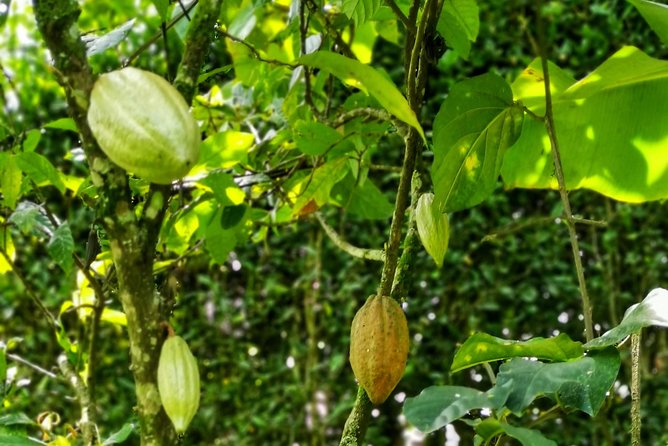
Once you reach the farm grounds, the day turns from classroom to action. The next major phase is picking cacao pods in the plantation, and you walk among cacao trees in their natural form.
What I like is you are not surrounded by only cacao. As you move through the property, you also see other plants that belong to local farm life, like mandarin trees, coffee plants, and plantain. It gives you a fuller picture of how cacao fits into a working landscape and a household economy.
You even get to use tools to pick ripe cacao pods. That is important, because cacao fruit ripeness is not just a visual guess. You learn what to look for, then you taste raw cacao fruit, which is sweet and a little surprising compared with how most of us experience chocolate.
One small consideration: the walk can be steep in places. People often recommend sturdy shoes, long pants, and maybe bug spray, because you are in nature and you might get a bit dirty during the harvesting part.
Same city, a completely different day:
- Medellin: Comuna 13 Graffiti Tour, Cable Car & Street Food
★ 4.8 · 9,046 reviews - Comuna 13 Graffiti Tour with Street Food
★ 5.0 · 7,503 reviews - Museo Pablo Escobar
★ 5.0 · 7,242 reviews - Guatapé Tour: Piedra del Peñol with Boat Tour, Breakfast, Lunch
★ 5.0 · 7,035 reviews
Stop 2 continued: Fermentation in wooden containers, then drying in greenhouse or sun
After you pick ripe fruit, you extract the seeds and move into fermentation and drying, which is where cacao flavor starts forming its personality. This is not instant chocolate. Fermentation is a process that takes time, and the tour builds that understanding clearly.
You cut open the fruit to extract seeds, then the seeds ferment in wooden containers for six days. During fermentation, the fruit’s inner changes help develop the chocolate notes you will taste later, which is why this step is treated with respect on the farm.
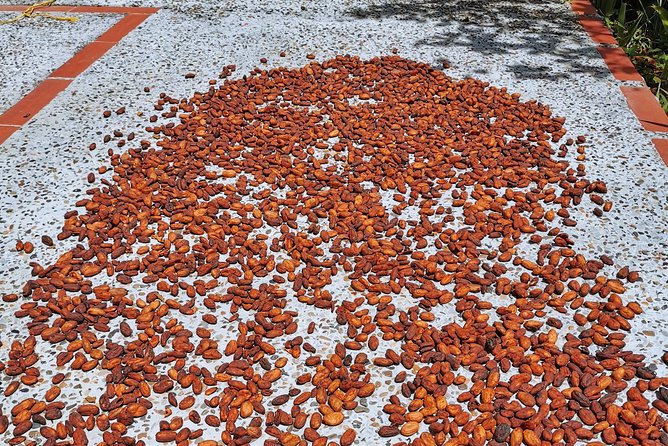
Next comes drying, and the method depends on conditions. The farm may use a greenhouse setup called marquesina, or they might spread the seeds out to dry in the sun. Either way, you learn that drying is not just drying, it is controlled preparation for roasting.
Weather influences drying schedules too. You might see cacao drying continue for two to four days depending on the day’s conditions. That is part of why a good-weather requirement shows up for this kind of experience.
Stop 3: Roast, hull, grind, and build the flavor bar from scratch
When drying is done, you move into the transformation phase, roasting through grinding. This is where the tour shifts from agriculture into craft technique.
On the farm, roasting is done artisanal-style with a simple pot over wood fire. After stirring for about 30 minutes, the beans take on a subtle woody flavor that you can smell before you even taste.
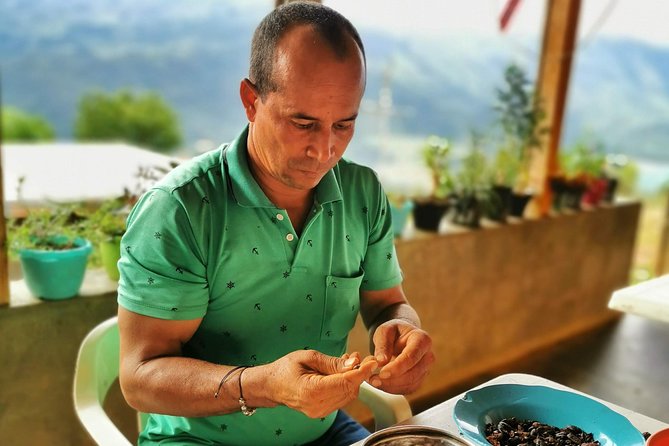
Then comes manual work: the husk is removed, and the beans are separated by hand. That part is tactile and slow, and it helps you understand why bean handling matters when you care about final texture.
Grinding and melting are next. Once the beans are husk-free, they are ground and melted, and the friction from the artisanal grinder helps create a smooth chocolate base. You also get to hear about adding natural flavor ingredients to change the profile.
The farm experiments with flavor additions such as mandarin skin, rice, sugar cane, chia, quinoa, peanuts, and more. You can even suggest an idea for a new combination, which makes it feel like you are contributing to the process instead of just consuming the result.
The hands-on chocolate step: mix ingredients, mold, chill, and eat with a view
After the cacao base is prepared, you get your own starring moment. You mix your freshly ground chocolate with ingredients available at the farm, including powder milk, vanilla essence, green pepper, salt, sugar, ginger, lemon skin, and other options you can choose from.
The mixing part is fun because you are doing what chocolatiers do in miniature: balancing sweet, spice, and aroma. Then you mold your creation and put it in the fridge to solidify while you enjoy a snack and hot chocolate.
This is where the day gets cozy. You will be served cheese bread with hot chocolate made with farm ingredients, and the view is part of the meal. It is the kind of break that helps you digest the process you just watched, and it makes the waiting time feel worthwhile.
Once your bar is ready, you get to receive your own-made chocolate. If you want more to take home, there is also the chance to buy from the farm.
Fair trade take-home and customs: plan your money for purchases
A big value for chocolate lovers is what happens after the tour. You can take farm-made, fair trade handmade chocolate home as a gift, and the tour information emphasizes that customs should not be a problem.
For buying extra chocolate on site, plan for payment. One review tip is to bring Colombian pesos, since credit cards or US dollars might not be accepted. If you only bring a card, you could end up doing the walk to the shop and then wishing you had cash.
If you do like to snack on the way home, this is a strong day for that too. Between hot chocolate, cheese bread, and your own bar, you leave with multiple chocolate moments built into one half-day.
Price and time: is $129 worth it for Medellin?
At $129 per person for about six hours, this is not a cheap “quick stop” activity, but it is also not just a tasting. You are paying for private transportation, a private bilingual guide, and a full seed-to-cup experience done at a working cacao farm.
What makes it good value is the mix of included items. You get pick up and drop off from El Poblado or Laureles, air-conditioned vehicle comfort, and snacks that include hot chocolate and cheese bread. Admission tickets for the farm segments are also listed as free.
The only catch is lunch is not included. If you have a big appetite, you will want to treat this as a snack-and-sweet day, and plan something simple before or after. Since the tour includes multiple taste moments, most people do not feel deprived, but it can matter if you are used to full meals on tours.
Also, private is a pricing multiplier for a reason. When you are the only group, your questions about cacao enemies, fermentation, and flavor additions get answered at the pace you need. That is harder to get on bus tours.
Who this tour fits best, and who might not love it
This experience is a great match if you like hands-on learning and you want something more authentic than a storefront tasting. You will enjoy it if you care about craft and farming, and if you like the idea of understanding chocolate from pod to roast.
It is also ideal for couples and small groups who want personalized attention. Many reviews praise guides by name, including Alejandro, Laura, Erika/Erika, Sara, and Andrew, which signals strong guide performance and good English support when needed.
Kids can do it too. One family review described going with a 12-year-old daughter, with the guide speaking English well and the walk and tasks working as a kid-friendly way to see how food becomes chocolate.
If you have mobility concerns, consider this part carefully. You are on a farm, and parts of the property walk can be steep, with people recommending shoes or boots. If that kind of terrain is tough for you, this could feel more like a hike than a relaxed tour.
Weather and timing: why the farm day can change slightly
This tour needs good weather, which is common for outdoor farm schedules. If weather is poor, you are offered a different date or a full refund, so you are not locked into a bad-weather gamble.
Even when the day is scheduled, farm steps can shift because drying depends on conditions. You might hear drying is two to four days depending on weather before roasting and grinding. On your tour day, you should be flexible about timing and trust the process.
For planning your day in Medellin, give yourself breathing room. With pickup, driving, farm walking, hands-on mixing, and chilling time, six hours can be busy. Add in a little buffer if you have evening plans, because you will not want to rush out right after the chocolate payoff.
Should you book the Medellin Chocolate Farm Private Tour?
Yes, if you want the real thing, not just a chocolate tasting. This is one of the better Medellin food experiences because it links education to action, and you end the day with a bar you helped make.
Book it especially if you:
- Want private, bilingual guiding with time for questions
- Enjoy learning by doing, like picking cacao and mixing your own ingredients
- Appreciate fair trade farm products and want a take-home gift that feels personal
Skip or rethink it if:
- You dislike steep or uneven outdoor walking
- You want a full lunch included as part of the price
- You prefer city-based attractions only
If you are packing for Medellin, I would treat this like a mini hiking day with a dessert finish. Good shoes, water, and cash for farm purchases set you up for a smooth chocolate afternoon.
Hot off the list in Medellin
- Tour Medellín: Pablo Escobar and Commune 13★ 5.0 · 3 reviews
- Tour Guatapé – Piedra del Peñol with departure from Medellín★ 5.0 · 24 reviews
- Tour Guatapé con visita a Granja de las Llamas y las Alpacas★ 3.5 · 11 reviews
- Shared Tour to Comuna 13 & Aurora Cable Car in Medellin★ 5.0 · 4 reviews
- Medellín: Flower Farm & Silletero History Tour★ 4.3 · 23 reviews
- Shared Tour Medellin’s Violence & Post-conflict after Pablo★ 4.1 · 3 reviews
- From Medellín: El Retiro Private Tour with Food Tastings★ 4.4 · 8 reviews
- Comuna 13 Neighborhood & Street Art Private Tour★ 4.7 · 12 reviews
Dessert Tours, compared.

Eco-Hike in Minca: Coffee Tour, Waterfall & Chocolate Experience!
Read our review →
Colombian Cacao Experience | Chocolate Tour | BOOK NOW!
Read our review →
Boutique Rum and Chocolate Tasting at Lunático
Read our review →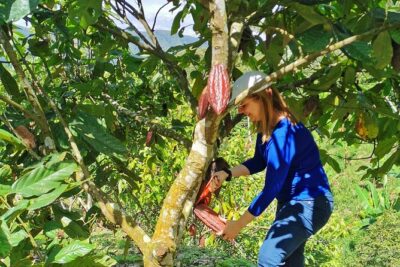
Coffee & Chocolate Private Tour in Medellin: Genuine Experience
Read our review →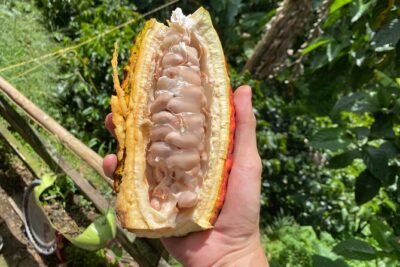
Comuna 13 Tour with Spray Painting and ice cream
Read our review →Browse the lists this tour appears in