
REVIEW · PABLO ESCOBAR TOURS
More than Escobar Tour
Cartels have a paper trail. What makes this tour work is its clear, respectful look at coca, cocaine, and the people harmed by narco-violence. I really like the coca leaf context you get first, then the honest way the story moves to violence, environmental damage, and the politics behind the War on Drugs. I also love that it stays victim-centered, ending at the memorial rather than treating Escobar as the main character.
There’s one possible drawback: this is not a casual party walk. Expect a lot of talk about crime, systems, and consequences, so bring comfortable shoes and a calm mindset, not just curiosity.
In This Review
- Key highlights to know before you go
- Price and timing: what $25 buys you in Medellín
- Where the tour begins: El Poblado meeting point and a clear walking rhythm
- Stop 1: Parque Lineal La Frontera and coca leaf reality checks
- Montecasino and the cartel timeline you actually need
- Medellín Chamber of Commerce: drug economics in plain language
- Stop 3: Parque de la Inflexión memorial and the victims-centered ending
- The guide and the storytelling style: why it feels respectful
- What to bring and how to make the most of it
- Who this tour suits best in Medellín
- Should you book More than Escobar Tour with Real City Tours?
- FAQ
- What is the price of the More than Escobar tour?
- How long does the tour last?
- What time does the tour start?
- Where is the meeting point?
- Where does the tour end?
- What is included in the ticket price?
- Is transportation included?
- How big is the group?
- What is the cancellation policy?
- Are service animals allowed?
Key highlights to know before you go
- Start with coca in Parque Lineal La Frontera, including Indigenous medicinal and spiritual uses, then the harsh realities of drug production
- Montecasino history puts Medellín’s cartel story in context, including the Castaño brothers and the rise and fall narrative
- Medellín Chamber of Commerce stop turns the topic economic, covering demand, supply chains, elasticity, money laundering, and shadow economies
- Parque de la Inflexión ends at a memorial, built on a former Escobar-owned building once bombed in cartel conflict
- Small group size (maximum 12) means you can ask questions and stay focused for the full 3.5 hours
Price and timing: what $25 buys you in Medellín
For $25 per person, you’re getting a 3 hours 30 minutes guided experience in the El Poblado area. That price is more than just a “see the sights” outing, because the guide uses key landmarks as teaching tools, not as photo backdrops.
Start time is 3:00 pm, and the route finishes at Inflexión Memorial Park. Transportation is not included, so you’ll want to plan how you’ll arrive near the meeting point (Tanque campestre, EPM, Cl. 18 Sur #39a-85, El Poblado). The good news is that the meeting area is near public transportation, which makes it easier to plug into your day.
The group is capped at 12 people. For a topic this heavy, smaller groups help keep the pace humane, and it also makes it easier to hear the guide’s explanations without strain.
More Pablo Escobar history tours:
- Museo Pablo Escobar
★ 5.0 · 7,242 reviews - Medellín: The Real Pablo Escobar Tour
★ 4.8 · 3,205 reviews - Pablo Escobar Shared Tour of Medellin
★ 5.0 · 1,560 reviews
Where the tour begins: El Poblado meeting point and a clear walking rhythm
You meet at Tanque campestre epm, Cl. 18 Sur #39a-85 in El Poblado. It’s a practical starting point because El Poblado is where many visitors base themselves, and you’re not forced into a long commute just to begin the tour.
From there, the walking and stops create a rhythm: explanation first, then a location that makes the explanation real. The itinerary is designed to move from plants and culture to geopolitics, then to local economics, and finally to victims and memorial space. That flow matters. If you’re only chasing famous cartel names, you can miss the point. Here, the route keeps steering you back to systems and consequences.
Also, admission tickets for the key parks or stops mentioned are free. That saves you money and keeps you from having to deal with extra ticket lines on a half-day schedule.
Stop 1: Parque Lineal La Frontera and coca leaf reality checks
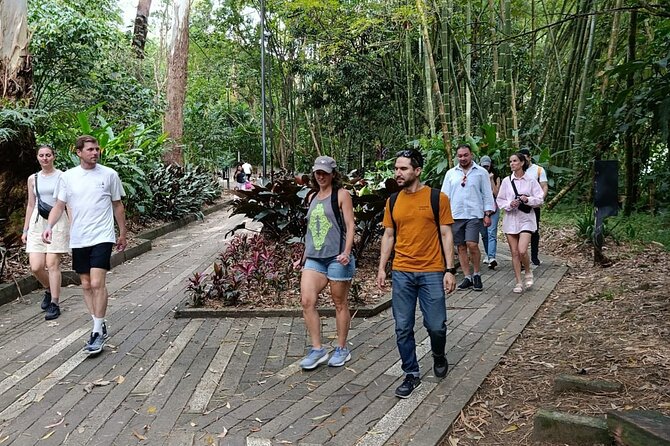
The tour kicks off in Parque Lineal La Frontera, a green corridor right on the edge of Medellín and Envigado. This is where the experience gets its most important grounding. Before any cartel talk, you learn about the cultural, spiritual, and medicinal uses of the coca leaf among Indigenous communities.
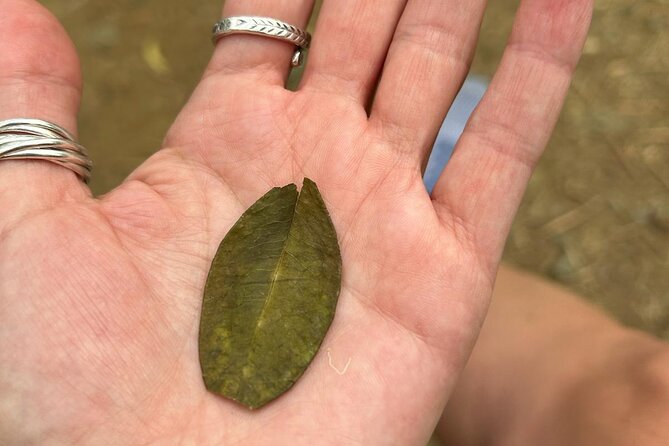
That choice is not random. It forces you to separate the plant’s history from the way it has been weaponized. I like that the guide makes the contrast explicit instead of glossing over it. You hear how coca is used in traditional life, then you’re shown how it can be transformed into cocaine and what that transformation does to the environment.
The environmental piece is especially sobering. The tour explains the devastating consequences of chemical waste being dumped into the jungle during production. Even if you have only a basic awareness of the drug trade, this part puts real-world harm on the timeline instead of letting the conversation stay abstract.
Practical note: this is about 40 minutes at the start. Wear shoes you trust, because you’ll likely be walking through park paths and along the corridor area before the story shifts into modern history.
Montecasino and the cartel timeline you actually need
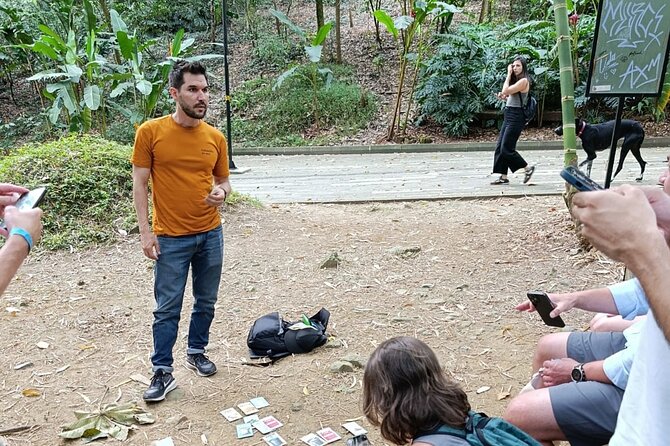
After the coca introduction, the tour moves into the broader global and local story. You’ll talk about the global history of coca and cocaine, including how perceptions changed over time and how historical figures are connected to the wider picture.
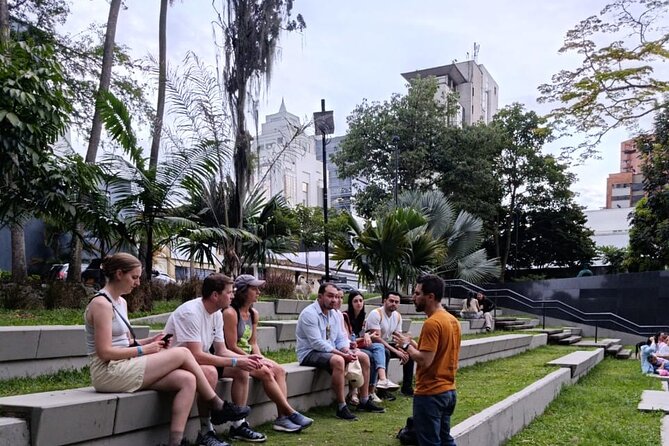
Then the tour lands at Montecasino, the former residence of the Castaño brothers. This is where Medellín’s cartel era sharpens into names and power structures. The guide connects the Castaño brothers to the creation of paramilitaries and the vigilante group known as Los Pepes, and then walks through the rise and fall of Escobar and the Medellín cartel.
What I value here is the framing. This is not a victory lap for criminal mythology. The tour discusses narco-terrorism as a violent era that shaped everyday life, then connects it to the War on Drugs declared by the U.S. government and what that policy pressure did within Colombian society.
You’ll also notice the tour keeping your attention on links between events. Escobar is part of the story, but he’s not the whole story. The goal is to help you see the full chain, from ideology and violence to policy, economics, and the knock-on effects felt by communities.
More things to do in Medellin:
- Medellin: Comuna 13 Graffiti Tour, Cable Car & Street Food
★ 4.8 · 9,046 reviews - Comuna 13 Graffiti Tour with Street Food
★ 5.0 · 7,503 reviews - Guatapé Tour: Piedra del Peñol with Boat Tour, Breakfast, Lunch
★ 5.0 · 7,035 reviews - Day Trip To Guatapé with ,Breakfast, Lunch and Boat Ride
★ 5.0 · 2,996 reviews
Medellín Chamber of Commerce: drug economics in plain language
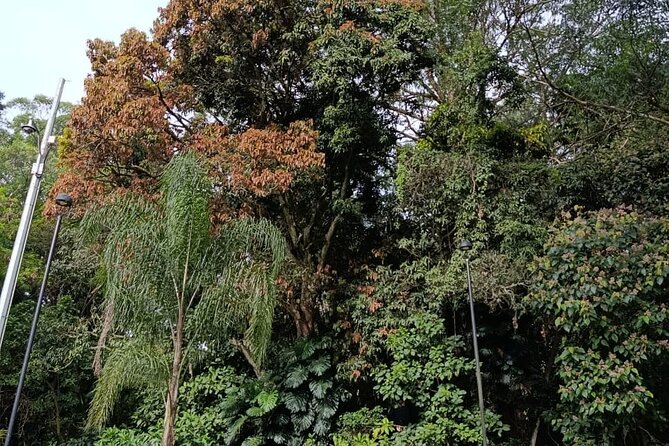
Next you head to the Medellín Chamber of Commerce. This stop is about the economics of the drug trade, and it’s one of the most useful sections if you want to understand why the problem is so hard to shrink.
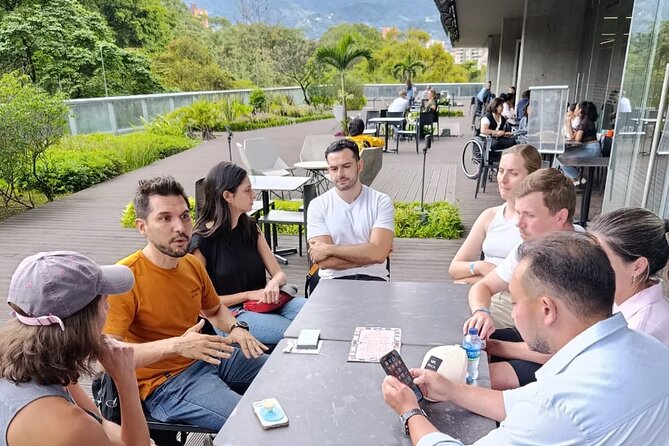
You’ll cover demand and supply chains, then talk about elasticity, money laundering, and the shadow economies that influence systems at local, national, and global levels. The key value for you is how the guide turns big ideas into a logical map you can carry around in your head.
Instead of only asking who is to blame, the tour asks how the system keeps moving. That shift is important in Medellín, where the cartel era is history, but it also shaped the financial and social structures people still navigate.
This stop lasts about 45 minutes. If you prefer tours that are only visual, this portion can feel more classroom-like. But for many visitors, it’s exactly what makes the experience different from the typical Escobar tour route. It gives you a framework, and frameworks help you make sense of what you’re seeing long after the walk ends.
Stop 3: Parque de la Inflexión memorial and the victims-centered ending
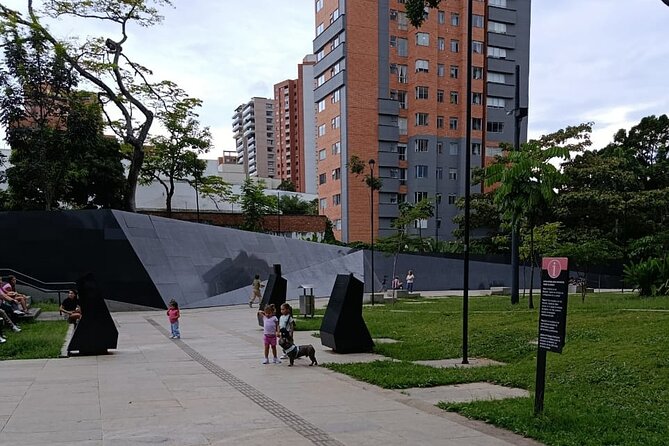
The final destination is Parque de la Inflexión, built on the site of the former Monaco building. This is tied directly to the Escobar story. The building was once owned by Escobar and was bombed by the Cali Cartel, so the site holds layers of conflict in one location.
The tour ends with a memorial honoring the victims of narco-violence. This ending is deliberate, and it’s one of the reasons I respect this tour. The experience doesn’t try to shock you into fascination. It pushes you to think about responsibility and harm, and it brings together the earlier themes of coca, violence, and economics into a human outcome.
In practical terms, the last part gives you a different kind of quiet space. It’s a chance to process what you heard earlier, without names being used like souvenirs. If you came in only knowing a few famous cartel details, this memorial section is what helps the story stick in a more meaningful way.
The tour includes about 30 minutes here, which is a good length to absorb the message without dragging into fatigue.
The guide and the storytelling style: why it feels respectful
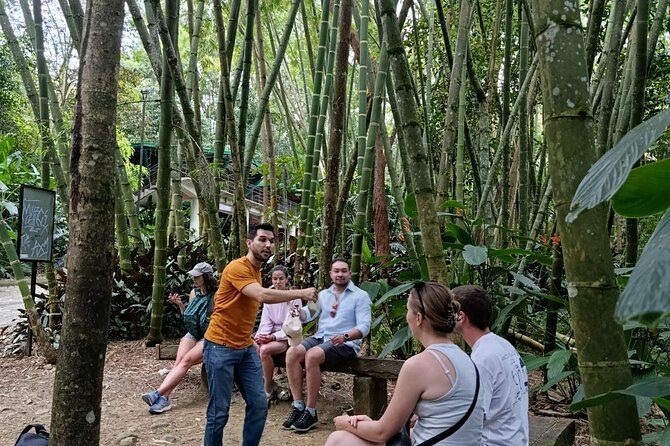
A big reason this tour gets such strong marks is the guide, Pablo. In the way he tells the story, you can feel the local knowledge and the care for tone.
What I like most is the balance: historical and political context, economic mechanics, and the pain of victims all get their share of attention. The experience is firm about not glorifying crime or promoting consumption. That matters, because Medellín’s cartel past can be turned into entertainment too easily, and this route stays grounded in consequences.
The pace also helps. With a maximum of 12 people, the tour doesn’t turn into a loud group hustle. You can listen closely, and the guide can keep the explanation sharp without it turning into a lecture that nobody understands.
What to bring and how to make the most of it
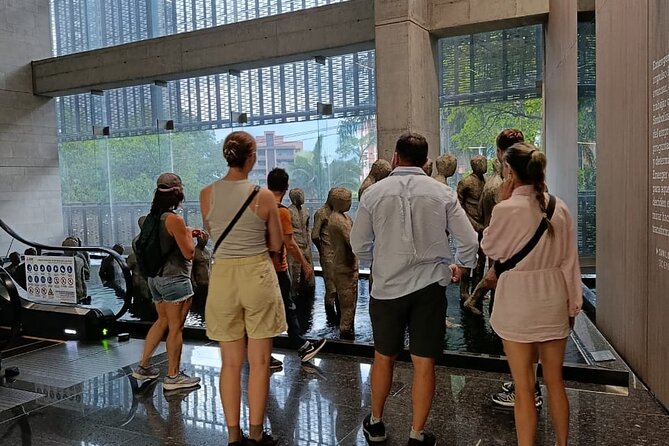
Because the tour is about 3.5 hours and includes multiple outdoor locations, plan for comfort. Bring water, wear grippy shoes, and assume you’ll be on your feet for park paths and city blocks between stops.
Since the subject matter includes violence, chemical waste impacts, and the effects of the War on Drugs, you’ll have a better experience if you come ready to think, not just to collect facts. If you’re sensitive to heavy topics, you can still do this tour, but I’d suggest you mentally prepare for a serious, not celebratory, mood.
If you’re traveling with someone who only wants light, funny Medellín stories, this might not be the best choice. But if you want to understand how Medellín got where it is, this tour gives you a strong base.
Who this tour suits best in Medellín
This is ideal for visitors who want more than one cartel name. If you’re curious about the coca story from Indigenous use to global demand, you’ll likely appreciate the structure.
It also works well if you like analysis. The economics stop at the Chamber of Commerce is especially good for travelers who prefer explanations for how systems operate, not just a list of events.
If you’re short on time but want a guided route with clear themes, 3 hours 30 minutes is manageable. And because the group is small, you get that focused, human pace instead of feeling rushed by a big crowd.
Should you book More than Escobar Tour with Real City Tours?
I’d book this tour if you want a thoughtful Medellín experience that treats the subject with respect and actually teaches you something. The value comes from its structure, from coca and environmental impacts to cartel history and then to economics, ending at a memorial for victims.
Skip it if you want a purely sightseeing, joke-driven outing, or if you want to avoid discussions of violence and drug policy altogether. Also, because transportation is not included, make sure you can get yourself to the El Poblado meeting point without stress.
If you like context, not just celebrity crime stories, this one is easy to recommend.
FAQ
What is the price of the More than Escobar tour?
The price is $25.00 per person.
How long does the tour last?
The duration is approximately 3 hours 30 minutes.
What time does the tour start?
The start time is 3:00 pm.
Where is the meeting point?
The meeting point is Tanque campestre epm, Cl. 18 Sur #39a-85, El Poblado, Medellín, Antioquia, Colombia.
Where does the tour end?
The tour ends at Inflexión Memorial Park, Cra. 44 #15 Sur-31, El Poblado, Medellín, Antioquia, Colombia.
What is included in the ticket price?
The tour includes professional guidance.
Is transportation included?
No, transportation is not included.
How big is the group?
The tour has a maximum of 12 travelers.
What is the cancellation policy?
You can cancel for a full refund up to 24 hours before the experience start time. Within 24 hours of the start time, the amount paid is not refunded.
Are service animals allowed?
Yes, service animals are allowed. The tour also notes that it is near public transportation and that most travelers can participate.
Hot off the list in Medellin
- Tour Medellín: Pablo Escobar and Commune 13★ 5.0 · 3 reviews
- Tour Guatapé con visita a Granja de las Llamas y las Alpacas★ 3.5 · 11 reviews
- Tour Guatapé – Piedra del Peñol with departure from Medellín★ 5.0 · 24 reviews
- Shared Tour to Comuna 13 & Aurora Cable Car in Medellin★ 5.0 · 4 reviews
- Medellín: Flower Farm & Silletero History Tour★ 4.3 · 23 reviews
- Shared Tour Medellin’s Violence & Post-conflict after Pablo★ 4.1 · 3 reviews
- From Medellín: El Retiro Private Tour with Food Tastings★ 4.4 · 8 reviews
- Comuna 13 Neighborhood & Street Art Private Tour★ 4.7 · 12 reviews
Pablo Escobar Tours, compared.
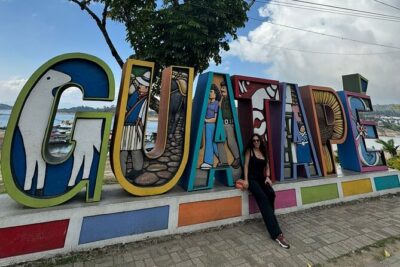
Peñol Stone and Pablo Escobar Hacienda Boat Tour
Read our review →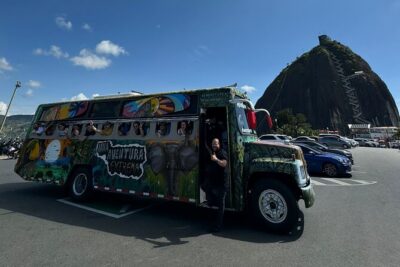
Excursion to Guatapé by chiva, lunch and Pablo Escobar’s hacienda
Read our review →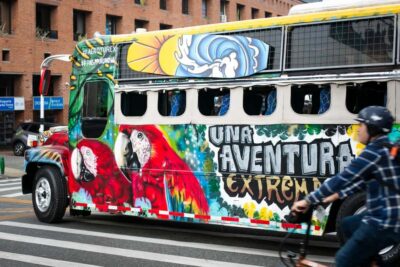
Guatapé Day Trip & Boat to Pablo Escobar’s Estate
Read our review →Browse the lists this tour appears in