
REVIEW · MEDELLÍN TOURS
Shared Medellín Downtown Tour with Wireless Audio
Medellín has a split personality, and this walk explains it. This shared downtown tour connects art and industry to hard truths, including the 80s and 90s story, then ties it to the city’s brighter rebuilding through railroads and the Park of Lights. You also get wireless audio so you can hear clearly while moving through busy streets and still stop for photos.
I love the way the guide stitches together paisa culture with real places in the historic center, not just dates. And I like that the narration aims for accurate, objective history while still being direct about conflict and social change, which is exactly what makes Medellín feel real, not curated.
One thing to consider: you’ll walk about 8 km, which means the tour can feel long, especially around crowded areas. Add in possible rain, and the wireless devices are not waterproof, so you will want solid shoes and weather gear.
In This Review
- Why This Medellín Downtown Tour Gets Such Strong Marks
- Meeting Museo de Antioquia and Botero Plaza: where the story starts
- Wireless audio receivers: the practical upgrade you will feel immediately
- Botero Square art and the paisa identity behind it
- Junín Street and the historic center: how downtown becomes a living lesson
- The 80s and 90s in Medellín: history without taboos
- Railroad and La Alpujarra: development written into city symbols
- Park of Lights: a tribute you can walk through
- How long is this walk, and how should you pace it?
- Rain, crowds, and the reality of downtown sidewalks
- What you get beyond history: local tips for lunch and coffee
- Price and value at $13: what you pay for, and what to budget
- Who this Medellín downtown tour is best for
- Should you book this Medellín downtown tour?
Why This Medellín Downtown Tour Gets Such Strong Marks
- Starting at Botero Plaza (right by Museo de Antioquia) sets the tone with art and civic identity from minute one.
- Wireless receivers keep you in the story even on noisy sidewalks, while you keep hands free for photos.
- Paisa culture + industry explanations give you context for why Medellín became what it is today.
- The 80s and 90s chapter is frank without turning the whole city into a crime documentary.
- Railroad-era landmarks (La Alpujarra and Park of Lights) show development you can still see with your own eyes.
- Local guide energy and Q&A focus is repeatedly praised, from Miguel to Deisy and Santiago.
Meeting Museo de Antioquia and Botero Plaza: where the story starts
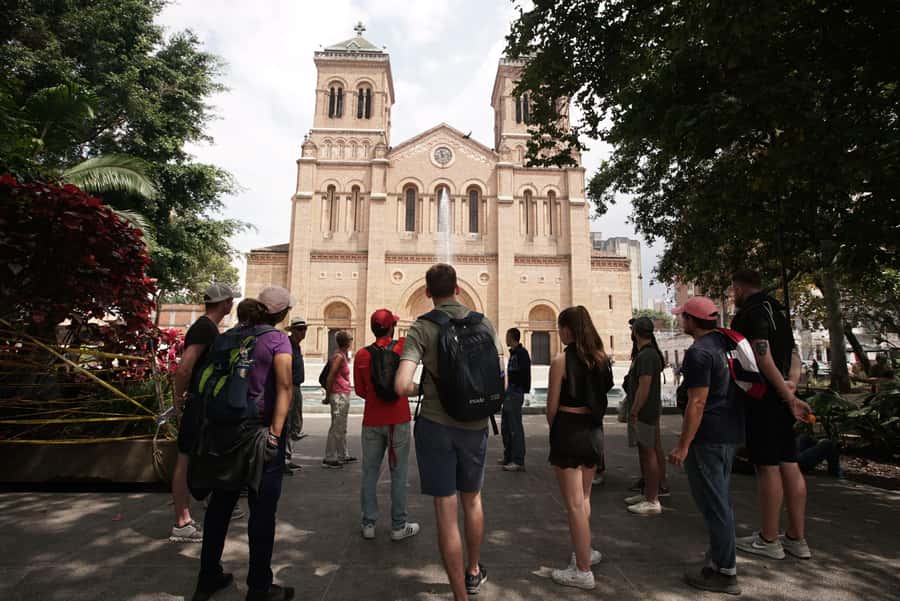
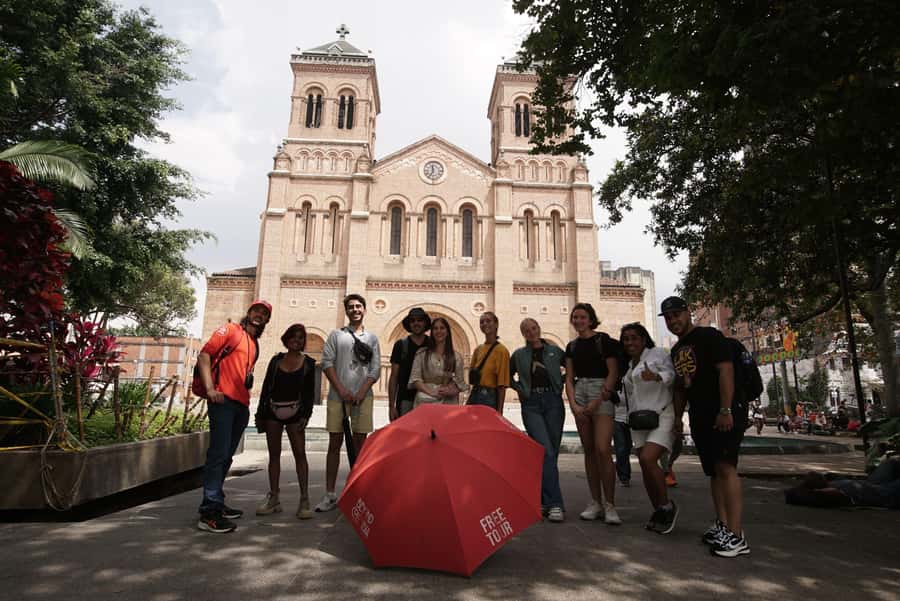
Your tour begins in the classic downtown zone: right in front of Museo de Antioquia at Botero Plaza. Beyond Colombia guides meet you with red umbrellas, so it is pretty hard to miss them once you spot the group.
This matters because Botero Square is more than a photo stop. It is a good first “orientation point” for Medellín, where art and public space sit right next to the city’s everyday flow. In practice, that means you start learning what you are seeing, before you get swept along by streets and noise.
More things to do in Medellin:
- Medellin: Comuna 13 Graffiti Tour, Cable Car & Street Food
★ 4.8 · 9,046 reviews - Comuna 13 Graffiti Tour with Street Food
★ 5.0 · 7,503 reviews - Museo Pablo Escobar
★ 5.0 · 7,242 reviews
Wireless audio receivers: the practical upgrade you will feel immediately
A big reason this tour works well is the professional wireless audio system. You wear a receiver, and the sound is designed to stay crisp even in busy areas, which is key on Medellín’s downtown blocks.
Why you will care: you do not have to keep craning your neck to hear the guide. You can take a photo, adjust your route, or step aside for a better view without losing the thread of the story.
Two practical notes from the tour details:
- The audio system is not suitable for children under 15.
- It is not waterproof, so if it starts to rain, devices get collected and stored safely.
Botero Square art and the paisa identity behind it
The itinerary’s first “big idea” is the connection between art and identity. You will hit Botero’s Square, which the tour frames as a reference point for the city. Even if you are not a museum person, you are getting a quick education in why public art belongs in public life here.
Then the tour moves into paisa industry and culture, which are described as pillars for understanding Medellín’s importance in Colombia. In other words, you are not just learning about the city, you are learning how the people explain themselves.
If you like tours that help you decode a place, this is a strong fit. Guides such as Miguel, Deisy, Carolina, and Santiago are repeatedly praised in the tour feedback for making the history stick, especially when you ask questions.
Junín Street and the historic center: how downtown becomes a living lesson
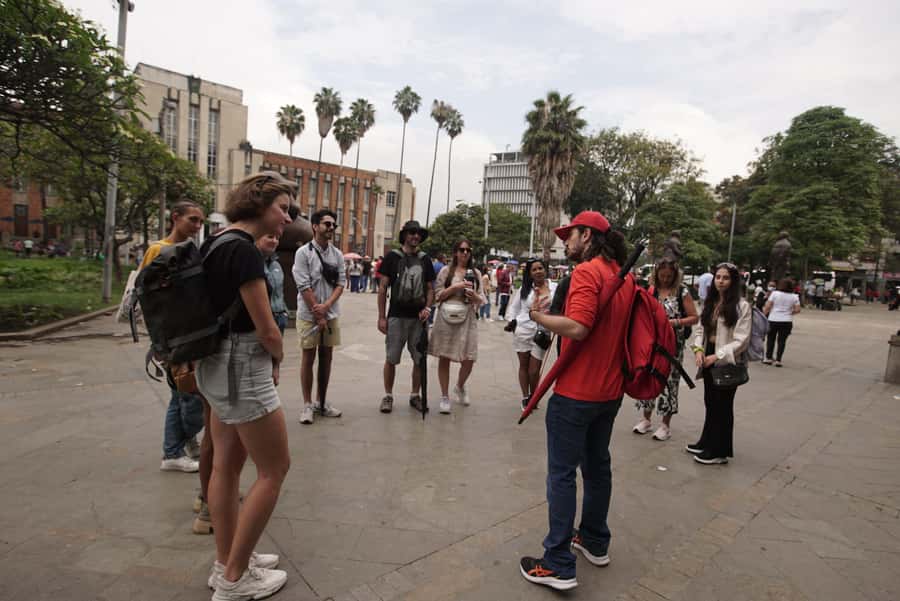
A key part of the experience is the downtown walking itself. You will move between passages, cross Junín street, and follow the pulse of the historic center rather than sticking to a single boulevard.
This is where you start noticing the “layers” that make Medellín tricky and fascinating. You see old architecture and civic spaces, then you see the modern reshaping in how people use the streets. The guide’s job is to explain the why behind what you are seeing.
One practical benefit of a guided walk like this: you can cover a lot of ground in about 3 hours while still stopping enough times to get the context. And because it is a shared tour, you usually get more chances to overhear other people’s questions, which often become your own learning prompts.
Same city, a completely different day:
- Guatapé Tour: Piedra del Peñol with Boat Tour, Breakfast, Lunch
★ 5.0 · 7,035 reviews - Medellín: The Real Pablo Escobar Tour
★ 4.8 · 3,205 reviews - Day Trip To Guatapé with ,Breakfast, Lunch and Boat Ride
★ 5.0 · 2,996 reviews - Comuna 13 Graffitour knows the urban art district of Medellín
★ 5.0 · 2,856 reviews
The 80s and 90s in Medellín: history without taboos
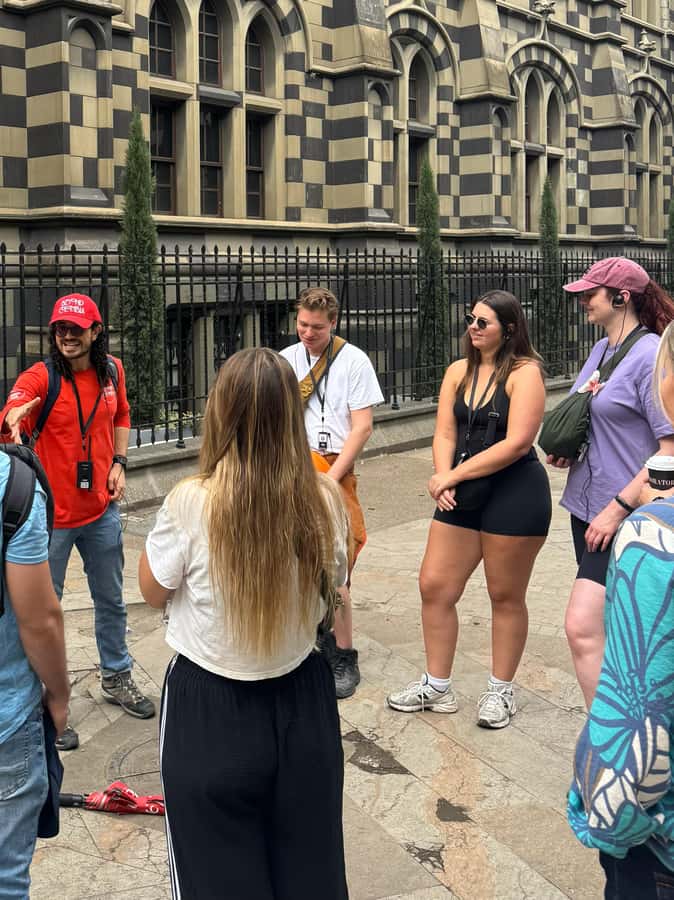
The tour does not treat the past like a closed book. One of the stated highlights is 80’s and 90’s in Medellín, the history without taboos, including how the city confronted a dark period tied to drug trafficking.
What makes this section useful is that it is paired with the broader theme of rebuilding and social investment. The tour narrative emphasizes that Medellín moved from violence toward a future shaped by resilience and collective effort, which is why the city today can feel far more walkable and welcoming than the stereotypes suggest.
At the same time, it is smart to approach this chapter with an open mind. Even when guides aim for accurate and objective knowledge, Medellín’s recent history is still emotionally charged, and different people will read it differently. Your best move is to ask follow-up questions and let the guide explain the complexity.
Railroad and La Alpujarra: development written into city symbols
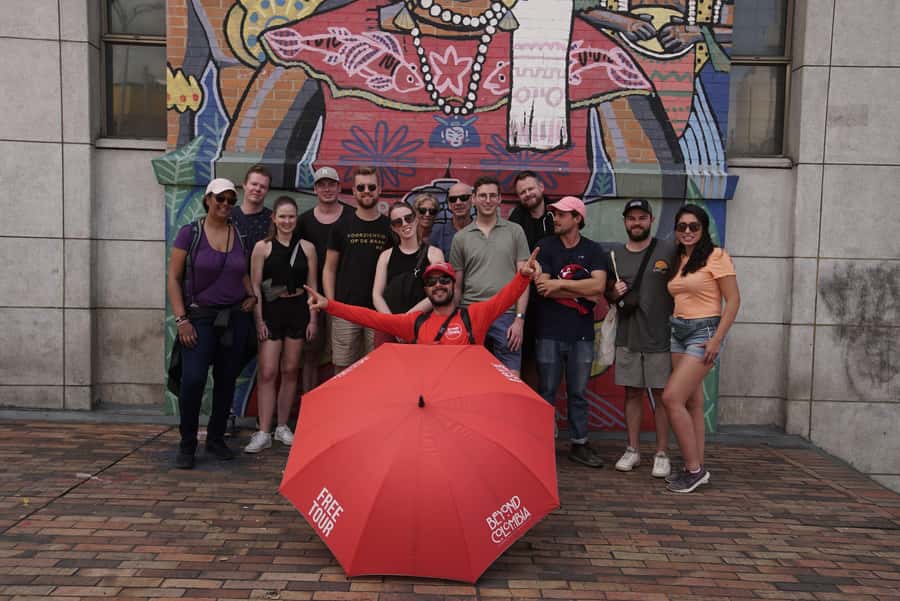
Medellín’s growth is not just an abstract storyline. The tour calls out the railroad and La Alpujarra as symbols of the city’s development, and that is exactly the kind of detail that makes a history walk worthwhile.
Why it is valuable: rail and related infrastructure explain how a city physically connects people, commerce, and opportunity. When your guide points out these landmarks, you stop thinking of history as “stuff that happened” and start seeing it as “the reason certain places look the way they do.”
In Medellín, the infrastructure story also helps you understand why neighborhoods and public spaces became focal points for change. You are basically learning the city’s logic, not just its timeline.
Park of Lights: a tribute you can walk through
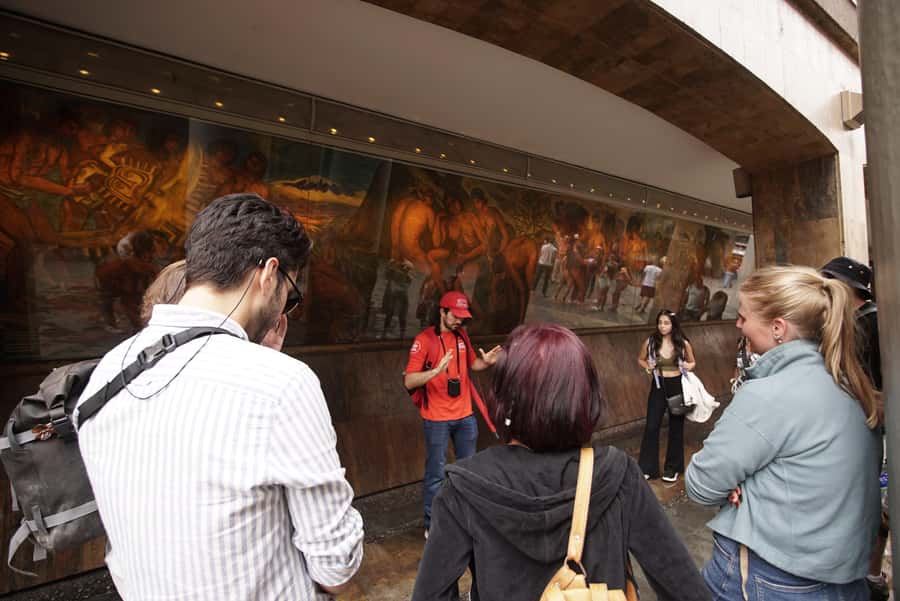
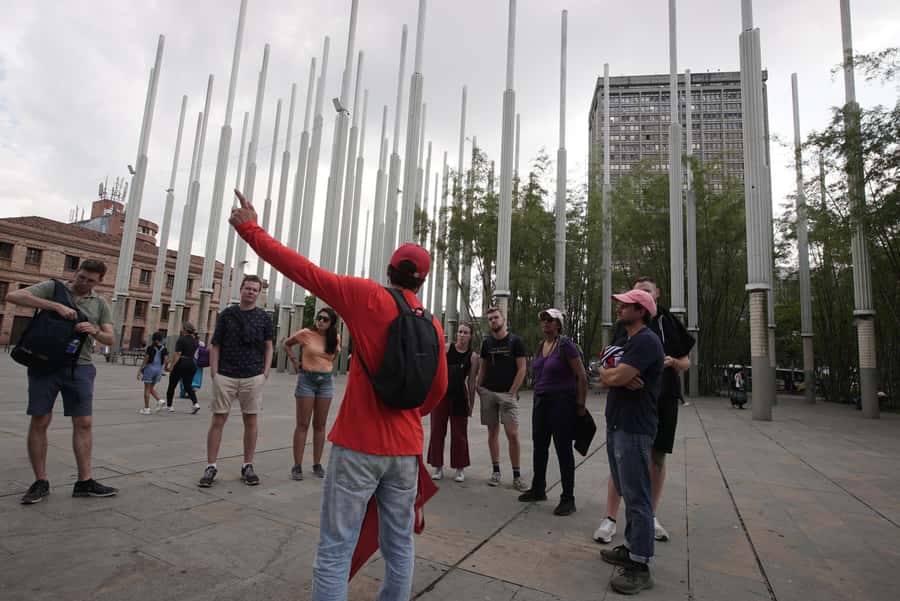
Another standout highlight is Park of Lights, described as a homage to the father of railroads in Medellín. This is one of those stops that works on two levels: you get a meaningful historical reference, and you also get a visual break from pure street-level scenes.
Even if you only spend a short time there, it gives you a “pause moment” where the tour’s big theme lands. The guide’s explanation ties the city’s industrial roots to the way Medellín later invested in a future that makes life in the center possible.
In practical terms, it also gives you something to remember when you think back on the tour later. Most walking tours end in a blur of streets; this one tries to anchor you with specific symbols.
How long is this walk, and how should you pace it?
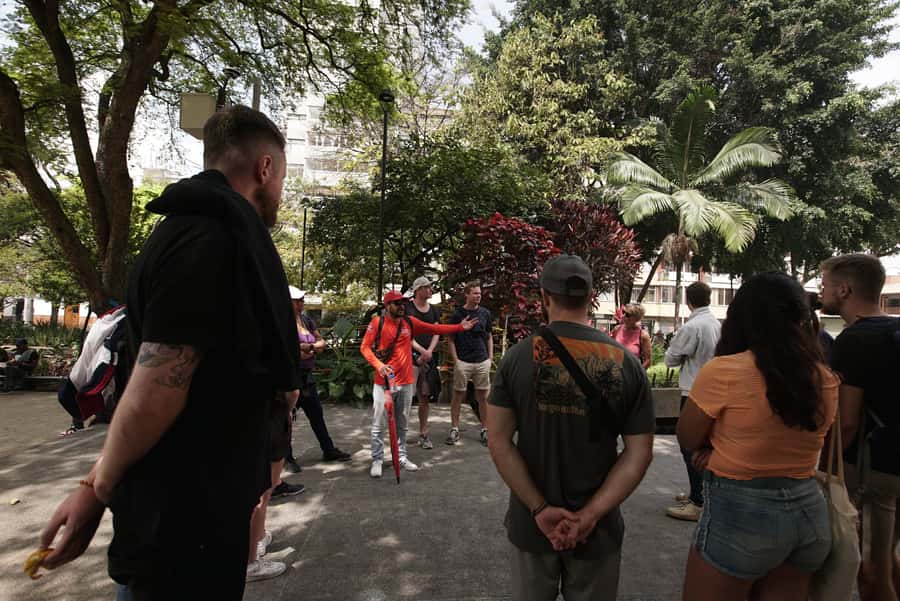
The tour runs about 150 minutes to 3 hours, and it is billed as a walking experience with resting stops. You should plan on walking roughly 8 km.
That may sound like a lot until you think about the format: downtown streets, frequent explanation breaks, and a clear route built around landmarks like Botero Plaza, Junín street, and the railroad-era sites. Still, you will feel it if you normally avoid long walking days.
I recommend you treat it like a half-day commitment. Wear comfortable shoes, bring a camera if you want photos, and carry water or whatever you use for hydration. The tour explicitly reminds you you may feel thirsty.
Rain, crowds, and the reality of downtown sidewalks
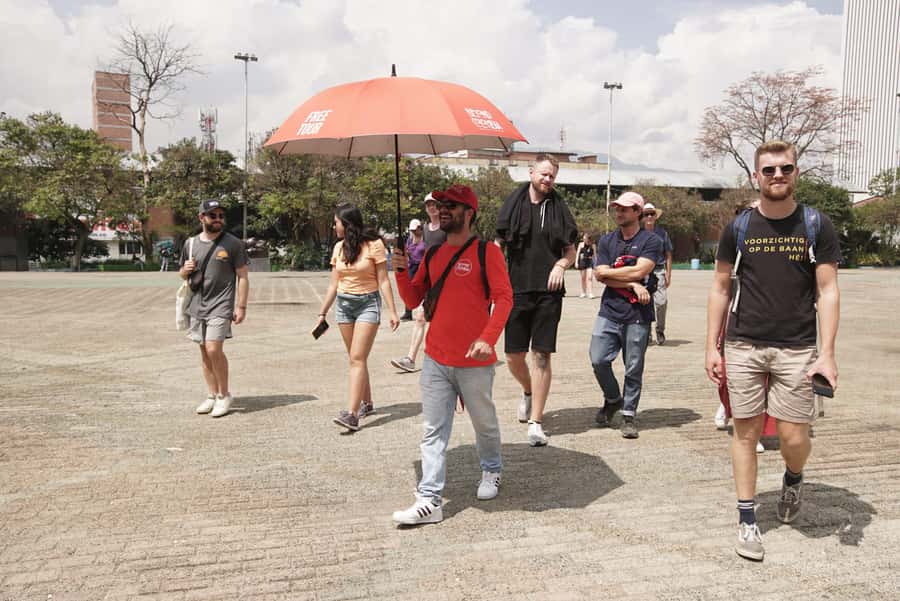
Medellín’s weather can change fast, and the tour encourages you to show up ready. Bring a rainproof coat or umbrella, because the guide notes you cannot control the weather. If rain hits, the wireless system is collected since it is not waterproof.
Crowds are another real part of the experience. The tour notes that you will visit some crowded areas, so keep your belongings close. That is not just safety talk. It helps you enjoy the story without constantly worrying about your bag.
What you get beyond history: local tips for lunch and coffee
This is not just “see places, hear facts, move on.” It includes recommendations of local allies where you can have lunch, buy coffee, and grab souvenirs. That kind of info is handy because downtown has options, but you often want someone to steer you toward trustworthy choices.
The guides are also known for answering questions and adapting to what your group wants to know. You can see that pattern in the names showing up across the feedback: Miguel, Deisy, Carolina, Alejandro, Santiago, Manuel, Sebastian, and Daniel.
If you are on your first day in Medellín, this tour can act like a launchpad. You leave knowing what to look for next and where to go for a comfortable meal.
Price and value at $13: what you pay for, and what to budget
At $13 per person for about 3 hours, the value is in what is included. You get:
- An English or Spanish speaking guide
- Sightseeing of essential historic center places
- Wireless audio for enhanced comfort
- Local recommendations for food, coffee, and souvenirs
What is not included is equally important for planning. You are not paying for transportation to or from your hotel, and you are not paying for transportation during the tour since it is walking. Food, drinks, and souvenirs are also on you, and tickets or entrances are not included, because the tour will not take you to places with sudden extra charges.
So your budget is simple: plan for a meal or snack after the walk, and bring water so you do not get stuck buying it at the least convenient moment.
Who this Medellín downtown tour is best for
This tour is a strong pick if you want the Medellín story in a short time window. You get the city’s art connection, the paisa industry and culture pillars, and the major transformation storyline from the 80s and 90s into rebuilding and social commitment.
It is also a good fit if you like learning from locals who can handle questions about current affairs alongside historic facts. The tour feedback repeatedly highlights guide performance and engagement, like Santiago’s animated presentation style and Carolina checking in if her group understood during Spanish narration.
On the other hand, it is not right for everyone. The tour states it is not suitable for people with mobility impairments due to the walking length and shared street setting. If mobility is an issue for you, you will likely need a different format.
Should you book this Medellín downtown tour?
Book it if:
- You are seeing Medellín for the first time and want a fast, organized way to understand the city center.
- You care about learning why Medellín changed, including the hard parts, not just postcard scenery.
- You appreciate practical comfort, like wireless audio that lets you hear well while you walk.
Skip it or swap to something else if:
- You know you will struggle with 8 km of walking or crowded sidewalks.
- Rain would ruin your day, and you would rather avoid a format where audio devices are pulled in wet weather.
- You prefer tours that focus only on light, upbeat themes. This one includes a direct look at the 80s and 90s, because that is part of the city’s real explanation.
If your goal is to get your bearings fast and understand Medellín as a place that rebuilt itself, this is one of the most sensible downtown starts you can choose.
Hot off the list in Medellin
- Tour Medellín: Pablo Escobar and Commune 13★ 5.0 · 3 reviews
- Tour Guatapé – Piedra del Peñol with departure from Medellín★ 5.0 · 24 reviews
- Tour Guatapé con visita a Granja de las Llamas y las Alpacas★ 3.5 · 11 reviews
- Shared Tour to Comuna 13 & Aurora Cable Car in Medellin★ 5.0 · 4 reviews
- Medellín: Flower Farm & Silletero History Tour★ 4.3 · 23 reviews
- Shared Tour Medellin’s Violence & Post-conflict after Pablo★ 4.1 · 3 reviews
- From Medellín: El Retiro Private Tour with Food Tastings★ 4.4 · 8 reviews
- Comuna 13 Neighborhood & Street Art Private Tour★ 4.7 · 12 reviews
Medellín Tours, compared.
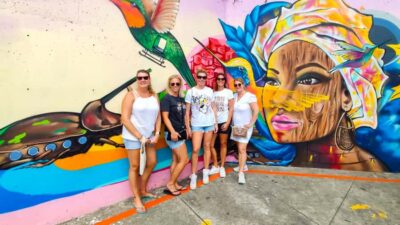
Comuna 13 Graffiti Tour, Cable Car & Street Food
Read our review →

Guatapé Tour: Piedra del Peñol with Boat Tour, Breakfast, Lunch
Read our review →
Day Trip To Guatapé with ,Breakfast, Lunch and Boat Ride
Read our review →
Comuna 13 Graffitour knows the urban art district of Medellín
Read our review →