
REVIEW · COFFEE FARM TOURS
Specialty Coffee Tasting in Bogotá, From coffee growers to your cup
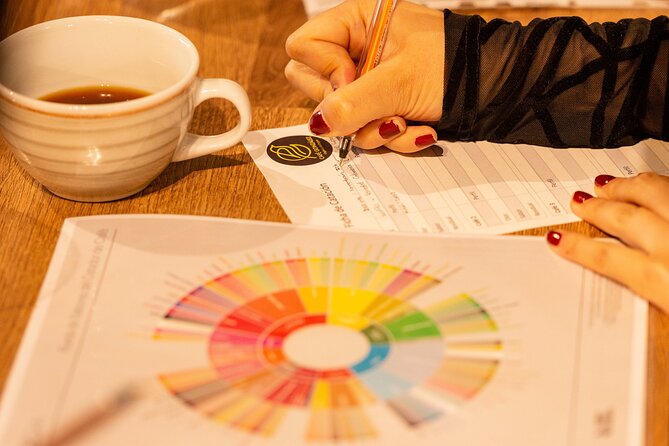
Coffee tastes different when you control the variables. This 2-hour tasting at Café González in Bogotá walks you through four brewing methods and a flavor mapping table so you can learn what you like, not just what you’re supposed to like. I love the back-to-back comparisons, and I love how guides like Jorge and Andrea keep the experience hands-on and patient.
You’ll start with two coffees, one from the washed process and another from the honey process, then continue with coffees that include natural and another washed option. Between tastings, you’ll use a flavor association tool, plus you get a baked empanada to set up the rest of the session.
One consideration is that timing and how smoothly things run can vary. To avoid stress, I’d arrive a bit early at Cra 19 #123-60, keep a flexible mindset, and treat this as a learning experience more than a rigid, stopwatch-perfect schedule.
In This Review
- Key things to know before you go
- Brewing Your Way Through Bogotá: what this tasting is really about
- Meet at Cra 19 #123-60: logistics that actually affect your experience
- Four brew methods in two hours: AeroPress, V60, French Press, siphon
- Washed, honey, natural, and another washed: how processing changes the cup
- The flavor table plus an empanada: training your palate without overthinking
- What you actually learn about grind, water, and pouring
- Price and value: is $30 worth two hours of tasting?
- Who should book this Bogotá coffee tasting?
- Should you book this coffee tasting in Bogotá?
- FAQ
- How much does the specialty coffee tasting in Bogotá cost?
- How long is the experience?
- Where is the meeting point?
- Does the tour end at the meeting point?
- What brewing methods are included?
- What coffee processing styles are tasted?
- Is food included?
- How many people are in a group?
- Is it near public transportation?
- Can I bring a service animal?
- Is there free cancellation?
Key things to know before you go
- Four brew methods in one session: AeroPress, V60, French Press, and Japanese siphon so you can taste technique, not just beans.
- You compare processing styles: washed, honey, and natural, which can shift sweetness, acidity, and body.
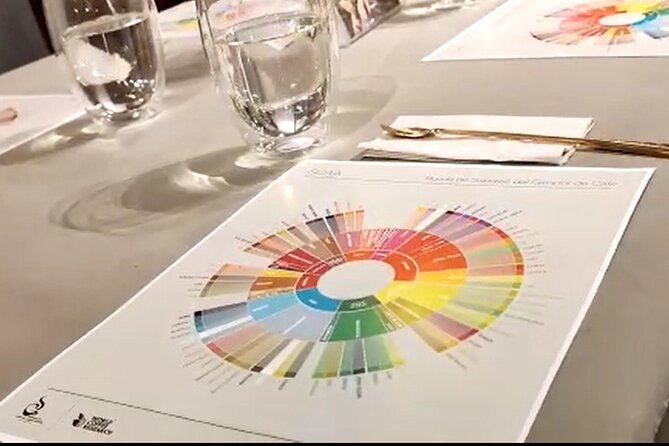
- Flavor table training: you map what you sense to descriptors so tasting becomes repeatable.
- Food that fits the goal: a baked empanada helps reset your palate for later cups.
- Small group feel: capped at 15 people, which makes it easier to ask questions.
- Guides who slow down: Jorge and Andrea are known for pacing and explaining clearly.
Brewing Your Way Through Bogotá: what this tasting is really about
Specialty coffee tours can sometimes feel like a lecture. This one is different because it turns the session into a mini lab, where you taste while learning what changes the cup.
The big idea is simple. Coffee is not one flavor. It’s the result of choices like grinding, water temperature and quality, and how you pour. Then add the processing method of the coffee cherry itself, and you get even more variation. Over about two hours, you’ll taste your way through enough variables to understand your own preferences.
You don’t need to be a coffee nerd to enjoy it. If you drink coffee daily and wonder why it sometimes tastes bright and sometimes tastes flat, this will help you connect the dots. And if you already care about espresso versus pour-over, this gives you a structured way to compare methods without guessing.
The setting is Café González in Bogotá, and the session is built for a small group. That matters because tasting is personal. You’ll likely want to ask why one cup feels lighter or why another tastes sweeter, and smaller groups make that possible.
More Coffee Farm Tours in Bogota
- Coffee Farm Tour from Bogotá – Be a Farmer for a Day
★ 5.0 · 213 reviews - Specialty Coffee Workshops in Bogota
★ 5.0 · 145 reviews - From Bogotá: Coffee Farm and Tequendama Falls Tour
★ 4.5 · 130 reviews
Meet at Cra 19 #123-60: logistics that actually affect your experience
You start at Cra 19 #123-60 in Bogotá, and the activity ends back at the same meeting point. That round-trip setup is a plus in a city where travel time can swing based on traffic.
The experience is near public transportation, and service animals are allowed. So if you’re planning this between other sights, you shouldn’t have to design your whole day around it.
One practical tip I’d give you based on how this type of experience usually runs: arrive early, not right on the minute. Even when everything is well organized, coffee tastings can have small delays. If you show up with a cushion, you’ll enjoy the session more because you’re not mentally racing the clock.
Also, because the maximum group size is 15, you’ll get a more comfortable back-and-forth during the tastings. It still won’t feel like private tutoring, but it’s not a cattle-car class either.
Four brew methods in two hours: AeroPress, V60, French Press, siphon
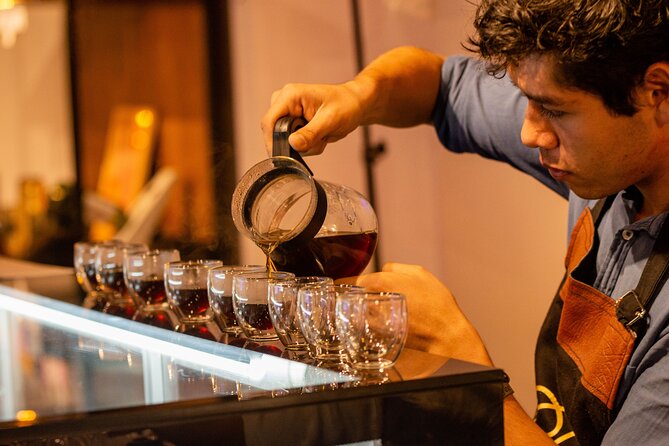
This is the backbone of the tasting. You’ll try four cups prepared using different methods:
- AeroPress
- V60
- French Press
- Japanese Siphon
Each method highlights different traits. Even if you don’t memorize all the science, your tongue will do the comparing for you.
AeroPress often feels like a bridge between bright and full-bodied, because it can bring out clarity while still tasting round. V60 is typically associated with clarity and structure, and you’ll likely notice differences in acidity or perceived sweetness compared to the other methods. French Press tends to feel heavier, with more body and a more grounded mouthfeel. The Japanese siphon is its own style, and the cup can feel clean but theatrical in how it lands.
The value here is not that you’ll become an at-home barista in one afternoon. It’s that you’ll learn what different technique choices do to flavor. Then when you’re brewing at home, you’ll know what to adjust instead of chasing random hacks.
You’ll also learn how grinding, water, and pouring affect properties like extraction and balance. That’s the practical part you can use immediately. If you’ve ever tasted coffee that’s too sharp, too bitter, or thin, this training gives you a direction for fixing it.
Washed, honey, natural, and another washed: how processing changes the cup
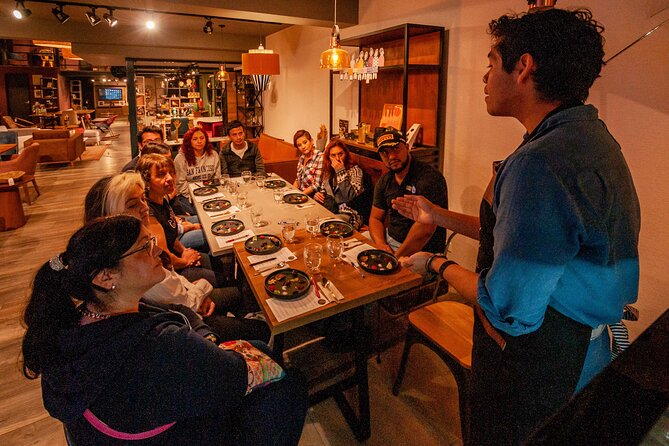
After the brew-method comparisons, the session focuses on coffee processing. You’ll taste coffees using multiple processes, starting with:
- one coffee in the washed process
- one coffee in the honey process
Then you’ll move on to additional cups that include natural and another washed coffee.
Processing is where a lot of the mystery lives for casual coffee drinkers. The coffee plant starts the same, but what happens after harvest changes how the beans develop and dry, which can shape sweetness, acidity, aroma intensity, and the overall “texture” of the cup.
In a tasting like this, the point is to make those differences noticeable enough that you can describe them. You start by tasting, then you learn what to listen for. You don’t just swallow and move on.
You’ll also hear about the history of the coffee, tied to the farm-to-cup idea. You can treat this as context, not homework. When you understand where the coffee comes from and how it was handled, it becomes easier to appreciate why a certain cup tastes the way it does.
More Food Tours in Bogota
- Bogotá Food Experience: Cultural & Culinary Tour
★ 5.0 · 591 reviews - Viejo Bogota Food Tour with 12+ Tastings
★ 5.0 · 544 reviews - Bogota Food Tour with over 12 Tastings & Tejo
★ 4.9 · 454 reviews - Bogotá Tour: Monserrate, Food, City Walk & Botero Museum
★ 5.0 · 328 reviews
The flavor table plus an empanada: training your palate without overthinking
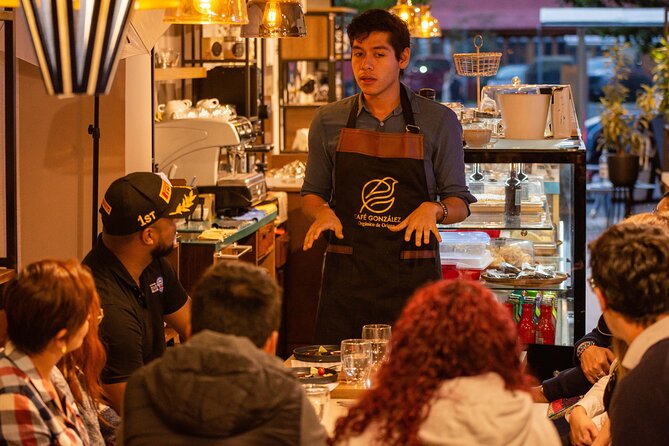
Here’s one of my favorite parts: you’ll have a table of flavors available. This helps you connect what you smell and taste to simple descriptors and memory cues.
That sounds a bit gimmicky until you try it. The flavor table is basically a tasting translator. Instead of saying it tastes good or weird, you can start naming things like fruit notes, sweetness impressions, or roast-related flavors. Naming is how you build your own coffee language.
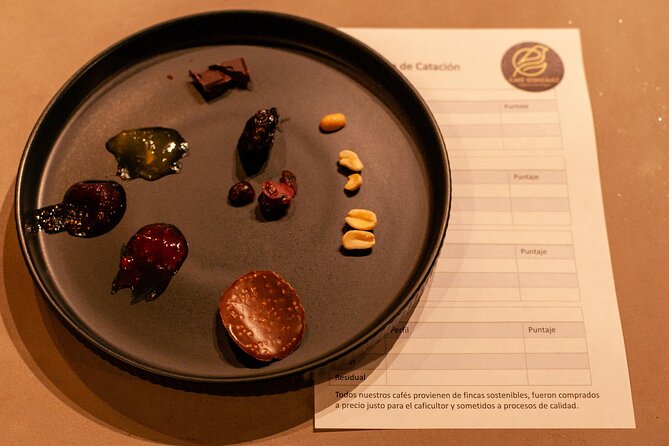
The empanada matters too. You’re given a baked empanada to prepare your mouth for the next flavors. Food in a tasting session is not just a snack. It helps keep your palate clearer, so later cups don’t blur together.
And because it’s baked empanada, it’s not overly aggressive in a way that would totally overpower coffee aromas. It’s there to reset you, then you get back to tasting.
In one session finish detail, some people also mention receiving a small certificate and a dessert. Even if those extras are light, they’re a nice touch because the experience feels complete, not cut off mid thought.
What you actually learn about grind, water, and pouring
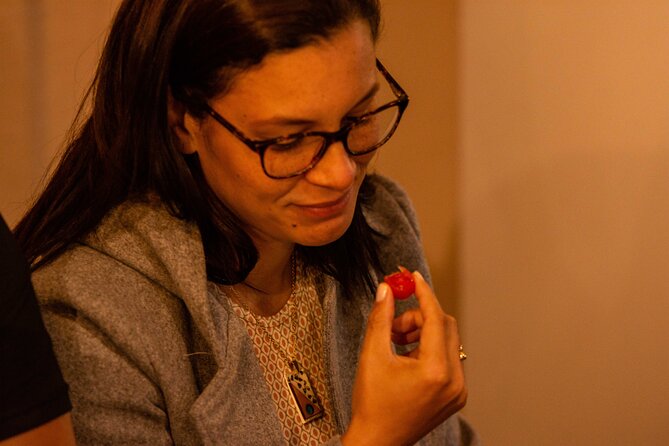
A lot of tours hand you coffee and tell you to notice differences. This one goes a step further. You learn how you can modify attributes and how different factors change the properties of coffee.
Grinding: If grind is too coarse, you often under-extract. That can leave the cup tasting thin or sour. If grind is too fine, you can over-extract, which can push bitterness forward. During a tasting, you’re not taking home a grinder, but you’re building intuition.
Water: Water quality affects extraction and flavor carry. Even when you don’t have lab-grade water at home, knowing that water matters will stop you from blaming beans alone.
Pouring: The way you pour affects contact time and how evenly coffee is extracted. You’ll likely notice that two coffees with similar flavor profiles can still taste different based on technique.
This matters because you’ll stop thinking of coffee as a fixed product. You’ll start thinking of it as a controllable craft.
If you buy beans after the session, this knowledge makes the purchase feel more confident. Instead of buying based on label hype, you can choose what processing and flavor traits you want to experience again.
Price and value: is $30 worth two hours of tasting?
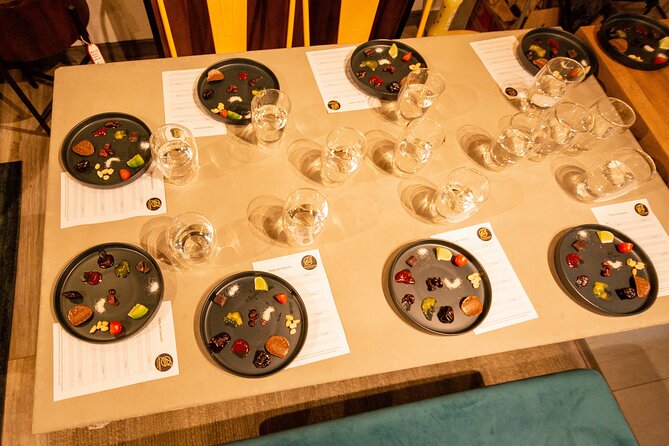
At $30 per person for about two hours, this sits in the midrange for coffee experiences. What makes it feel worth it is that you get structured comparisons, not just sampling.
You’re tasting four cups made with AeroPress, V60, French Press, and Japanese siphon. You’re also tasting multiple processing styles, starting with washed and honey, then including natural and another wash. That means your “taste value per dollar” is high because the variety is built in.
You also get guidance. For $30, you’re not paying only for coffee. You’re paying for someone to help you understand why the cup changes, and how to use that understanding later when you’re brewing.
If you’re the type of traveler who wants the most efficient use of time, this can work well because the duration is tight enough that it won’t eat an entire morning. For people who prefer deep self-guided experiences, you may wonder if two hours is enough. But for most coffee lovers, it’s a strong first step.
The only reason value might feel weaker is if you’re expecting a very technical, perfectly translated lecture with lots of fine details. The session is designed for tasting and learning, but the depth you experience in your preferred language can affect how satisfying it feels.
Who should book this Bogotá coffee tasting?
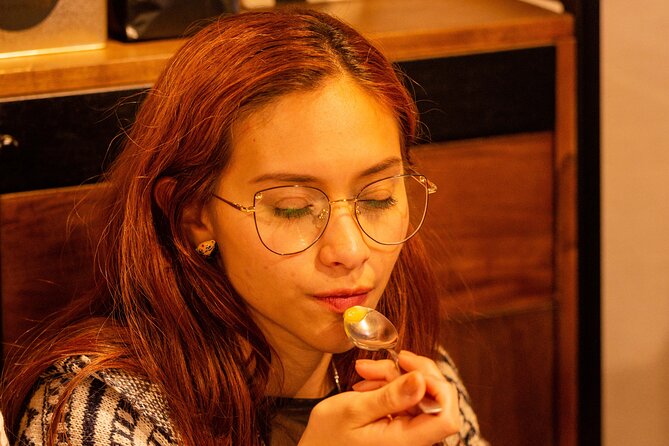
This is a great fit if you fall into one of these groups:
You love coffee and want a structured way to compare what you like. You want to understand processing styles beyond “dark roast versus light roast.” You like hands-on lessons, not just sipping.
It’s also a good fit if you’re traveling with friends who have different preferences. The tour gives you the vocabulary and the comparisons to talk about taste in a way that doesn’t turn into I like it versus you like it.
Who might pause first? If you need everything to be perfectly on-time and ultra predictable, build in buffer time. And if you are looking for very technical explanations without any translation friction, go in with flexible expectations and focus on tasting what’s in front of you.
If your goal is pure café hopping, this might feel too instructional. But if your goal is to come away better at choosing and tasting coffee, it lands well.
Should you book this coffee tasting in Bogotá?
Yes, I’d book it if you want to understand coffee in a way that sticks. The combination of four brew methods, multiple processing styles, and a flavor mapping table makes the learning practical. The empanada is a small detail, but it shows the session is built around palate control, not just sampling.
To make it go smoothly, do two simple things. Arrive a bit early at Cra 19 #123-60. Then bring curiosity. If you come ready to compare cups and ask questions, you’ll walk away knowing what you like and why.
If you’d rather stay totally hands-off, or you’re allergic to structured experiences, you might enjoy Bogotá coffee without a guided session. But for most coffee-minded travelers, this format is an efficient, enjoyable way to level up your palate in a short time.
FAQ
How much does the specialty coffee tasting in Bogotá cost?
It costs $30.00 per person.
How long is the experience?
It lasts about 2 hours.
Where is the meeting point?
You meet at Cra 19 #123-60, Bogotá, Colombia.
Does the tour end at the meeting point?
Yes, the activity ends back at the meeting point.
What brewing methods are included?
You’ll taste coffee prepared with Aero Press, V60, French Press, and Japanese Siphon.
What coffee processing styles are tasted?
The tasting includes coffees from the washed process and the honey process, and it also includes natural process and a wash.
Is food included?
Yes, you’ll have a baked empanada during the experience.
How many people are in a group?
The experience has a maximum of 15 travelers.
Is it near public transportation?
Yes, it is near public transportation.
Can I bring a service animal?
Yes, service animals are allowed.
Is there free cancellation?
Yes, you can cancel for free up to 24 hours in advance for a full refund.
More Coffee Experiences in Bogota
- VIP Bogota City Tour: Monserrate, Candelaria, Coffee Tasting, 6hr
★ 5.0 · 95 reviews - Bogota: Colombian Coffee Tasting
★ 4.8 · 92 reviews - Coffee Farm Experience Private Day Tour
★ 5.0 · 81 reviews - Coffee and Chocolate tour in Bogota
★ 5.0 · 67 reviews
Hot off the list in Bogota
- Catedral de Sal desde Bogotá en Tren★ 5.0 · 5 reviews
- Tour of Zipaquirá: Visit the Salt Cathedral and the main squares★ 4.5 · 55 reviews
- Zipaquirá and Salt Cathedral Muisca Heritage with Guide – Private★ 4.5 · 23 reviews
- Zipaquira Salt Cathedral★ 5.0 · 4 reviews
- LOCAL GUIDE Zipaquirá PRIVATE TOUR – Salt Cathedral and Salt Oven★ 5.0 · 24 reviews
- Zipaquirá Salt Cathedral: An architectural wonder.★ 4.5 · 24 reviews
- Private Zipaquira Salt Cathedral and Guatavita Lagoon Tour from Bogota★ 4.5 · 44 reviews
- Zipaquira Salt Cathedral★ 4.5 · 12 reviews
Coffee Farm Tours, compared.
Half Day Bike Tour in Medellin – Local snack, Coffee or Beer
Read our review →
Half-Day Coffee Tour: From the Seed to the Cup, Farm & roastery
Read our review →
Coffee Tour with Transport, Snacks and Tastings
Read our review →
Electric Bike City Tour Medellin With Colombian Coffee and Snack
Read our review →
Private Coffee Farm Tour in Medellin: Real Authentic Experience
Read our review →
Guatape & Coffee Farm & El Peñol Rock & Quaint Town: Best Combo
Read our review →
Coffee tour in Medellín with tastings and transportation
Read our review →Browse the lists this tour appears in