
REVIEW · COOKING CLASSES
4h Cooking Class in Cartagena with 10 Recipes & Bottomless Drinks
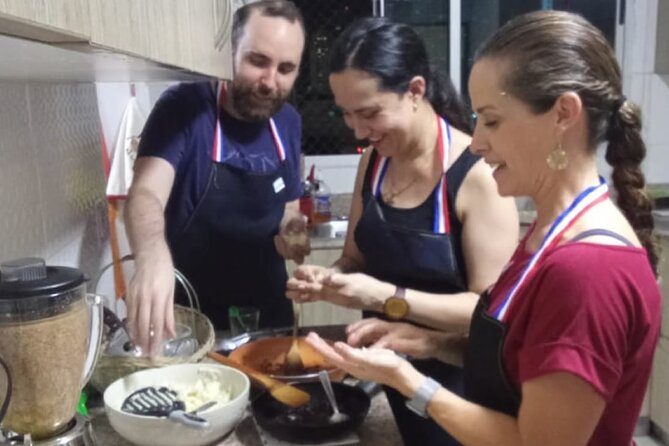
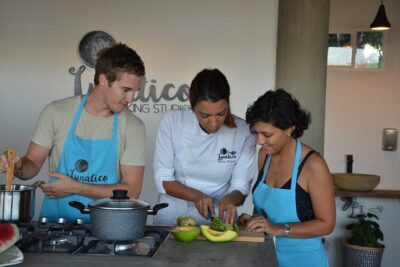
Dinner turns into a cooking party. In Cartagena, you cook 10 Colombian recipes in Jose and Marina’s home kitchen, and the first sip of a cold drink sets the mood fast. You’ll be working in a real neighborhood home kitchen, not a stage-like space.
I love how Jose and Marina teach the food with stories, not just instructions. I also like that it’s truly hands-on with 10 recipes you chop, fry, simmer, and season yourself. One thing to consider: with bottomless cocktails, the class stays upbeat and a bit party-ish, so plan your pace.
In This Review
- Key highlights at a glance (what makes this class special)
- Cartagena at 6:00 pm, when the cooking class becomes the plan
- Your hosts Jose and Marina: storytelling plus real technique
- How the class actually feels: chopping, sizzling, and tasting as you go
- Menu walk-through: from carimañolas to cocadas
- Starters: carimañolas and butter cassava
- Arepas de queso: griddle cooking you can actually repeat
- Main comfort foods: patacones, empanadas, and ajiaco
- A coastal classic: arroz con coco
- Dessert: tres leches and cocadas
- Bottomless drinks: mojitos, caipirinhas, and local favorites
- Small group size (max 6) and why it matters
- Where it happens: Manga, Cartagena, and a “back at base” ending
- Value check: is $85 worth it for 10 recipes and bottomless drinks?
- Who this class is perfect for (and who should skip it)
- Practical tips before you go
- Should you book the 4-hour cooking class in Cartagena?
- FAQ
- Where does the cooking class start in Cartagena?
- What time does the class begin?
- How long is the experience?
- What do you cook during the class?
- Is the class taught in English?
- How large is the group?
- Is the class alcohol included?
Key highlights at a glance (what makes this class special)
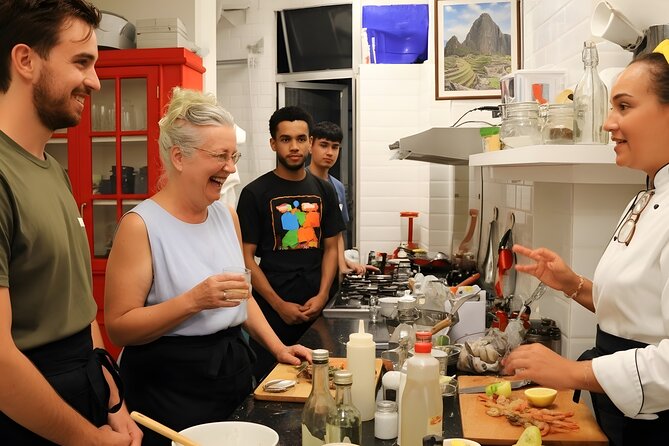
- 10 recipes, hands-on cooking: You don’t just watch. You work through starters, mains, sides, and dessert.
- Bottomless mojitos, caipirinhas, and local drinks: The drinks are part of the experience, keeping the energy up while you cook.
- Small group size (max 6): More attention at the cutting board and less time waiting your turn.
- Hosted by Jose and Marina in English: You get guidance in English, with personal explanations as you go.
- A full shared feast at the end: You sit down together and eat what you made, family-style.
Cartagena at 6:00 pm, when the cooking class becomes the plan
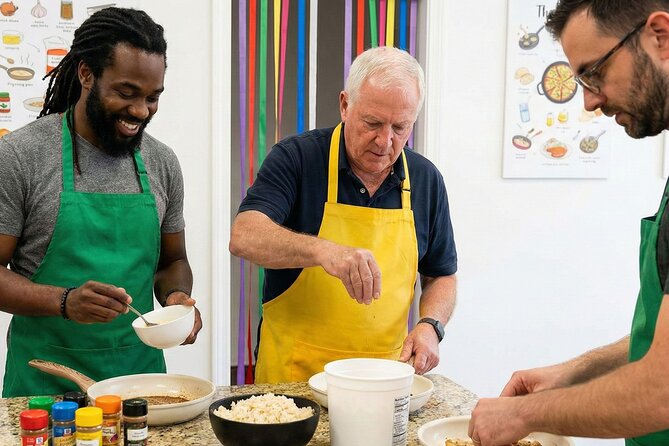
This starts at 6:00 pm in Manga, and it runs about 3 hours 30 minutes. That timing is smart because Cartagena can feel hottest earlier in the day, and evenings are when the city really starts to loosen up. The class also ends back at the meeting point, so you’re not guessing how to get home after.
The vibe is part cooking workshop, part celebration. You’re walking into a warm home where drinks and conversation are already part of the rhythm, so the experience feels like “an afternoon with dinner at a friend’s place,” not a formal culinary lecture.
More Cooking Classes in Cartagena
- Small-Group Colombian Cooking Class in Cartagena with Local Chefs
★ 5.0 · 466 reviews - Cooking Class In A Real Restaurant At Old City
★ 5.0 · 180 reviews - SkyKitchen 4 Course Cooking Class
★ 5.0 · 157 reviews
Your hosts Jose and Marina: storytelling plus real technique
Jose and Marina are the heart of the class. They guide you through each dish, but the teaching style matters. You’re not just getting a list of steps. You’re learning why the food is done that way, and what to look for while it cooks.
That approach is practical. When you understand the logic behind things like frying, griddling, and simmering, you’re more likely to repeat it later. And because the group is kept small (maximum of 6 people), you’re more likely to get specific help when something is taking longer than expected.
How the class actually feels: chopping, sizzling, and tasting as you go
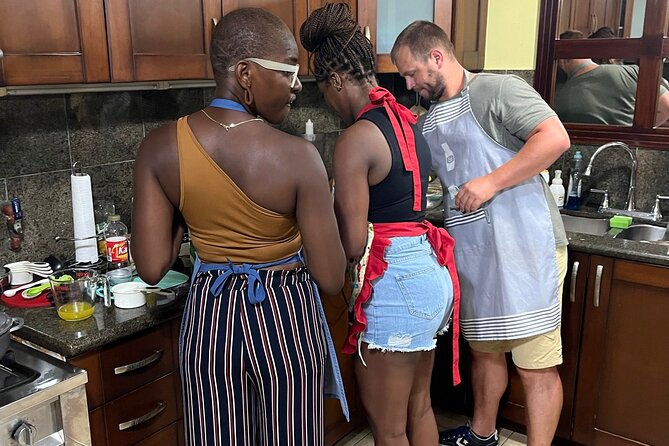
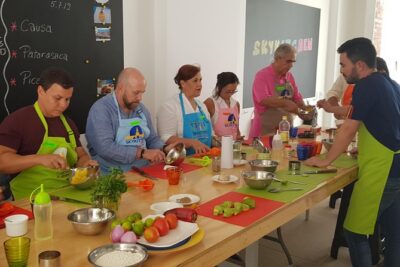
The class is built around active cooking. Expect to spend time at the prep stations and the heat stations, doing everything from chopping ingredients to frying and seasoning. Even if you’re a confident cook, the fun part is how Colombian comfort foods come together with flavors that feel familiar and new at the same time.
You’ll also be tasting along the way, because learning in the kitchen works best when you can connect steps to flavor. The bottomless drinks help with that social side, but they also make it easier to relax, ask questions, and keep the afternoon moving.
Menu walk-through: from carimañolas to cocadas
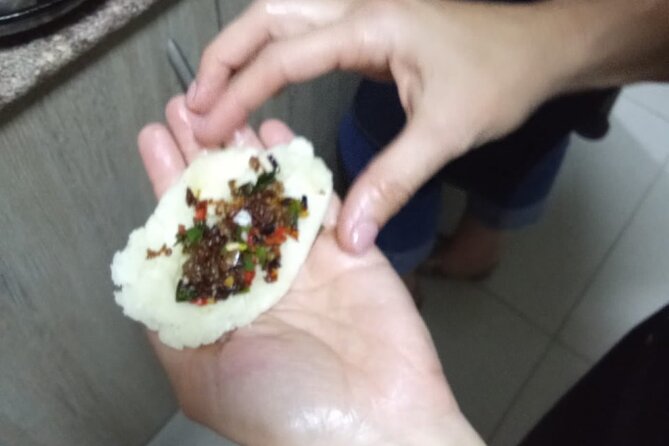
Here’s what you’re working through in the class, and what each dish means on the plate.
A few more Cartagena plans worth comparing
- Bazurto Market Tour and Cooking Class in Cartagena
★ 5.0 · 131 reviews - 5-Hour Cooking and Tasting Class with Market Small Group Tour
★ 5.0 · 19 reviews - Cartagena Local Market Tour and Cooking Class
★ 4.5 · 17 reviews - Cooking Class 4 Hours with a local Mom in Cartagena
★ 5.0 · 9 reviews
Starters: carimañolas and butter cassava
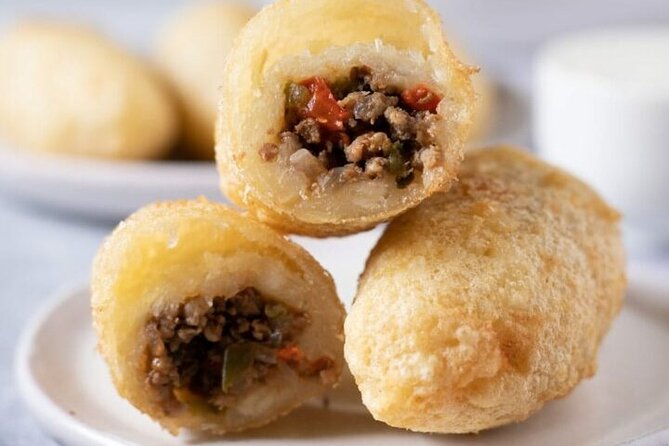
Carimañolas are cassava fritters filled with seasoned meat or cheese. The key idea is texture plus filling. You’re not just frying dough, you’re aiming for crisp outside and a flavorful center. It’s a great first dish because it teaches you how cassava behaves when it hits hot oil.
Butter cassava (boiled mandioca finished with herbs and butter) is a comforting counterpoint. It’s softer, more straightforward, and it gives you a sense of how local roots and simple finishing techniques create a satisfying dish without a lot of fuss.
Arepas de queso: griddle cooking you can actually repeat
Next up is arepas de queso, cheese-filled corn cakes cooked on the griddle. This is the kind of cooking that turns into a take-home win. Once you see how the heat controls the outside and the cheese handles melting, you can picture making it later at home.
If you’ve only had arepas as a store-bought snack, this format helps you understand them as a cooking process, not a packaged product.
Main comfort foods: patacones, empanadas, and ajiaco
Patacones are twice-fried green plantains with savory toppings. The “twice-fried” part matters. The first fry sets the shape and softens, and the second fry is what builds crunch. Even if toppings are adjustable, the plantain technique is the real lesson.
Empanadas Colombianas are turnovers with fillings that can be beef, chicken, or vegetarian. This part teaches you how to work with stuffed dough and seal it properly so it stays intact while cooking. You’ll likely notice that seasoning inside the filling is just as important as what happens outside.
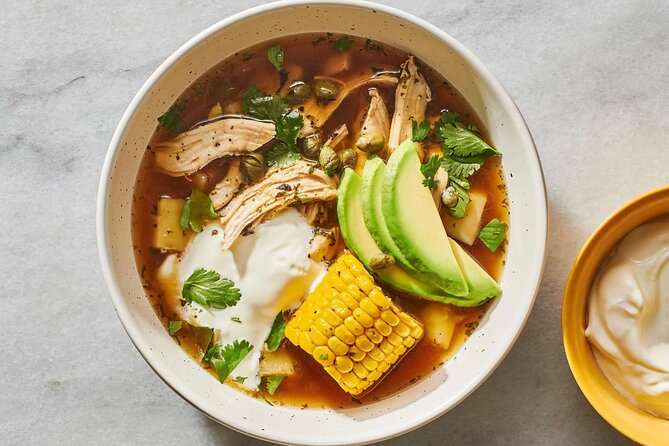
Ajiaco soup brings the class into a bowl. It’s a traditional chicken and potato soup with local herbs. Soup is a different kind of skill, because you’re managing flavor over time. It also feels like the class’s “sit down and breathe” moment, even though you’re still cooking.
A coastal classic: arroz con coco
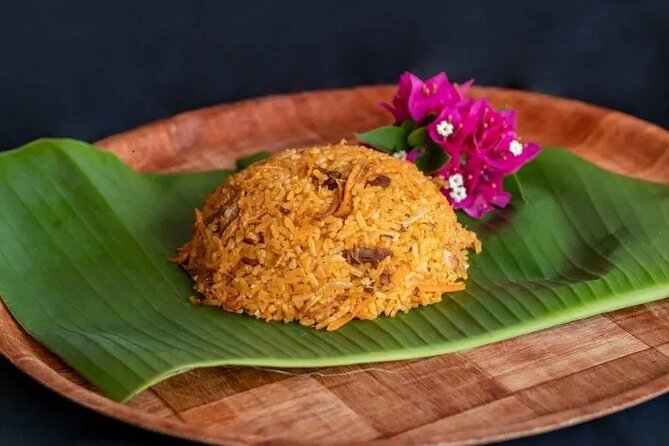
Arroz con coco (coconut rice) is a coastal Colombian staple. It adds sweetness and aroma without turning the meal into dessert. It also balances the heavier fried items earlier, giving the feast a more rounded feel.
If you’re the type who likes your meal to move through textures, this is a key dish. Fried and stuffed foods can dominate, and rice helps reset your palate.
Dessert: tres leches and cocadas
For dessert you get tres leches cake, sponge cake soaked in three types of milk. It’s classic for a reason, and in this setting it feels earned because you’ve already been working through savory dishes. The soaking style makes it soft and pudding-like, so it’s not about crisp sweetness, it’s about creamy comfort.
Then cocadas, sweet coconut bites, finish things off. They’re a coconut-heavy finale that keeps the flavor profile consistent with the earlier coconut rice.
Bottomless drinks: mojitos, caipirinhas, and local favorites
The class includes bottomless cocktails with unlimited mojitos, caipirinhas, and local drinks. This is one of the biggest reasons people remember the experience, because it turns the cooking into a social event.
A quick practical note: the drinks are part of the value here, but they also mean you should pace yourself. You’ll be doing hands-on cooking, and kitchen tasks are easier when you’re focused. If you want to sip and still take your time chopping and tasting, you’ll have a better experience.
Small group size (max 6) and why it matters
With a maximum of 6 travelers, the class avoids the common problem of cooking schools where you feel like an observer. Here, you’re more likely to get personal guidance, and it’s easier to ask questions while you’re actively cooking.
It also makes the shared meal feel more communal. Sitting down together is part of the design, and smaller groups tend to lead to real conversation instead of a quick photo and scramble.
Where it happens: Manga, Cartagena, and a “back at base” ending
The meeting point is in Manga, Cartagena, and the activity ends back at the meeting point. That matters because Cartagena can be a maze after dark if you’re hopping between neighborhoods. You’ll save time and stress by knowing your route is handled.
Also, Manga is a good place to start an evening plan because it feels local. You’re less likely to feel like you’re staging your night around one tourist strip. This is the kind of outing that anchors your evening in a normal neighborhood routine.
Value check: is $85 worth it for 10 recipes and bottomless drinks?
At $85 per person, the value is mainly about three things you get together: 10 recipes, bottomless drinks, and a small-group, hosted format in a home setting.
If you’ve done cooking classes before, the usual trade-off is either fewer dishes or fewer included extras. Here, you get a menu that moves through multiple skill types: frying, griddling, stuffing, soup, and dessert. And the drinks are not a token welcome drink, they’re part of the session.
One thing to watch is your goal for the night. If you’re looking for quiet, low-energy cultural touring, a cooking-and-cocktails format may feel more “party dinner” than “food education.” If, however, you want hands-on fun with real dishes and a social table, the price starts to make more sense.
Who this class is perfect for (and who should skip it)
This is ideal if you:
- Want a hands-on way to learn Colombian food, not just taste it
- Like food plus conversation, especially in a small group
- Enjoy cocktails with your meals and don’t mind a lively atmosphere
- Prefer an experience that ends neatly back where it started
You might skip it if you:
- Want an early start or an all-day activity
- Prefer a quiet, alcohol-free experience
- Don’t enjoy cooking tasks like frying, stuffing, or seasoning
Practical tips before you go
A few things will help you get the most out of the night.
- Eat lightly beforehand if you can. The class ends with a shared feast, and the menu includes several filling dishes.
- Wear comfortable, easy-to-move clothes. You’ll be active in the kitchen.
- Drink water between cocktails if you want to stay sharp. Bottomless drinks make pacing your friend.
- Ask questions early. With a small group and hosts Jose and Marina, you’ll likely get clearer answers if you start asking at the beginning rather than near dessert.
Should you book the 4-hour cooking class in Cartagena?
I’d book it if your ideal Cartagena night looks like this: you cook real Colombian dishes, learn the techniques behind them, and end seated with the people you cooked beside. The pairing of 10 recipes plus bottomless mojitos and caipirinhas is a strong combination for value, especially in a small group with English guidance from Jose and Marina.
I’d think twice if you want a low-drink, low-energy outing, or if you’re easily overwhelmed by active kitchen work. In that case, you may prefer a more relaxed food-focused plan.
FAQ
Where does the cooking class start in Cartagena?
It starts in Manga, Cartagena, Bolivar, Colombia.
What time does the class begin?
The start time is 6:00 pm.
How long is the experience?
It runs about 3 hours 30 minutes.
What do you cook during the class?
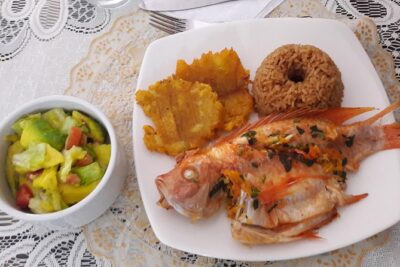
You cook 10 traditional Colombian dishes and sample them as you go, including carimañolas, arepas de queso, patacones, empanadas Colombianas, ajiaco soup, arroz con coco, tres leches, and cocadas, plus other items from the menu.
Is the class taught in English?
Yes, it is offered in English.
How large is the group?
The experience has a maximum of 6 travelers.
Is the class alcohol included?
Yes, it includes bottomless cocktails such as mojitos, caipirinhas, and local drinks.
Hot off the list in Cartagena
- Private Baru Aviary Tour with Lunch Included★ 4.5 · 26 reviews
- SkyKitchen 2-Hour Cocktail Class in Cartagena★ 5.0 · 23 reviews
- Rosario Islands Private Day – Exclusive VIP Escape★ 5.0 · 21 reviews
- CITY WALLED CITY SEGWAY SKATEBOARD TOUR and GETSEMANI★ 5.0 · 30 reviews
- Shore Excursion private Luxury City tour of Cartagena★ 5.0 · 8 reviews
- Cartagena Culinary Private Tour: Local Flavors & Hidden Gems★ 4.0 · 6 reviews
- Zip Through Walled City and Barrio Getsemani by Segway★ 5.0 · 4 reviews
- Shore Excursion Mangroves tour★ 4.5 · 3 reviews
Cooking Classes, compared.
Small-Group Colombian Cooking Class in Cartagena with Local Chefs
Read our review →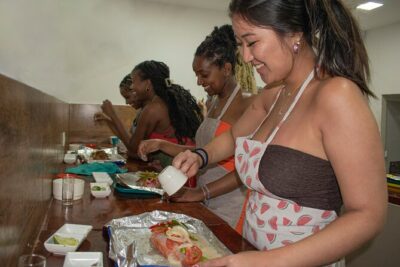
Bazurto Market Tour and Cooking Class in Cartagena
Read our review →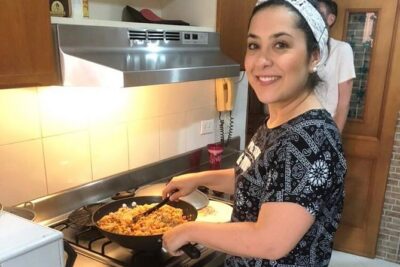
Private Colombian Cooking Class in Medellin with a Local Family
Read our review →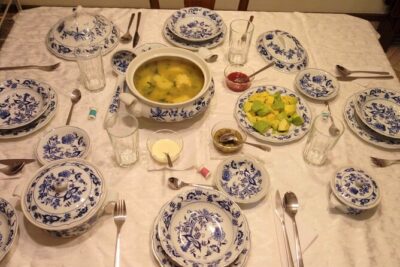
Plaza Minorista Tour and Home Cooking in Medellín with Daniela
Read our review →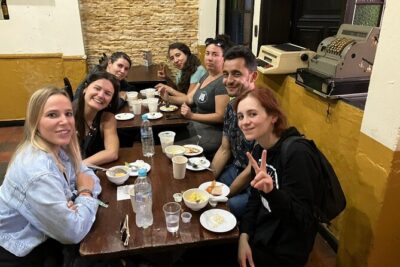
Private Colombian Cooking Class and Market Tour In Bogota
Read our review →
5-Hour Cooking and Tasting Class with Market Small Group Tour
Read our review →Browse the lists this tour appears in