REVIEW · BOGOTÁ TOURS
Armed Conflict and Violence Tour in Bogotá, Colombia
A good story can change how you look at a city. This low-cost armed conflict and violence tour in Bogotá uses real locations tied to Colombia’s hardest chapters, explained by in-person bilingual local guides. You are not just ticking off sights, you are learning how violence reshaped politics, media, and daily life.
I like two things a lot. First, it ties big, painful events to specific corners of Bogotá, from the assassination of Jorge Eliecer Gaitán and the Bogotazo to the formal power of Plaza Bolívar. Second, the guide speaks in both English and Spanish, which makes the context easier to follow even if your Spanish is basic.
One drawback to weigh: the subject matter is heavy. You are walking through topics tied to political violence and cartel history, and the tour depends on good weather (it is canceled for poor conditions). If you prefer light, upbeat sightseeing only, this one may feel emotionally intense.
In This Review
- Key highlights you should know
- Where Bogotá’s power and pain share the same street corners
- Gaitán and the Bogotazo: why one death changed a whole country
- Parque de los Periodistas: conflict and the fight to be heard
- Chorro del Quevedo: old Bogotá and the wider Latin American story
- Banco de la República museums: cartel history, growth, and downfall
- The Ministry of Foreign Affairs: diplomacy next to hard truths
- Plaza Bolívar: the state’s core, surrounded by history
- Centro Cultural Gabriel García Márquez: culture as a response to conflict
- Price and logistics: why $12 can be a smart value in Bogotá
- Who should book, and who might skip it
- Should you book this Armed Conflict and Violence tour?
- FAQ
- How long is the Armed Conflict and Violence Tour in Bogotá?
- What is the price of the tour?
- What is included in the tour price?
- Does the tour include private transportation?
- Where do you meet and where does the tour end?
- Are the stops free to enter?
- What is the cancellation policy?
Key highlights you should know
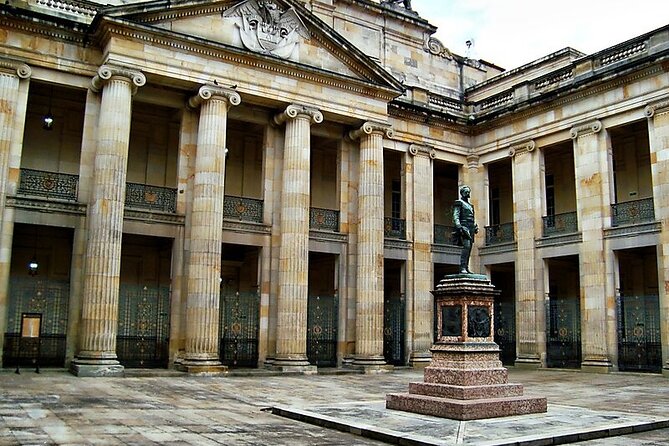
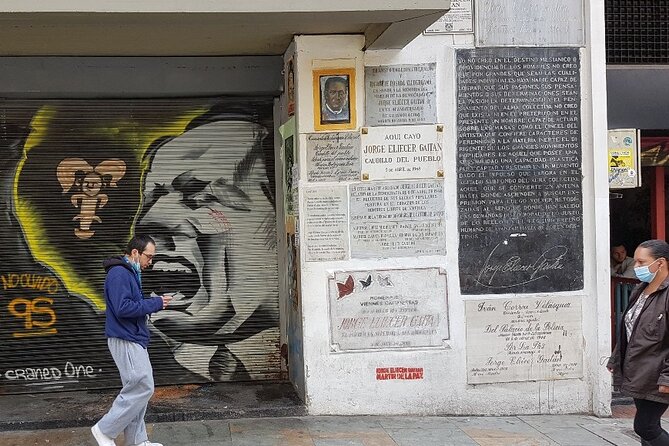
- Jorge Eliecer Gaitán Monument connects the April 9, 1948 assassination to the Bogotazo riots and La Violencia
- Parque de los Periodistas Gabriel García Márquez links conflict to the struggle for press freedom
- Plaza del Chorro del Quevedo gives you grounding in Bogotá’s early story and the region’s foundation
- Museos del Banco de la República focuses on how Medellín and Cali cartels grew and why they faced major decline
- Plaza Bolívar and the Ministry of Foreign Affairs show how the state, diplomacy, and law sit in the middle of history
Where Bogotá’s power and pain share the same street corners
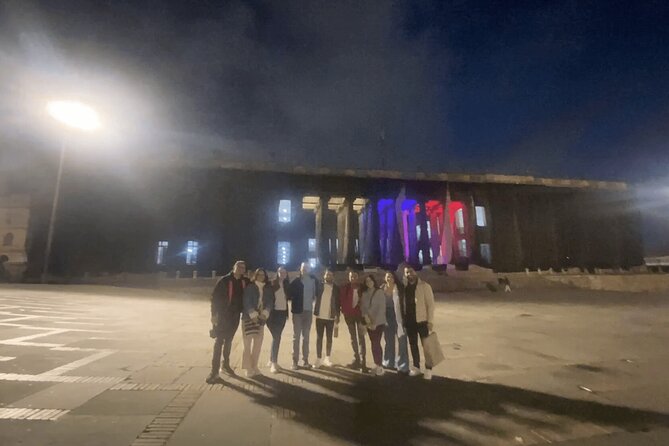
This tour is only about 2 hours and 15 minutes, but it covers a lot of emotional ground. You start at Journalists’ Park Gabriel García Márquez, then work your way through major public spaces, monuments, and cultural sites that are directly connected to Colombia’s armed conflict era.
The price is a huge part of the appeal. At $12 per person, you are getting an organized walking experience plus an in-person guide who can translate the story for English speakers. You are also seeing stops that are listed as free admission, which helps the value stay strong.
The format matters, too. The group is capped at 20 travelers, so you are less likely to feel like a face in a crowd. It is also a mobile ticket experience, which is convenient if you do not want to fuss with paper confirmations while traveling.
More things to do in Bogota:
- Bogotá Bike Tour
★ 5.0 · 3,329 reviews - Bogota: Bicycle City Tour
★ 4.9 · 2,156 reviews - Zipaquirá: Salt Cathedral Group Tour with Pickup
★ 4.8 · 1,606 reviews
Gaitán and the Bogotazo: why one death changed a whole country
You begin at the Jorge Eliecer Gaitán Monument, a site tied to April 9, 1948. Gaitán was a charismatic political leader who was assassinated, and that single moment triggered the infamous Bogotazo riots. The story then moves into La Violencia, the era that followed with widespread violence across Colombia.
What you gain here is perspective. It is easy to treat these as distant history facts. A local guide’s explanation helps you see the cause and effect, how political tension can explode fast, and how public outrage turns into chaos in a major city like Bogotá.
Practical note: this is one of the most important stops conceptually, so if you show up a few minutes late, you will miss context that the rest of the tour builds on.
Parque de los Periodistas: conflict and the fight to be heard
Next you head to Parque de los Periodistas Gabriel García Márquez. The park is dedicated to journalists, which is a smart choice for this kind of tour. In conflict zones, information is not neutral, it becomes a target, a weapon, and a lifeline.
This stop is short, but it changes the lens. Instead of focusing only on armed groups and politics, you are asked to think about freedom of expression and what media faced during times of conflict. The connection to Gabriel García Márquez is especially meaningful because his name is tied to storytelling, literature, and how societies process trauma.
If you care about how truth travels during unstable periods, this is one of the most thought-provoking stops. It also offers a change of pace, a moment to slow down and absorb rather than just walk.
Chorro del Quevedo: old Bogotá and the wider Latin American story
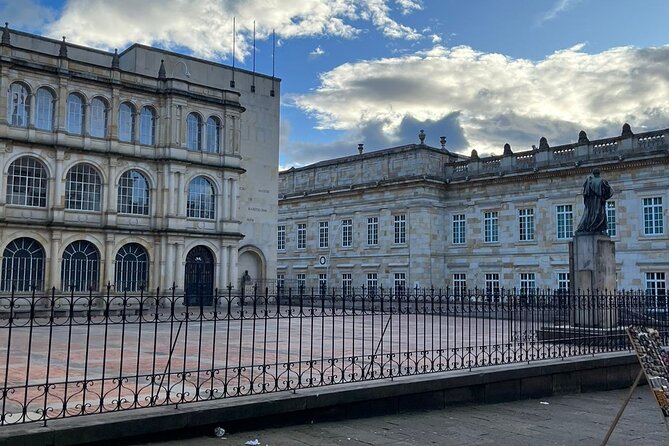
Plaza del Chorro del Quevedo is where the tour grounds itself geographically and historically. The focus here is the foundation of Bogotá, plus some context about the history of the continent.
Why this matters: when a tour jumps straight into modern violence, you can lose the sense of continuity. This plaza helps you remember that today’s institutions and conflicts did not appear in a vacuum. They grew out of earlier city-building, colonial-era foundations, and the long formation of social and political structures across Latin America.
This stop is brief, so it is not going to turn into a full lecture about pre-modern Bogotá. Still, it provides useful context so the later stops feel less random and more connected.
Same city, a completely different day:
- La Candelaria, Monserrate and Museums Bogotá Private City Tour
★ 5.0 · 1,567 reviews - Shared Tour of the Historic Candelaria in Bogotá
★ 5.0 · 1,551 reviews - Bogotá: Guided La Candelaria Walking Tour
★ 4.8 · 1,229 reviews - Graffiti Tour: a fascinating walk through a street art City
★ 5.0 · 1,074 reviews
Banco de la República museums: cartel history, growth, and downfall

One of the most direct and uncomfortable parts of the tour is at Museos del Banco de la República. Here you talk about Medellín and Cali cartels. You also cover how these powerful drug groups grew, and what led to their downfall.
The key value of this stop is cause-and-effect. You are not just hearing names and dates, you are trying to understand how organizations expanded, why they became so entrenched, and what pressure eventually changed the balance.
There is also specific attention to the extradition of Cali cartel members to the United States. Even if you have only heard the term before, this is the kind of detail that helps you link local violence to international consequences. It is also a reminder that conflict and power rarely stay within one country’s borders.
A consideration: the topic is intense. If you already know the basics and want a lighter thematic approach, you might find this section heavy. But if you want real context behind Colombia’s armed conflict and violence, it is hard to skip.
The Ministry of Foreign Affairs: diplomacy next to hard truths
You continue to the Passport Office North Headquarters at the Ministry of Foreign Affairs. The tour frames this building as a central piece of Colombia’s diplomatic efforts, and notes that it was the first presidential palace.
This stop is a good counterweight to the darker subject matter. It forces you to think about how countries represent themselves, how governments maintain legitimacy, and how formal institutions keep functioning even when violence disrupts society. Seeing the physical seat of diplomacy helps you connect story to place.
It is only about 10 minutes, so the emphasis stays on symbolism and context rather than architecture trivia. But that makes it easier to fit into a short tour without turning into a museum marathon.
Plaza Bolívar: the state’s core, surrounded by history
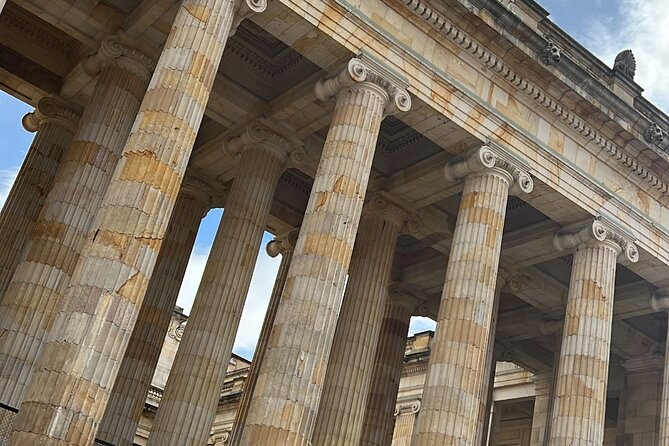
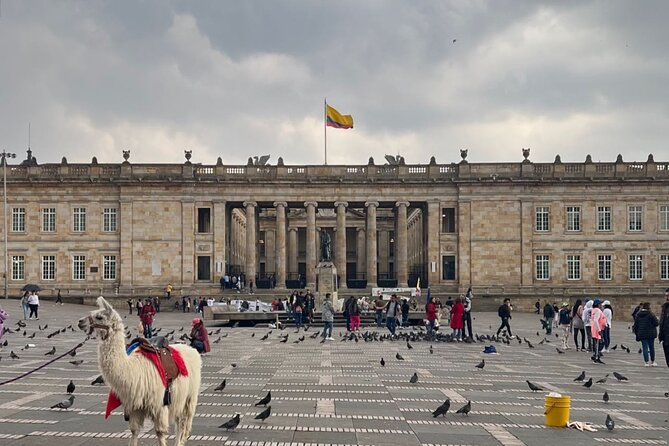
You finish at Plaza de Bolivar de Bogota, Bogotá’s main square. The plaza sits at the center of major institutions, including the National Capitol, the Supreme Court, and the Presidential Palace. From here, you get a clear sense of how government, law, and public space sit side by side.
This stop is more than scenic. It is about meaning. After talking about political violence, journalists, and cartel history, Plaza Bolívar gives you a final piece of the puzzle: what the state looks like when it is still standing, still governing, even after difficult eras.
If you want an image in your head that sticks, this is the one. It is where you can look around and think, this is the stage where decisions get made, and where the country has tried to move forward.
Centro Cultural Gabriel García Márquez: culture as a response to conflict
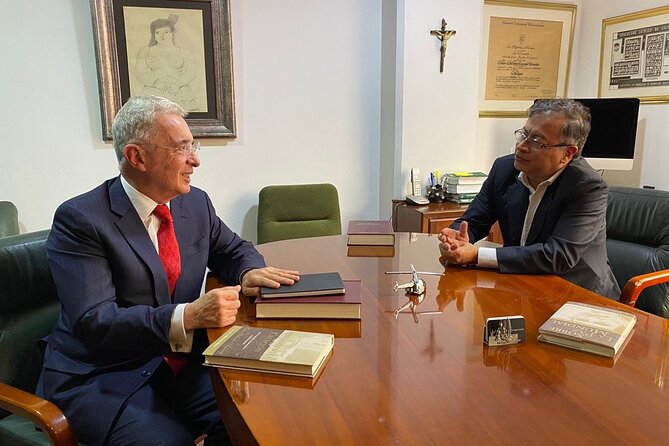
The tour also includes Centro Cultural Gabriel García Márquez. This cultural stop focuses on reflections through literature and arts, linked to Colombia’s turbulent history.
This part helps you land the plane. After walking through monuments, plazas, and institutions, culture gives you a way to process what you heard. It also reinforces the tour’s repeated theme: Colombia’s story is not only about violence, it is also about interpretation, memory, and the attempt to build meaning after trauma.
It is brief, so it will not replace a deep museum visit. Think of it as a guided nudge toward what to read or explore next if the topic stuck with you.
Price and logistics: why $12 can be a smart value in Bogotá
At $12 per person, this tour is priced for accessibility. You are not paying for private transport, because the tour explicitly does not include transportation. Instead, you are paying for organization, a guide who can translate and explain, and a structured route through significant sites.
Duration is around 2 hours and 15 minutes, which is a realistic window for a walking tour that includes multiple stops. It also helps you fit it into a busy schedule without sacrificing too much time.
Group size is capped at 20 travelers, which usually leads to better Q and A than a huge mass tour. You also get a mobile ticket, so you can keep it simple.
Two practical tips for getting the most out of the time:
- Plan to arrive at the meeting point using public transportation, since private transport is not included
- Wear comfortable shoes and be ready for walking in a city-center area
One more thing: good weather is required. If conditions are poor, you will likely have to switch dates or get a full refund, so do not schedule this as your only option for that day.
Who should book, and who might skip it
I recommend this tour if you want context. If you are the type of traveler who reads signs and wants the story behind them, you will appreciate how the guide connects each stop to a bigger theme: political rupture, press freedom, city origins, cartel rise and decline, diplomacy, and state institutions.
It is also a decent fit if you are traveling with someone who prefers walking and discussion rather than loud party energy. The bilingual guide format helps if you and your travel partner do not speak the same language fluently.
I suggest thinking twice if you want light sightseeing. The tour focuses on armed conflict and violence, including assassination-triggered riots and cartel history. You can still learn a lot, but you should expect the mood to be serious.
Should you book this Armed Conflict and Violence tour?
Book it if you want a low-cost, guided route that connects Colombia’s history to specific Bogotá locations. At $12, the value is strong, especially because the stops listed are free admission and the guide works in both English and Spanish.
Skip it if you are sensitive to heavy topics, or if you already feel overwhelmed by political news and violent history. This is not a quick photo tour, it is a guided explanation of how violence shaped the country.
And one practical caution: while the provider’s communication response indicates they can refund when there is a problem, I still recommend you confirm meeting details close to start time. That way, you protect the time and money you are putting into the experience.
FAQ
How long is the Armed Conflict and Violence Tour in Bogotá?
The tour lasts about 2 hours and 15 minutes.
What is the price of the tour?
The price is $12.00 per person.
What is included in the tour price?
It includes an in-person guide who speaks both Spanish and English.
Does the tour include private transportation?
No, private transportation is not included.
Where do you meet and where does the tour end?
You meet at Journalists’ Park Gabriel García Márquez in Bogotá, and the tour ends back at the meeting point.
Are the stops free to enter?
The listed stops have admission ticket pricing marked as free.
What is the cancellation policy?
You can cancel for a full refund up to 24 hours before the experience starts. If you cancel less than 24 hours before, the amount paid is not refunded.
Hot off the list in Bogota
- Tour of Zipaquirá: Visit the Salt Cathedral and the main squares★ 4.5 · 55 reviews
- Zipaquirá and Salt Cathedral Muisca Heritage with Guide – Private★ 4.5 · 23 reviews
- Catedral de Sal desde Bogotá en Tren★ 5.0 · 5 reviews
- LOCAL GUIDE Zipaquirá PRIVATE TOUR – Salt Cathedral and Salt Oven★ 5.0 · 24 reviews
- Zipaquira Salt Cathedral★ 5.0 · 4 reviews
- Zipaquirá Salt Cathedral: An architectural wonder.★ 4.5 · 24 reviews
- Private Zipaquira Salt Cathedral and Guatavita Lagoon Tour from Bogota★ 4.5 · 44 reviews
- Zipaquira Salt Cathedral★ 4.5 · 12 reviews
Bogotá Tours, compared.
La Candelaria, Monserrate and Museums Bogotá Private City Tour
Read our review →
Shared Tour of the Historic Candelaria in Bogotá
Read our review →
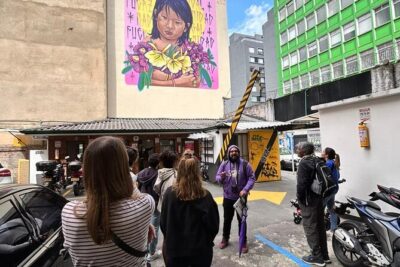
Graffiti Tour: a fascinating walk through a street art City
Read our review →