
REVIEW · COMUNA 13 TOURS
Graffiti Tour: a fascinating walk through a street art City
That first splash of color makes you look twice. This Bogotá graffiti tour is more than pretty walls. You get street art with clear social context, from human rights and migration to politics, music, and identity.
What I like most is the way the guide turns each wall into a story you can actually follow. I also love that you’re not just staring at paint, you’re learning techniques and symbols, from stencils to aerosol work and even the contrast between different methods like aerosol versus vinyl.
The one drawback to think about is the walking. This is a city street route with some time at each stop, so it is not the pick for mobility limits.
In This Review
- Key things you will notice on this Bogotá graffiti walk
- Meeting the art where it lives, not where it is stored
- How the $15 price works out in real value
- Stop-by-stop: what you will see and why it matters
- Stop 1: Gold Museum start point, welcome and tour goals
- Stop 2: Procuraduría General de la Nación and the mural tied to human rights
- Stop 3: parqueadero publico and the migration mural with an indigenous girl portrait
- Stop 4: Casa Quiebra Canto, two salsa murals tied to song and nightlife
- Stop 5: Torre Bacata, the tallest illegal graffiti in the country
- Stop 6: Viuda Negra Tattoo Gallery and the hooded gaze with aerosol versus vinyl
- Stop 7: parqueadero Moto with three murals, including stencils from travel portraits and parenting themes
- Stop 8: LITOGRAFIA CH stencil for Venezuelan migrants
- Stop 9: Park motos smokes shop CENTRAL and the origins of graffiti, from cave art to public space
- Stop 10: Torre Ventto, political posters and stencils for current social issues
- Stop 11: Alianza Francesa Bogotá, art plus science plus environment for the Amazon
- Stop 12: Superdorado de Aves and indigenous cosmovision
- Stop 13: Parqueadero Público la 3 and Comuna 13, Operation Orion, and false positives
- Stop 14: Cafetería La Ventantia, the Hitnu last indigenous leader and the tension between development and preservation
- Stop 15: COOTRADIAN, an abstract letter reading game tied to aerosol workshops
- Stop 16: Cl 20 #430 and murals of social demands from Bogotá political artists
- Stop 17: The Spot Bogotá Centro and the tallest wall in the country
- What this tour teaches you, beyond graffiti techniques
- Who should book this, and who might not love it
- Should you book Capital Graffiti Tours in Bogotá?
- FAQ
- What is the duration of the graffiti tour in Bogotá?
- How much does it cost?
- Where does the tour start and end?
- Is admission included for the mural and museum stops?
- What is included in the price?
- Is food included?
- Is the tour good for beginners?
- Is the tour accessible for people with mobility restrictions?
- Are there any restrictions on animals or getting there?
- Can I get a refund if I cancel?
Key things you will notice on this Bogotá graffiti walk
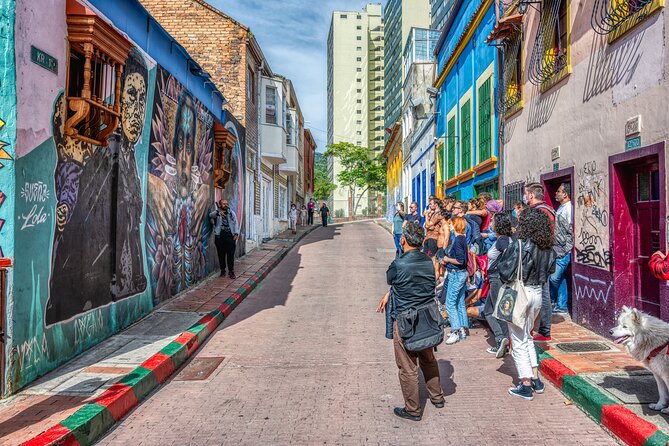
- A guide who links art to what is happening in the streets
- 17 planned stops, each tied to a specific theme, from migration to music and social demands
- Stencils, letters, and technique talk, including a hands-on style moment with an abstract letter reading game
- No entry ticket pain, with stops marked as free to access during the tour
- Small group size (max 15) that makes questions easy
- A finish at an art gallery where more than 100 artists show work
Meeting the art where it lives, not where it is stored
This tour is built like a walk with chapters. You start at Capital Graffiti Tours, right by Cra. 6 #15-88 in Santa Fé, Bogotá. From the first minutes, the guide frames what you’re going to look for, so the murals stop feeling random.
You’ll finish at Ocio Gallery on Cra. 5 #26b-26, and that ending matters. It is a useful mental bridge, moving from public walls into a gallery space where you can keep browsing without the pressure of rushing to the next stop.
Duration is about 2 hours 30 minutes, and the pace works because there are many short stops. Most entries are marked free, so you’re spending your time learning, not waiting in lines.
More Walking Tours in Bogota
- Bogotá: Guided La Candelaria Walking Tour
★ 4.8 · 1,229 reviews - Walking Tour in La Candelaria Bogotá
★ 5.0 · 859 reviews - Bogotá Tour: Monserrate, Food, City Walk & Botero Museum
★ 5.0 · 328 reviews
How the $15 price works out in real value
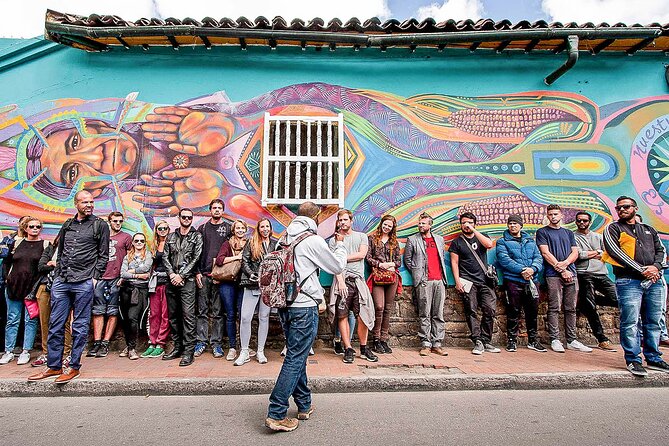
At $15 per person for roughly 2.5 hours, the value comes from three things. First, you get an experienced English-speaking guide to connect the dots between art and real-life issues. Second, the route hits a lot of different kinds of street expression in one go, so you are not paying just for one mural.
Third, the tour is capped at 15 people. That small group limit often means you get more conversation instead of just hearing facts over a loud crowd. If you’re short on time in Bogotá, this is a smart way to sample a wide slice of public art in one afternoon.
One more detail I appreciate: food is not included. That sounds basic, but it matters because it nudges you to plan a snack or meal before you go, instead of trying to solve hunger mid-walk.
Stop-by-stop: what you will see and why it matters
Below is the flow you can expect, with what each stop adds to your understanding of Bogotá street art.
Stop 1: Gold Museum start point, welcome and tour goals
You begin right in front of the Gold Museum. The guide gives a warm welcome and lays out what the tour is trying to teach you, which is huge for street art. Without that framing, you can end up focusing only on style.
This first stop is also a mental warm-up. You get set up to notice symbolism, references, and how street artists communicate under everyday conditions.
More Comuna 13 graffiti walks:
- Graffiti Tour in La Candelaria Bogotá
★ 5.0 · 315 reviews - Bogotá: La Candelaria Graffiti & Urban Art Guided Tour
★ 4.7 · 250 reviews - Fun Graffiti Workshop: The Art of Aerosol and Color
★ 5.0 · 73 reviews - Graffiti Tour in La Candelaria Bogotá with Transportation
★ 5.0 · 68 reviews
Stop 2: Procuraduría General de la Nación and the mural tied to human rights
Next, you visit a massive mural at la Procuraduría General de la Nación. It features images created in collaboration with social leaders and human rights defenders.
The theme is direct: violence threatens people working for food sovereignty. The artwork uses metaphor and visual storytelling to show the leaders’ work and values, and you’ll be given context on how expert artists use social communication to make the message readable from the street.
Stop 3: parqueadero publico and the migration mural with an indigenous girl portrait
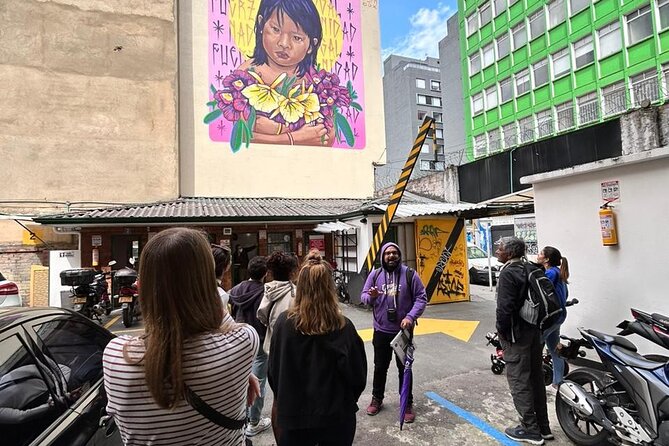
At parqueadero publico, you’ll see a mural recognizing challenges of migration. It includes a portrait of an indigenous girl from a nomadic tribe.
This one is also tied to international commissioning, because the mural was commissioned by the Peruvian embassy and created by two women painters, one from Bogotá and one from Lima. It’s a nice reminder that street art does not always grow only from the neighborhood. Sometimes it is shaped by cross-city collaboration and official support too.
Stop 4: Casa Quiebra Canto, two salsa murals tied to song and nightlife
At Casa Quiebra Canto, you get two distinct salsa culture murals. One connects to the song Lágrimas Negras, while the other captures the energy of salsa dancing in a well-known nightclub setting.
I like this stop because it shifts your thinking. You see that street art can celebrate music culture and movement, not only protest. The social meaning is still there, it’s just expressed through rhythm and community.
Stop 5: Torre Bacata, the tallest illegal graffiti in the country
Now you hit a standout for sheer audacity: Torre Bacata, described as the tallest illegal graffiti in the country. It sits on a semi-abandoned skyscraper called Torre Bakatá.
This is the moment where you feel why graffiti exists as both art and statement. Scale changes the message. When the work is this tall, it stops being a casual tag and becomes a loud visual claim in the city’s skyline.
Stop 6: Viuda Negra Tattoo Gallery and the hooded gaze with aerosol versus vinyl
At Viuda Negra Tattoo Gallery, the mural shows an indigenous person under a hooded woman’s watchful gaze. The artwork explores a contrast between aerosol and vinyl techniques.
This is where technique talk starts to matter more than paint color. When a guide points out materials and method, you learn how artists get different looks and different effects from different tools, and why those choices support the theme.
Stop 7: parqueadero Moto with three murals, including stencils from travel portraits and parenting themes
This stop is built around three murals.
You’ll see work by a renowned artist from Spain who gained prominence in the 1990s. You’ll also encounter a prominent photographer whose travel portraits get turned into stencils, which is a clever translation from camera realism into street graphic language.
The last mural here shifts into a psychological space. It delves into themes of parenting and freedom, so it is not only social commentary, it’s emotional and personal too.
Stop 8: LITOGRAFIA CH stencil for Venezuelan migrants
At LITOGRAFIA CH, the highlight is a stencil artwork focused on the experiences of Venezuelan migrants.
Stencils can feel quick, but the point is often speed with impact. In this case, the message is about people crossing borders and what that experience does to identity and safety.
Stop 9: Park motos smokes shop CENTRAL and the origins of graffiti, from cave art to public space
At Park motos smokes shop CENTRAL, you’ll see a wall covered with graffiti letters and characters that push you to think about origins. The theme explains the relationship between muralism and graffiti, and it takes you on a historical journey, from cave art to public space art.
I like this stop because it gives you a timeline. It helps you connect modern street art to the long human habit of marking space with images and words.
Stop 10: Torre Ventto, political posters and stencils for current social issues
Next is Torre Ventto, an area with political posters and stencils tackling social issues today.
This is a useful contrast after the origin-focused stop. You can see graffiti as an evolving language, adapting to new problems while keeping the same basic impulse: communicate fast and publicly.
Stop 11: Alianza Francesa Bogotá, art plus science plus environment for the Amazon
At Alianza Francesa Sede Centro, you’ll find a collaborative mural that ties art, science, and environment together.
The message focuses on threats facing the Amazon rainforest. This is street art with a global angle, and it’s a reminder that Bogotá walls can carry stories that reach far beyond Colombia.
Stop 12: Superdorado de Aves and indigenous cosmovision
Superdorado de Aves is a tribute to Indigenous cosmovision and cultural heritage.
I find these kinds of murals important because they counter a common tourist habit, treating street art like a visual trend only. Here, you’re looking at cultural worldview, not just aesthetics.
Stop 13: Parqueadero Público la 3 and Comuna 13, Operation Orion, and false positives
At Parqueadero Público la 3, the mural is about Comuna 13 and Operation Orion. It is based on powerful photographs by journalists and centers on community resilience in the face of false positives.
This is a heavy stop, and it’s the kind where context helps you avoid oversimplifying pain into “just another mural.” The guide’s job is to keep it human and specific.
Stop 14: Cafetería La Ventantia, the Hitnu last indigenous leader and the tension between development and preservation
Cafetería La Ventantia holds a stencil of the last indigenous leader of the Hitnu culture. The theme points to tensions between development and the preservation of cultural life.
This works well in a tour like this because it ties into multiple earlier themes: power, survival, identity, and who gets protected when change comes.
Stop 15: COOTRADIAN, an abstract letter reading game tied to aerosol workshops
At COOTRADIAN, you get an abstract letter reading game using letters created by famous graffiti writers. The idea is to introduce the aerosol workshops and make them feel open to all.
This stop is less about staring and more about participating in the language of graffiti. Even if you do not call yourself an artist, it helps you see the logic behind style and typography.
Stop 16: Cl 20 #430 and murals of social demands from Bogotá political artists
At Cl 20 #430, you’ll see murals connected to social demands. The mural work highlights foundations of society and social struggles, created by four renowned political artists from Bogotá.
This is a good “big picture” stop right before the finale. By now, you have the background for why political artists choose walls as their medium, and you can spot how themes repeat across the route.
Stop 17: The Spot Bogotá Centro and the tallest wall in the country
You end at The Spot Bogotá Centro, described as the tallest wall in the country. It features diversity and a space for reflecting on a better future based on sustainable social development, including the role of sustainable tourism.
Then you transition into the gallery finish at Ocio Gallery, where more than 100 artists exhibit their work. That last step helps you decide which artists, styles, and themes you want to follow up on after the walk.
What this tour teaches you, beyond graffiti techniques
This is one of those experiences where art history is really political history. Street art here is used to show who has voice and who is being threatened, who is migrating, who is remembered, and who is ignored.
You also learn how different tools shape meaning. Stencils can translate images quickly and sharply. Aerosol work can create atmosphere and texture. Even the contrast between aerosol and vinyl techniques becomes a way to explain choices behind the visuals, not just the result.
The salsa murals and the parenting and freedom theme keep it balanced. Not every mural is protest. Some are celebration, some are grief, some are questions about family and freedom. That range is why I think this tour works so well.
Who should book this, and who might not love it
This tour is a great fit if you want Bogotá’s public art through a story-guided lens. If you like murals but you also care about context, politics, and the human reasons behind the paint, you will get a lot out of this route.
It may be less ideal if you need step-by-step accessibility. The tour notes it is not recommended for mobility restrictions, and with 17 stops over about 2.5 hours, you’ll be on your feet for a while.
If you are traveling solo or as a couple, the small group size helps. You can ask questions without waiting for a megaphone crowd.
Should you book Capital Graffiti Tours in Bogotá?
Yes, if you want a fast, well-guided way to understand why Bogotá walls look the way they do. The price is low for the amount of ground covered, and you get enough stop variety, human rights murals, migration pieces, salsa culture, stencils, political posters, and technique talk, to feel like you sampled a real slice of the city.
I would book it early in your Bogotá stay. Public art tends to click more once you understand the themes, and this tour gives you that foundation in one afternoon.
FAQ
What is the duration of the graffiti tour in Bogotá?
The tour lasts about 2 hours 30 minutes.
How much does it cost?
It costs $15.00 per person.
Where does the tour start and end?
The tour starts in front of Capital Graffiti Tours at Cra. 6 #15-88, Santa Fé, Bogotá. It ends at Ocio Gallery at Cra. 5 #26b-26, Bogotá.
Is admission included for the mural and museum stops?
The stops are marked with admission ticket free for the sites included in the route, so you are not paying entry fees during the walk.
What is included in the price?
The included parts are experienced English-speaking guides and the exploration of multiple street art and graffiti locations.
Is food included?
No, food and tips are not included.
Is the tour good for beginners?
Most travelers can participate, and the guide approach is designed to make the art and its context easier to understand as you go.
Is the tour accessible for people with mobility restrictions?
It is not recommended for travelers with mobility restrictions.
Are there any restrictions on animals or getting there?
Service animals are allowed, and the tour is near public transportation.
Can I get a refund if I cancel?
Free cancellation is available. You must cancel up to 24 hours in advance for a full refund. Canceling less than 24 hours before the start time will not be refunded.
More Street Art Tours in Bogota
- Bogotá Bike Tour with street art
★ 4.5 · 21 reviews - Graffiti Tour: a fascinating walk through a street art City
★ 5.0 · 5 reviews - Bogotá Street Art and Graffiti Tour 3 Hrs
★ 5.0 · 5 reviews - Medellín: Private Comuna 13 Street Art Tour
★ 4.8 · 88 reviews
Hot off the list in Bogota
- Tour of Zipaquirá: Visit the Salt Cathedral and the main squares★ 4.5 · 55 reviews
- Zipaquirá and Salt Cathedral Muisca Heritage with Guide – Private★ 4.5 · 23 reviews
- Catedral de Sal desde Bogotá en Tren★ 5.0 · 5 reviews
- Zipaquira Salt Cathedral★ 5.0 · 4 reviews
- LOCAL GUIDE Zipaquirá PRIVATE TOUR – Salt Cathedral and Salt Oven★ 5.0 · 24 reviews
- Zipaquirá Salt Cathedral: An architectural wonder.★ 4.5 · 24 reviews
- Private Zipaquira Salt Cathedral and Guatavita Lagoon Tour from Bogota★ 4.5 · 44 reviews
- Zipaquira Salt Cathedral★ 4.5 · 12 reviews
Comuna 13 Tours, compared.
Comuna 13 Graffiti Tour, Cable Car & Street Food
Read our review →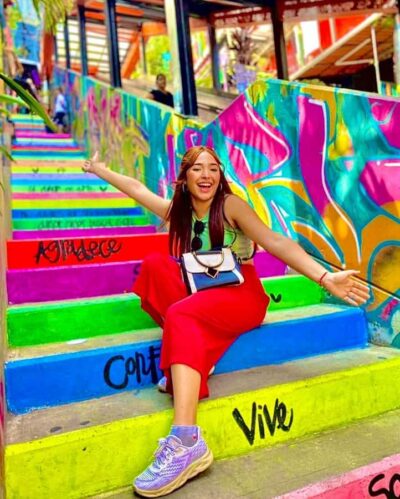
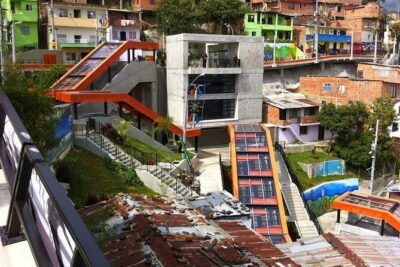
Comuna 13 Graffitour knows the urban art district of Medellín
Read our review →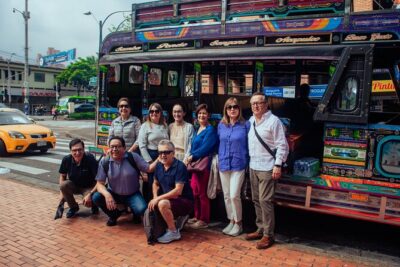
City tour Medellin + Comuna 13 + Graffititour Paisa for a day
Read our review →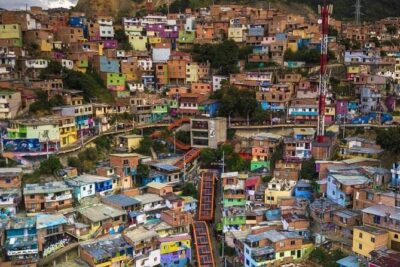
Guided Tour of Comuna 13 Medellín with Snacks Included
Read our review →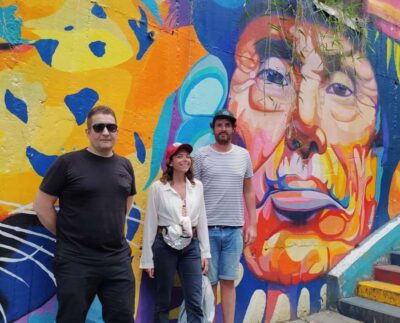
Comuna 13: Esmeralda más cata de café y cerveza tour Inolvidable
Read our review →Browse the lists this tour appears in