
REVIEW · SALSA DANCING CLASSES
Cali Salsa Tour: Learn the history, dance and play instruments
Cali salsa has a living pulse, and this tour teaches you why. You’ll spend about 3 hours in key spots around Cali, connecting salsa history to what you actually do with your feet and hands. It is built as a small-group experience, with plenty of interaction and real music moments, not a sit-and-listen lecture.
I especially like the mix of history plus participation. You start at Museo Raizales De La Salsa, where you see early salsa roots and hear how the city’s first orchestras shaped the sound, then you keep moving through landmarks that tie music to local identity.
One consideration: the day is fast and active, with multiple short stops and some basic dancing and instrument time. It is rated for moderate physical fitness, so go into it ready to walk and to join in at your own comfort level.
In This Review
- Key highlights you’ll feel fast
- A 3-hour Cali salsa lesson that stays fun and human
- Museo Raizales De La Salsa: where Cali salsa starts to make sense
- Plazoleta Jairo Varela: giant trumpets and Cali’s music brain
- Edificio Coltabaco: tobacco, vinyl, and that famous smell
- Kumis Kasimiro and Sin Street: open-air music where you feel it
- ASOMUCAF: souvenirs that help women heads of family
- The dance and instrument part: what you’ll actually do
- Price and value: why $70.67 can feel like a steal
- Meeting points, timing, and how to make this tour smooth
- Who should book this Cali salsa tour, and who might not
- Should you book it?
- FAQ
- How long is the Cali Salsa Tour?
- What is the price per person?
- What locations does the tour include?
- Is admission included anywhere?
- How big is the group?
- Is there free cancellation?
Key highlights you’ll feel fast
- Hands-on instrument time, not just watching someone play
- Museo Raizales De La Salsa with early Cali salsa artifacts, vinyl, and the first instruments
- Plazoleta Jairo Varela and the music connections tied to Grupo Niche and Guayacán
- Sin Street energy at Kumis Kasimiro, where locals gather for open-air music and dancing
- ASOMUCAF souvenir stop, supporting women heads of family in an 18th-century home
- Small group size (max 15), which usually means you get more attention
A 3-hour Cali salsa lesson that stays fun and human
This tour is built for people who want the story and the motion. It runs in the afternoon, starting at 2:00 pm, and finishes at a community-focused stop in San Pedro. The pacing is made of short segments, so you keep fresh eyes on each location and then get practical takeaways you can use later in the city.
You’re not stuck with a giant group either. The experience caps at 15 travelers, which matters because salsa is social. More people means less chance to try the basics. Here, that try-it approach is the point.
Price-wise, $70.67 per person feels fair when you remember what is included at the first museum stop, and what you get afterward. Admission is included at Museo Raizales De La Salsa, while other stops are free. Add in the interactive dance and instrument instruction, and it becomes more of a hands-on cultural session than a typical sightseeing walk.
More Historical Tours in Cali
- Shared Tour of the Historical and Cultural Center of Cali
★ 5.0 · 211 reviews - Shared Tour Cali’s Historical Downtown
★ 4.8 · 143 reviews - Historical Shared Tour Salsa, Graffiti & Resistance in Cali
★ 5.0 · 107 reviews
Museo Raizales De La Salsa: where Cali salsa starts to make sense
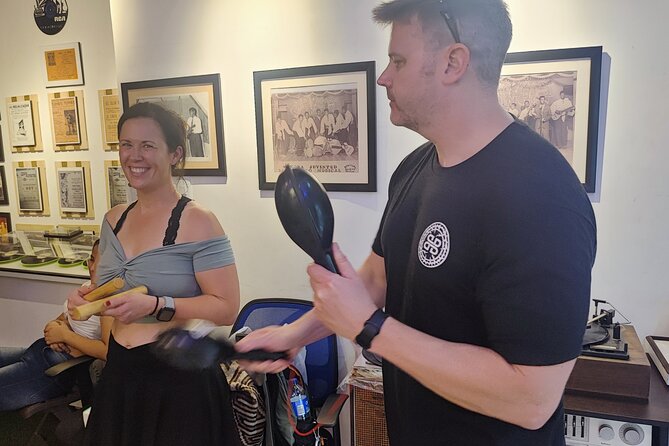
The tour begins at Museo Raizales De La Salsa, a focused space built around early salsa in Cali. Expect an orientation to where the music came from, with an emphasis on the first salsa orchestra in Cali and how that sound took form. You’ll also spend time with displays like vinyl records and the city’s earliest musical instruments.
This stop matters because salsa is more than a song. It’s a system of rhythms, instruments, and community energy. When you see early recordings, original instruments, and how the museum connects music to dancing, you stop treating salsa like one generic style. Instead, you start hearing Cali-style salsa as its own identity.
One small reality check: the museum time is set at about 30 minutes. That is enough for a strong baseline, but it is not meant to replace a longer museum visit. If you love museums and want to wander on your own afterward, plan a return visit when you have extra time.
Plazoleta Jairo Varela: giant trumpets and Cali’s music brain
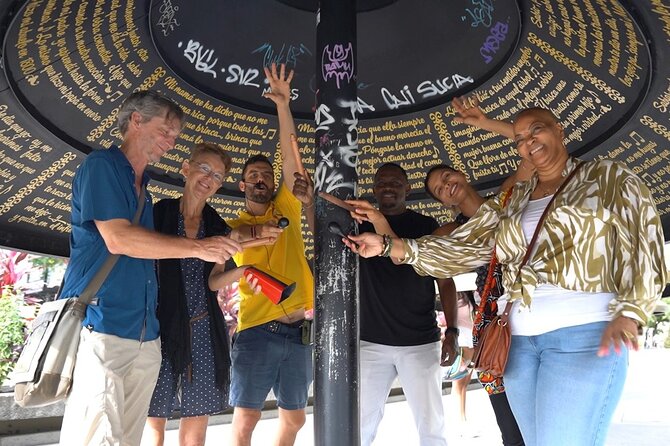
Next you’ll head to Plazoleta Jairo Varela, a plaza tied to Cali’s musical monuments. This is where the tour leans into stories around major salsa names, especially Grupo Niche and Guayacán. The guide connects those groups to the broader Cali sound, and you experience the area under the famous giant trumpet structures.
Why this stop works: a monument gives you a shortcut to culture. You get the feeling that salsa is not background noise in Cali. It’s built into public space, like a point of pride. When the guide connects that to the artists, you start to understand why certain styles and arrangements traveled through Cali in recognizable ways.
Time here is about 45 minutes, which is longer than the other quick stops. That extra time suggests you’ll have room for explanation and questions, which is exactly what you want when you’re learning how salsa works historically.
Edificio Coltabaco: tobacco, vinyl, and that famous smell
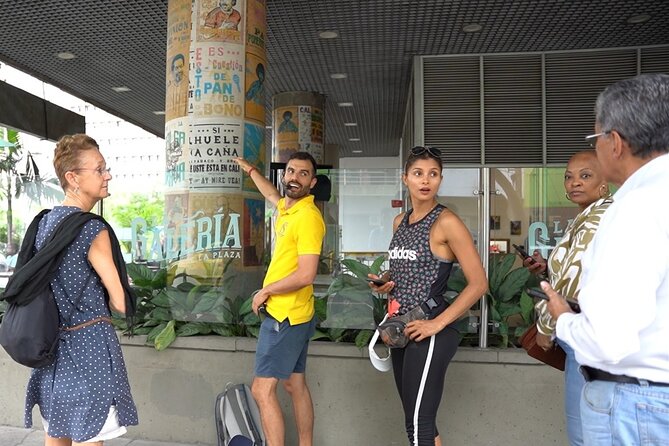
The third stop is Edificio Coltabaco, and the theme is unexpected in a fun way. You’ll hear about the relationship between tobacco and vinyl, and the tour uses a memorable idea: if it smells like cane, tobacco, and tar.
This is not a museum stop with deep artifact browsing in the short window you have. Instead, it is a cultural connection point. It helps explain how industries, materials, and local production shaped the audio world and the city’s artistic footprint. Vinyl makes a lot more sense when you link it back to how a place produces, records, and circulates music.
The time here is only about 15 minutes, so treat it like a sharp stop that adds color. You’re getting context, not trying to memorize every detail.
More Salsa Dancing Classes in Cali
- Shared Tour Cali’s Salsa, Graffiti & Resistance Experience
★ 4.8 · 53 reviews - Salsa Bar Hopping in Cali
★ 4.5 · 43 reviews - Salsa & Music Tour of Cali
★ 5.0 · 42 reviews - Friday Night Street Salsa and Bar Crawl in Cali, Colombia
★ 4.5 · 24 reviews
Kumis Kasimiro and Sin Street: open-air music where you feel it
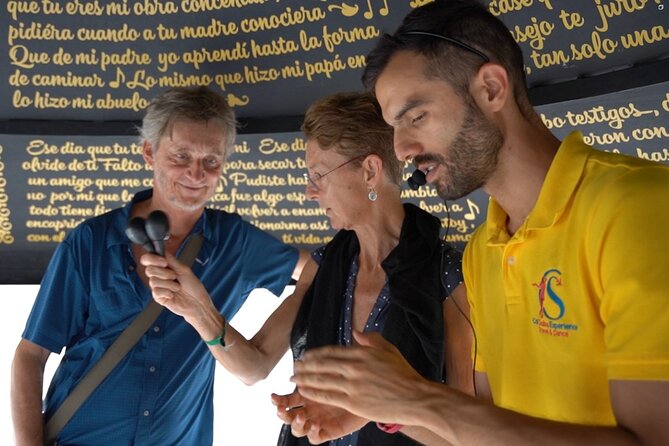
Then you reach Kumis Kasimiro, a stop tied to Sin Street, where locals gather on Friday and Saturday nights for an open-air carnival with live music and dancing. Even if your timing does not line up with peak party hours, the point is still clear: this neighborhood is part of the city’s salsa rhythm.
This is one of those “place-based learning” moments. You learn best when you stand where people actually dance and play. A street scene changes your understanding because you see how salsa moves through everyday life, not only through ticketed venues.
The tour allots about 15 minutes at this stop. That is enough to get the vibe and make connections, but it is not trying to turn into a full nightlife outing. If you want more dancing time, you can ask your guide for directions on where the locals are out and about, but the tour itself is intentionally time-boxed.
ASOMUCAF: souvenirs that help women heads of family
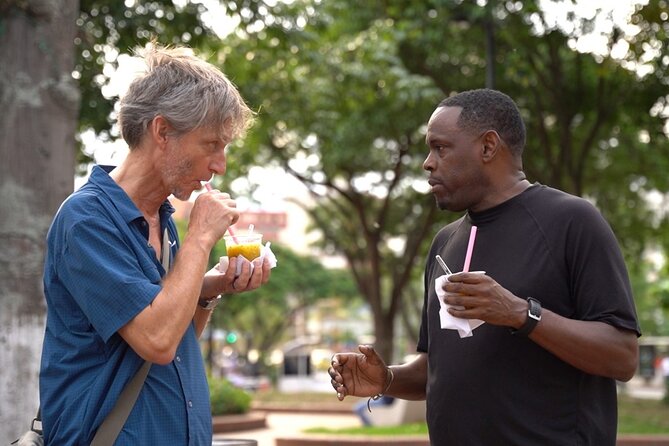
The final cultural stop is ASOMUCAF Asociación Mujeres Cabeza de Familia. This is where your tour earns a real-world purpose. You can buy souvenirs here, and that purchase helps support 60 women heads of family.
The setting is also part of the story. The association is in an 18th-century house, and the description notes that it held the Spanish settlers’ treasure. Even in a short visit, you get that blend of heritage space and current community work.
Time for this stop is about 20 minutes, which is a good length. It gives you time to look around without feeling rushed, and you can decide calmly if you want a small handmade item to take home.
If you care about using tourism to support local life, this stop is one of the strongest reasons to book. It changes the tour from entertainment into a small act of impact.
The dance and instrument part: what you’ll actually do
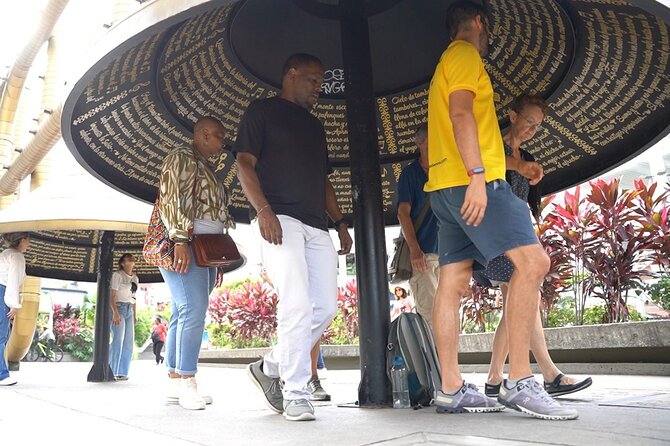
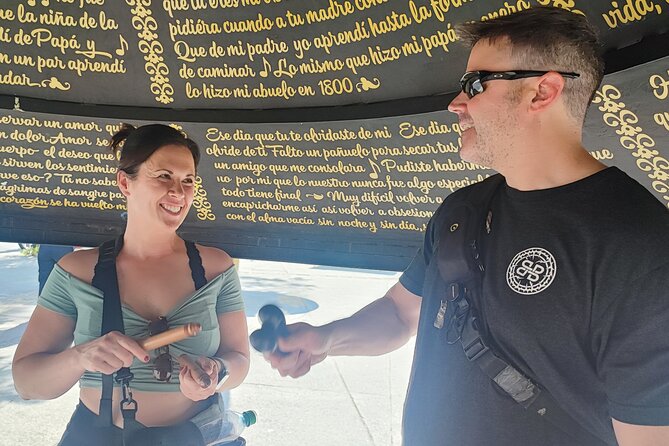
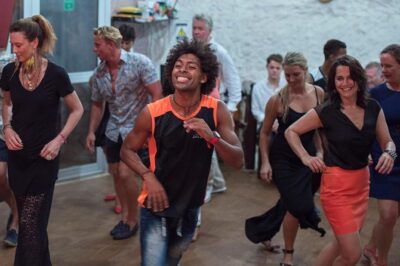
The title says Learn the history, dance and play instruments, and the experience leans hard into that promise. You’re not just being shown salsa. You get basic Cali-style steps, plus time to try instruments.
From the way the tour is described and what people highlight, the teaching style is meant to feel approachable. Reviews mention patient instruction and interactive moments, and that tracks with how the route is structured. After each music story, you get a chance to translate that story into physical movement and sound.
Here’s the practical way to think about the hands-on part:
- If you like learning by doing, you’ll probably love this.
- If you want advanced technique, this is probably not for that. It is a short course-style experience inside a city route.
- If you feel shy about dancing, you can still participate in a more comfortable way, because the tour is designed as a small group with a fun tone.
One more useful note from reviews: guides in this company are praised for English and for explaining things clearly. If you’re worried about not following along, that is a good sign.
Price and value: why $70.67 can feel like a steal
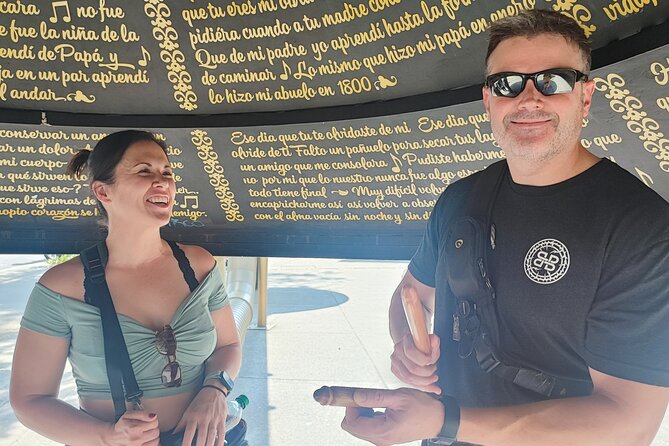
Let’s talk value like you’re deciding on a busy trip. At $70.67 per person, you’re paying for:
- A route through multiple meaningful locations in Cali
- A museum admission ticket included at Museo Raizales De La Salsa
- Dance basics and instrument playing time, which usually costs extra on its own
- A small group experience capped at 15 travelers
- The community-focused ASOMUCAF stop, where you can buy souvenirs that support women heads of family
If you’ve done other tours that are basically a guided walk, this one feels different because it keeps pulling you into the music. That is why people consistently recommend it highly, and why the 3 hours tend to feel productive instead of stretched.
Also, since it’s booked well in advance on average, you’ll want to lock in early if your dates are fixed. That simple step saves stress.
Meeting points, timing, and how to make this tour smooth
You start at Plazoleta Jairo Varela (or de La Caleñidad) in Granada, Cali at Av. 2 Nte. #10 Norte-1 a 10 Norte-75. Your tour ends at ASOMUCAF Asociación Mujeres Cabeza de Familia, Cl. 4 #5-84, San Pedro, Cali.
One practical tip: the tour tends to end near a cafe area with crafts and souvenirs, in front of the Merced church, which makes it easier to continue your day. From there, you can head toward San Antonio or use a taxi if you’re moving on to dinner plans.
Because the tour is rated moderate physical fitness, plan for some walking and standing, plus the energy of joining in with the dance and instrument parts. Comfortable shoes are a safe idea. Bring a water bottle if you tend to get thirsty on active tours, and keep your phone handy for quick photos if you like that sort of thing.
And because it is near public transportation, it’s also easier to connect with the rest of your Cali itinerary.
Who should book this Cali salsa tour, and who might not
This is a great fit if you:
- Want Cali salsa history but also want your hands and feet involved
- Prefer a small group with more interaction
- Like learning with a guide who stays enthusiastic and clear, especially if you are using English
- Want at least one meaningful community stop through ASOMUCAF
You might choose something else if you:
- Want a long deep-dive into one museum or one music topic, because the stops are time-boxed
- Prefer a fully seated, minimal-movement experience, because dance basics and instrument playing are part of the program
- Are traveling on a super tight schedule where 3 hours plus walking is hard to fit
Should you book it?
If you’re coming to Cali and you want more than “watch salsa,” I think this tour is a smart choice. The biggest win is the balance of history, dance basics, and hands-on instruments, plus the small-group size that makes interaction realistic. Add in the ASOMUCAF community stop, and it becomes a tour that feels useful, not just entertaining.
Book it if you want to leave with rhythm in your body and context in your head. Skip it only if you need a slower, less active cultural experience.
FAQ
How long is the Cali Salsa Tour?
The tour runs for about 3 hours.
What is the price per person?
The price is $70.67 per person.
What locations does the tour include?
You visit Museo Raizales De La Salsa, Plazoleta Jairo Varela, Edificio Coltabaco, Kumis Kasimiro (Sin Street), and ASOMUCAF Asociación Mujeres Cabeza de Familia.
Is admission included anywhere?
Admission is included at Museo Raizales De La Salsa. Admission is free for the other stops listed.
How big is the group?
The tour has a maximum of 15 travelers.
Is there free cancellation?
Yes, you can cancel for a full refund up to 24 hours before the experience start time.
Hot off the list in Cali
- Trekking to Pico de Loro★ 4.5 · 14 reviews
- Private Transfer from Cali Airport (CLO)★ 5.0 · 4 reviews
- Trekking & Rivering Reserve Pericos★ 5.0 · 5 reviews
- Sugar Cane Hacienda El Paraiso & Nature Day Tour★ 4.0 · 6 reviews
- Friday Night Street Salsa and Bar Crawl in Cali, Colombia★ 4.5 · 24 reviews
- Saturday Night Bar Crawl in Cali, Colombia★ 5.0 · 20 reviews
- San Cipriano & River Adventure Day Tour★ 4.5 · 11 reviews
- San Cipriano River Tubing Relax Day★ 5.0 · 4 reviews
Salsa Dancing Classes, compared.

Salsa & Bachata Nightlife Tour in Medellín with a Local Dancer
Read our review →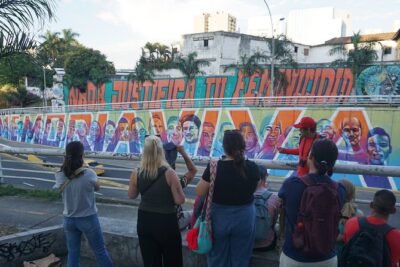
Historical Shared Tour Salsa, Graffiti & Resistance in Cali
Read our review →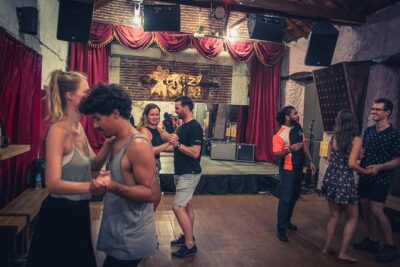
Salsa Tour in Cartagena with admission Ticket to Café Havana
Read our review →
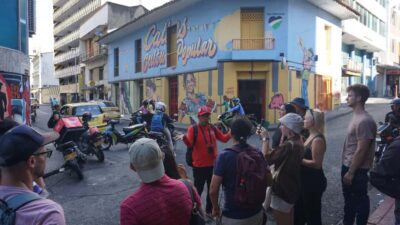
Shared Tour Cali’s Salsa, Graffiti & Resistance Experience
Read our review →
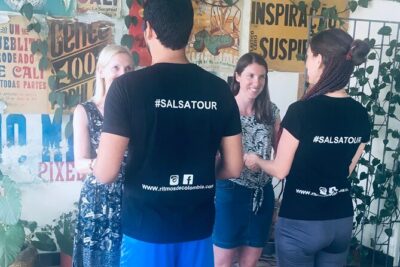
Browse the lists this tour appears in