
REVIEW · TATACOA DESERT TOURS
Community and Biodiversity Tour of the Tatacoa Desert. Villavieja
Desert wildlife surprises you here. This 12-hour trip from Villavieja pairs Tatacoa Desert biodiversity with small-town culture, then caps the day with a sunset mirador. I especially like that lunch is included, and it feels like a full day rather than a quick photo stop.
What I like even more is the pacing and group feel. You move through the day in an air-conditioned vehicle, with a small max of 15 people, and the guide explains in English so you actually understand what you are looking at.
One thing to consider: two major add-ons are optional and cost extra, the mineral pool and the observatory (both 10,000 COP). Also, the tour depends on good weather, so plan for flexibility.
In This Review
- Key things I’d pay attention to
- Villavieja First, Not Just a Transport Stop
- Magdalena River Stop, A Quick Taste of Colombia’s Main Waterway
- Desierto de la Tatacoa, Where Biodiversity Isn’t Just a Buzzword
- Valle de los Xilópalos, Gray Ground With a Geological Story
- Optional Piscina Mineral, A Swim Break That Costs Extra
- Desierto Gris to Desierto Rojo, The Color Shift That Changes Everything
- Las Ventanas Mirador, Sunset With a Drink and a View
- Astrosur Uno Observatory, Stargazing as an Optional Finish
- Lunch From Huila, Included and Actually Filling
- Price and Value: What $59 Buys You Here
- Who This Tatacoa Community and Biodiversity Tour Fits Best
- Booking Tips and What to Pack for a Long Desert Day
- Should You Book This Tatacoa Community and Biodiversity Tour?
- FAQ
- FAQ
- How long is the Community and Biodiversity Tour of the Tatacoa Desert in Villavieja?
- What is the price for this tour?
- Do I get picked up, and when should I be ready?
- Is lunch included?
- Is the tour offered in English?
- What optional activities cost extra?
- How big is the group?
- Does the tour run in bad weather?
- Are there any basics for participation?
Key things I’d pay attention to
- Villavieja town stop first so you start grounded in local life, not straight into the desert
- Magdalena River viewing for flora and fauna, including a short ferry-style ride stop
- Valle de los Xilópalos hike through a 4 km route with mild difficulty and geological storytelling
- Two desert colors, two walking sessions with the gray desert and then the red desert later
- Las Ventanas Mirador at sunset with a refreshing drink to mark the moment
- Optional experiences cost extra (mineral pool and Astrosur Uno observatory)
Villavieja First, Not Just a Transport Stop
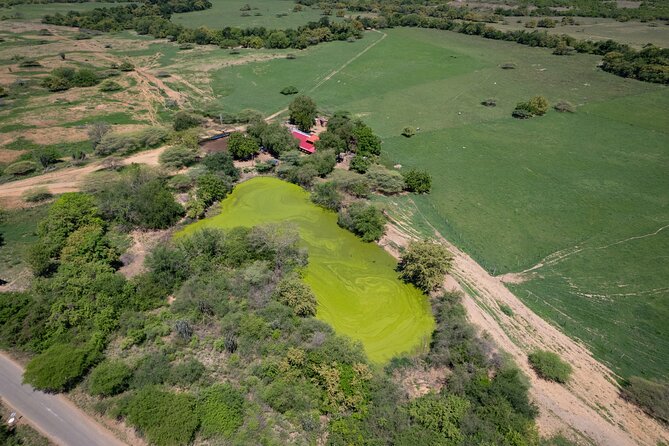
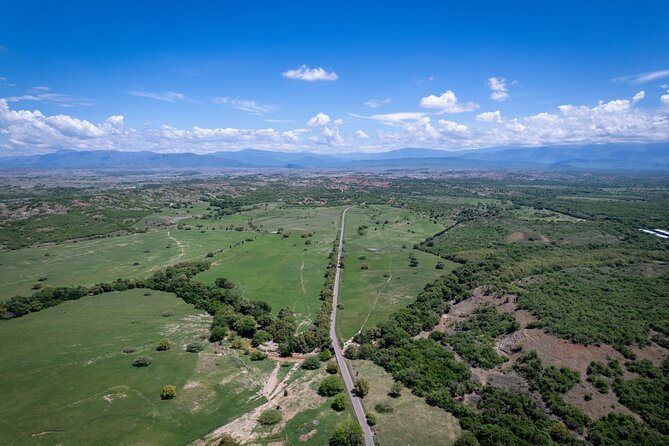
The day starts in Villavieja around 9:00 am, with pickup offered. You meet ready to go about 10 to 30 minutes early, so you are not rushing later. Stop 1 is short, about 10 minutes, focused on the town and its museum and attractions, plus a quick history primer.
Why this matters: when tours jump straight into scenery, you can miss the human side. Here, you get a tiny foundation for where you are and what Huila region life looks like. Even in a brief visit, it helps your eyes connect desert plants and animals to a wider landscape of people, livelihoods, and local pride.
A practical detail: this is a fast stop. You should use it to orient yourself, grab a quick look at what catches your interest, and ask the guide what to watch for later in the desert.
More Tatacoa Desert trips:
- Neiva: Guided Day Trip to the Tatacoa Desert with Lunch
★ 4.8 · 76 reviews - Community and Biodiversity Tour of the Tatacoa Desert from Neiva
★ 5.0 · 29 reviews - Discover the Tatacoa Desert with a Local
★ 5.0 · 20 reviews
Magdalena River Stop, A Quick Taste of Colombia’s Main Waterway
Next comes the Puerto Fluvial Malecon Ferri motos stop, about 20 minutes, centered on the Magdalena River. The goal is sighting its flora and fauna, so you are not just passing through scenery. This is also where the day starts turning from town and museum pace into “watch closely” pace.
The Magdalena is described as Colombia’s most important river, so the setting makes sense: river edges often act like feeding and hiding places for animals, and the guide can point out what to look for as you go. It is not a long boat day, but it is a meaningful part of a biodiversity tour because it broadens the day beyond sand and rock.
If you are the kind of traveler who loves small details, use this moment well. Keep your eyes moving between the waterline, plants near the shore, and any sudden motion.
Desierto de la Tatacoa, Where Biodiversity Isn’t Just a Buzzword
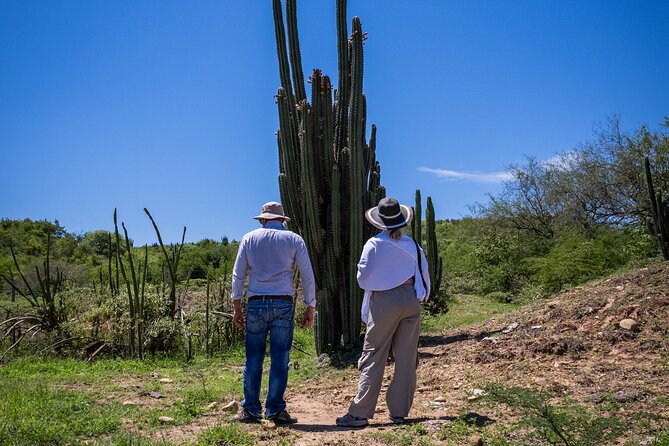
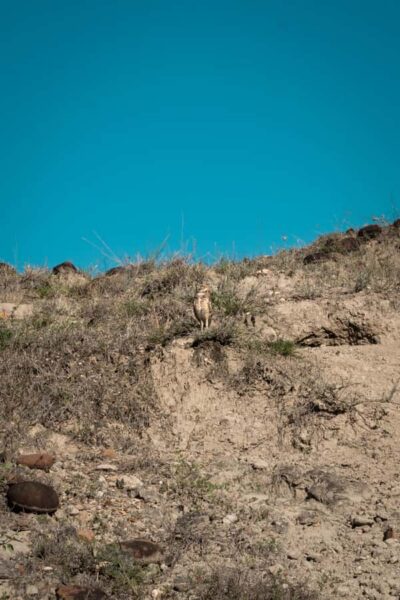
Now you enter the main event: the Desierto de la Tatacoa. The stop includes time at a natural sanctuary, described as a reserve that may be home to squibs, iguanas, birds, and other flora and fauna. The timing here is about 30 minutes.
What I like about this approach is that it sets expectations. Tatacoa is often sold as a desert for walking and photos. This version frames it as living, with animals and plants adapted to harsh conditions. You are not trying to “find a rare animal” like a scavenger hunt, but you are learning how the desert actually works.
A good tip: bring your attention the way you bring your water. Animals here can be easier to spot when you slow down, scan patiently, and follow the guide’s cues. In a day like this, you cannot do everything, but you can do better noticing.
Valle de los Xilópalos, Gray Ground With a Geological Story
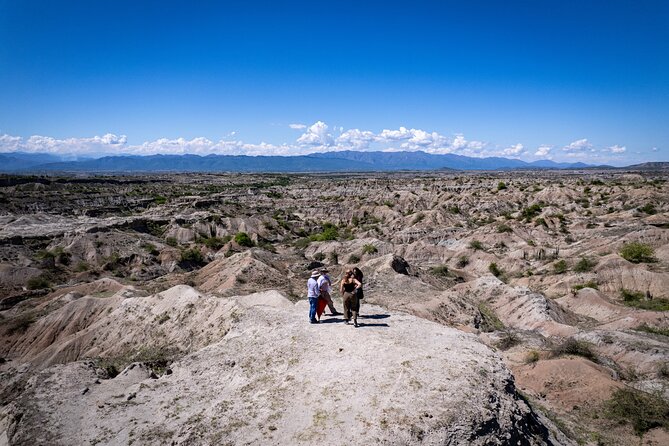
After the sanctuary time, you move to the Valley of the Xilópalos for a 4 kilometer hike with mild difficulty, about 110 minutes. This is the gray-toned part of Tatacoa, and it is explained with a pretty specific reason: the area turns gray due to a concentration of phosphorus and silica, linked to volcanic ash and torrential rivers in the middle Miocene epoch.
Now, you do not need to remember the geology to enjoy the hike. But the explanation matters because it changes how you read the ground. Instead of thinking gray means “plain,” you start to understand it as evidence of ancient change. That is the kind of context that makes a short walking route feel like a real experience.
What you can expect on the trail:
- a steady walk through the valley, with time to stop and look closely
- guide talk as you pass points of interest
- a route length that is manageable for many people, because the difficulty is labeled mild
Possible drawback: it is a hike. If you are sensitive to heat or uneven footing, pace yourself and use rest moments when the group stops. Also, you will likely want closed-toe shoes for grip.
Same city, a completely different day:
- Medellin: Comuna 13 Graffiti Tour, Cable Car & Street Food
★ 4.8 · 9,046 reviews - Comuna 13 Graffiti Tour with Street Food
★ 5.0 · 7,503 reviews - Museo Pablo Escobar
★ 5.0 · 7,242 reviews - Guatapé Tour: Piedra del Peñol with Boat Tour, Breakfast, Lunch
★ 5.0 · 7,035 reviews
Optional Piscina Mineral, A Swim Break That Costs Extra
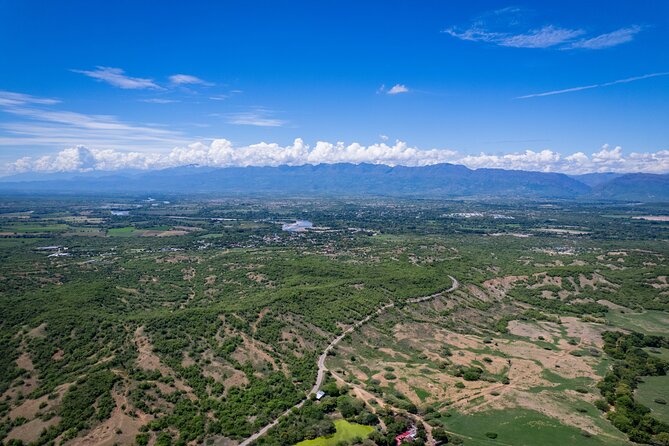
Around 1:30 pm you exit to the Piscina Mineral stop. The activity is optional and not included, with a cost of 10,000 COP. The schedule gives you a short transition and then time at the pool, about 105 minutes total, with around 2 hours 15 minutes mentioned for the pool period in the plan.
If you love a practical reward after walking, this is it. After the desert hikes, a mineral pool can feel like a reset, and you do not have to choose it if you want to rest, take photos, or conserve energy.
But here’s the consideration: because it is optional, you are deciding mid-day. I recommend you treat it like a separate plan with its own cost. If you choose to skip, you still get the rest of the route, so you are not losing the main story.
Desierto Gris to Desierto Rojo, The Color Shift That Changes Everything
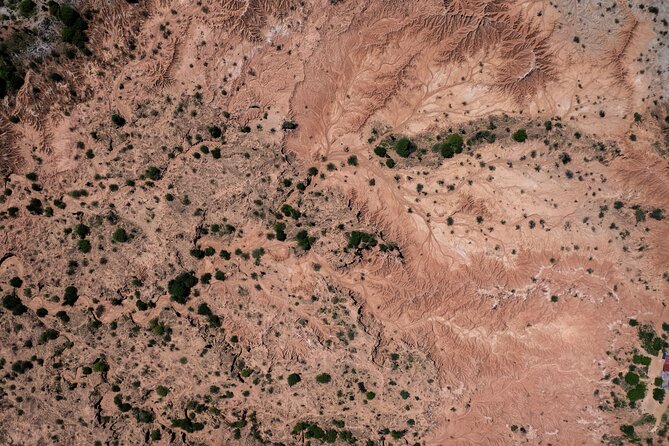
The day then moves from the gray desert phase into the red desert. At about 3:45 pm you depart for Desierto Gris described as leading into the red desert experience, with arrival around 4:00 pm. This section includes a 4 kilometer walking tour, about 105 minutes.
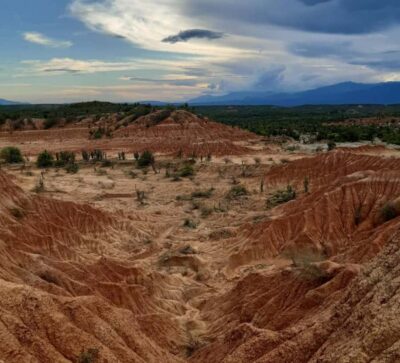
Here the tour description leans into the visual contrast: red and ocher colors, green cacti standing out against the rock, and a labyrinthine topography. The guide also notes that, if you are lucky, you may see wild animals like snakes, scorpions, lizards, eagles, and turtles.
I like this framing because it is honest about the nature of desert wildlife. You are not guaranteed sightings, but the conditions can make observation rewarding. When animals are out, they can be far more noticeable against red rock and bright plants than in dense forests.
Also, safety and comfort matter in desert walking. You should wear sun protection, keep an eye on your footing, and listen closely to the guide about where to step. In dry areas, the ground can look firm while actually being uneven.
Las Ventanas Mirador, Sunset With a Drink and a View
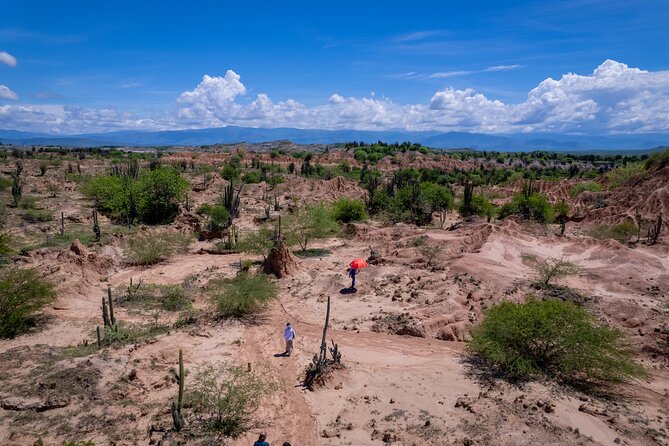
At about 5:45 pm you head to Las Ventanas Mirador. This stop is timed for sunset, with a refreshing drink included, and lasts about 45 minutes.
This is a great part of the schedule because it is not rushed. You get time to watch the light change over the rock formations, and the drink helps you recharge without needing to hunt for a place to buy something.
Practical advice: arrive ready to stand, look, and take photos. The best desert sunset moments are often the quiet ones, when you are not constantly moving.
Astrosur Uno Observatory, Stargazing as an Optional Finish
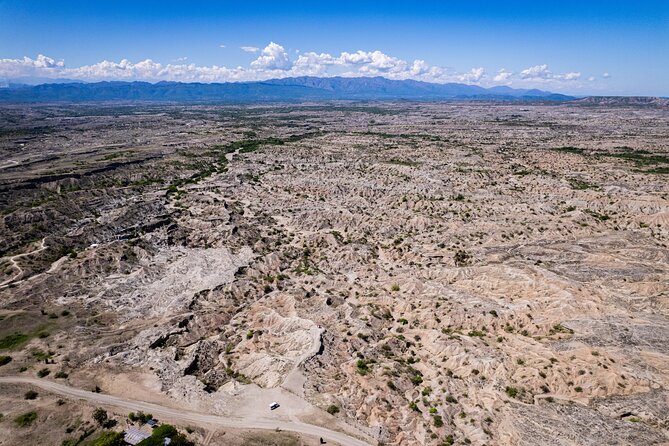
At around 6:30 pm you depart to the Astronomical Observatory Astrosur Uno. Observatory and star viewing are optional, not included, and cost 10,000 COP for entry and the astronomy session. The plan shows about 120 minutes for the optional astronomy portion.
If you do stargazing often, you might know the big factor: the quality of the night sky depends on conditions. Since this tour requires good weather, your chances are better when skies cooperate. Even if you skip the observatory, you still get the sunset mirador timing, so the day ends nicely either way.
If you choose to go, bring patience. Astronomy sessions can be slow at first, then suddenly rewarding as you learn what you are looking for.
Lunch From Huila, Included and Actually Filling
Lunch is included and described as a traditional meal from Huila, with options like meat, chicken, or beef. It also includes rice or potato, salad, and a drink.
This is a value point that matters more than it sounds. Desert days often mean buying food later, and that can turn expensive fast. Having lunch handled keeps you focused on the route and reduces “hangry math” in the middle of the day.
One more nice detail: the tour includes insurance policy and uses an air-conditioned vehicle. That combination is practical comfort for a long day and a good buffer if you are sensitive to heat or bumpy roads.
Price and Value: What $59 Buys You Here
At $59 per person for a roughly 12-hour day, I see solid value because so much is included:
- air-conditioned transportation
- lunch
- an insurance policy
- admission tickets that cover key segments in the schedule
The two obvious extras are the Hoyos or natural pool and the observatory, each listed at 10,000 COP. If you do both, you should factor that into your budget, because it changes the true price of the tour.
The biggest value is less about cost alone and more about structure. You get town context, river viewing, two desert walking sections, and a sunset mirador. That is a lot of “chapters” in one day, and it is hard to replicate cheaply on your own without local planning.
Who This Tatacoa Community and Biodiversity Tour Fits Best
This tour is a good fit if you want a desert day that mixes nature with local culture, not just rock views. It also works well for a wide range of ages, because the hikes are labeled mild difficulty and the schedule is built with time buffers between stops.
I especially like that it supports group comfort. The tour caps at 15 people, and the group vibe is described as comfortable, including older adults, a child, and even a pet. If you want a calmer group experience rather than a huge bus, this format is worth considering.
You might be less happy if you hate optional add-ons or you want a totally unstructured itinerary. This tour is planned and time-based, with specific blocks at each stop.
Booking Tips and What to Pack for a Long Desert Day
Since the experience requires good weather, check the forecast close to departure. If skies look questionable, you may be offered another date or a refund, but the key is to avoid booking your most time-sensitive plans right next to this.
For packing, aim for desert basics:
- sun protection (hat, sunscreen)
- water planning for a long day, plus whatever the tour provides
- closed-toe shoes for walking routes
- a light layer for evenings, since you finish with a sunset and possible observatory time
Also think about your photo goals. The schedule gives you sunset and desert walking windows. If you want clear shots, plan to be ready at those moments rather than only at the beginning.
Should You Book This Tatacoa Community and Biodiversity Tour?
I would book it if you want a day that feels like more than a checklist. The combination of desert wildlife focus, town and museum context in Villavieja, and two desert walking chapters makes the whole day feel connected. Add in the sunset at Las Ventanas and the optional observatory, and you get both nature and evening atmosphere.
I would hesitate only if your budget cannot stretch for optional stops, or if you strongly prefer a guaranteed stargazing experience without depending on conditions. Otherwise, for $59, this is a well-paced way to experience Tatacoa in a structured, easy-to-follow format with English explanations and a small group size.
FAQ
FAQ
How long is the Community and Biodiversity Tour of the Tatacoa Desert in Villavieja?
The tour runs about 12 hours, with multiple stops across the day, starting at 9:00 am.
What is the price for this tour?
The price is $59.00 per person.
Do I get picked up, and when should I be ready?
Pickup is offered. Be ready 10 to 30 minutes before the tour starts.
Is lunch included?
Yes. Lunch is included and is described as a traditional Huila meal with a protein, rice or potato, salad, and a drink.
Is the tour offered in English?
Yes, it is offered in English.
What optional activities cost extra?
The mineral pool (Hoyos or natural pool area) is optional and costs 10,000 COP. The observatory/astronomy entry is also optional and costs 10,000 COP.
How big is the group?
The tour has a maximum of 15 travelers.
Does the tour run in bad weather?
The tour requires good weather. If canceled due to poor weather, you are offered a different date or a full refund.
Are there any basics for participation?
Most travelers can participate, and service animals are allowed. It is also near public transportation.
Hot off the list in Colombia
- Zipaquirá: Private Salt Cathedral Mine and Walking Tour★ 4.8 · 3 reviews
- Zipaquirá: Private tour to the Salt Cathedral, Colombia’s first wonder★ 4.9 · 33 reviews
- Zipaquira: 5 hrs Salt Cathedral Tour★ 4.4 · 9 reviews
- Exotic Yacht – Tour through the bay of Cartagena★ 3.7 · 4 reviews
- Zipaquirá Salt Cathedral & Andrés Carne de Res (Chía)★ 4.6 · 30 reviews
- White Night Boat Party: Dinner Buffet, Dancing and Open Bar★ 4.6 · 3 reviews
- Wonders of Salt: Colombia’s Underground Cathedral★ 5.0 · 18 reviews
- Volcan del Totumo + Playa + Piscina★ 4.7 · 4 reviews
Tatacoa Desert Tours, compared.
Neiva: Guided Day Trip to the Tatacoa Desert with Lunch
Read our review →
Community and Biodiversity Tour of the Tatacoa Desert from Neiva
Read our review →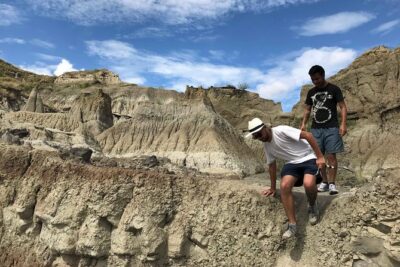
Community and Biodiversity Tour of the Tatacoa Neiva Desert
Read our review →
Desierto de la Tatacoa: paisajes y observación de estrellas.
Read our review →
2-Day Private Tour to the Tatacoa Desert from Bogotá – Astronomy
Read our review →
Tatacoa Desert Day Trip live, discover and connect
Read our review →
Day Trip to Tatacoa Desert (Horseback, Boat, Stargazing, ..)
Read our review →Browse the lists this tour appears in