
REVIEW · COMUNA 13 TOURS
Comuna 13 and social innovation in Medellin
Medellín’s story comes with a view. This 4-hour experience links memory and social innovation to life in Comuna 13, with a bilingual guide, private transport, and a cable car ride that gets you there fast. You start at a museum that frames Colombia’s armed conflicts, then you move up and into the neighborhood to understand how change takes shape.
I especially like the private setup. Your guide stays with your group, and you get included snacks, bottled water, and even medical assistance, which makes the day feel more “handled” than stressful.
One thing to plan around: the tour is not suitable for people with reduced mobility, and Museo Casa de la Memoria is not open on Mondays.
In This Review
- Key things to know before you go
- Museo Casa de la Memoria sets the emotional context
- San Javier by cable car, and why that ride matters
- Electric escalators in Comuna 13, from access to identity
- What “social innovation” looks like, not just sounds like
- Tour pace, $96 value, and what you actually get
- Who this tour suits best, and who should skip it
- Quick practical notes so you don’t get tripped up
- Should you book Comuna 13 and social innovation in Medellín?
- FAQ
- Is pickup offered for this Medellín Comuna 13 tour?
- How long is the tour?
- What stops are included?
- Are the cable car and escalator tickets included?
- Is the Museo Casa de la Memoria open every day?
- Is the tour suitable for people with reduced mobility?
Key things to know before you go
- Museo Casa de la Memoria (1 hour, free admission) grounds the day in Colombia’s wars and armed conflict narratives.
- San Javier cable car (30 minutes, included) saves time and gives an easy route up to Comuna 13.
- Electric escalators visit (1 hour 30 minutes, included) shows how public infrastructure reshapes daily life.
- Private bilingual guide plus private transportation means fewer logistics headaches and more focused storytelling.
- Snacks and ice cream, plus bottled water keep the energy up during the walk-and-learn rhythm.
- Not for reduced mobility, so choose a different option if you need step-free access.
Museo Casa de la Memoria sets the emotional context
The day starts at Museo Casa de la Memoria, a museum built around exhibits that offer diverse perspectives on Colombia’s wars and armed conflicts. Expect a serious tone and a lot to read and process, even if you’re not a museum person. This is the kind of stop that helps you understand why people talk about Medellín’s past so carefully.
I like that the museum is built for understanding, not shock value. You’re given a framework for questions like: What happened, who was affected, and how do communities keep memory alive while moving forward? The admission is free and the visit is about an hour, so you can stay focused without turning the museum into a full-day commitment.
If you’re visiting on a Monday, pay attention. This museum is not open on Mondays, which can change your whole schedule if you’re booking around weekdays.
More Comuna 13 graffiti walks:
- Medellin: Comuna 13 Graffiti Tour, Cable Car & Street Food
★ 4.8 · 9,046 reviews - Comuna 13 Graffiti Tour with Street Food
★ 5.0 · 7,503 reviews - Comuna 13 Graffitour knows the urban art district of Medellín
★ 5.0 · 2,856 reviews
San Javier by cable car, and why that ride matters
Next, you head to Estación metro San Javier. Then you take the cable car to Comuna 13, with the ticket included and about 30 minutes set aside for the ride. Even if you’ve taken plenty of cable cars before, this one matters because it connects you to the neighborhood in a direct, practical way.
The big value here is time and clarity. Instead of trying to navigate transfers and routes on your own, your plan is already mapped. You’re also moving from one “level” of Medellín to another, and you’ll feel that shift physically as well as visually.
This stop is short, which is good for a half-day tour. You get the transportation piece handled, then you’re ready for the neighborhood walking portion without lingering in transit.
Electric escalators in Comuna 13, from access to identity
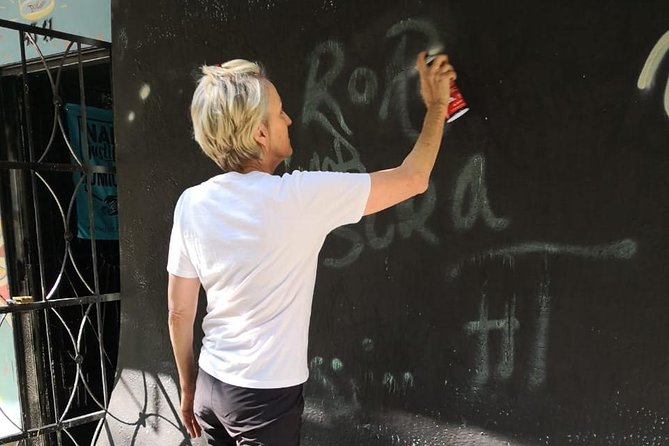
Your next stop is Escaleras Electricas de la Comuna 13, with about 1 hour 30 minutes on site. A few years ago, this area had a reputation as one of the most dangerous communities in Medellín, but today it’s known for colorful community life and public change. The electric escalators are more than a photo moment. They represent access, movement, and a kind of daily infrastructure that affects how people get to school, work, and services.
The escalators also help you understand the logic of the place. When a neighborhood climbs in layers, transportation becomes part of the story. Instead of seeing Comuna 13 as one static “destination,” you start to see it as a lived-in system where routes, meeting points, and shared spaces shape everyday routines.
You’ll likely spend time walking around the area while your bilingual guide explains what the neighborhood overcame and what it gained. That guided context is often where this tour earns its best praise, because it connects the physical setting to the human stories behind it.
What “social innovation” looks like, not just sounds like
This tour is built around the idea that social innovation is visible when you know what to notice. It is not only about buildings or murals. It’s also about how people organize, remember, and rebuild after violence and instability.
By pairing the museum with Comuna 13, you’re getting two angles. The museum gives you the broad lens on Colombia’s armed conflicts and how they shaped lives. Then Comuna 13 gives you the local lens, where community projects, public spaces, and infrastructure help people move through the day differently.
I like how the structure nudges you away from tourist shortcuts. You’re not just checking boxes. You’re learning why the neighborhood’s transformation has meaning, and why people talk about “before and after” with real emotion. Your guide’s stories are a major part of the experience, and they can be moving in a serious way, especially when they connect past hardship to present hope.
It’s also worth saying plainly: this is not a “party tour.” It’s an education-focused visit with a human tone, so keep your expectations respectful and your questions thoughtful.
More things to do in Medellin:
- Museo Pablo Escobar
★ 5.0 · 7,242 reviews - Guatapé Tour: Piedra del Peñol with Boat Tour, Breakfast, Lunch
★ 5.0 · 7,035 reviews - Medellín: The Real Pablo Escobar Tour
★ 4.8 · 3,205 reviews - Day Trip To Guatapé with ,Breakfast, Lunch and Boat Ride
★ 5.0 · 2,996 reviews
Tour pace, $96 value, and what you actually get
At $96 per person for about 4 hours, the value comes from how much is included. You’re not paying only for entry tickets. You’re paying for bilingual guidance, private transportation, and the logistics that make a neighborhood visit easier and safer to do well.
Included items you can count on:
- Snacks and ice cream
- Bottled water
- Local guide in Comuna 13 plus bilingual support
- Private transportation
- Medical assistance
And the key access pieces are handled:
- Museo Casa de la Memoria admission is free, with about 1 hour there
- Cable car to Comuna 13 from San Javier is included, about 30 minutes
- Escaleras Electricas De la Comuna 13 admission is included, about 1 hour 30 minutes
Group discounts and a mobile ticket are also part of the setup. If you like having fewer moving parts while traveling, this kind of package is a win.
One practical consideration is the pace. Four hours can feel quick if you’re also taking your time inside the museum and asking lots of questions. The plan is still balanced, because it splits learning, transit, and neighborhood walking into clear chunks rather than dumping everything into one long stop.
If you want an experience that reduces stress and increases meaning, this fits. If you prefer a super casual “wander on your own” day, you might find the structure feels a bit tight.
Who this tour suits best, and who should skip it
This works best for travelers who like context, guided storytelling, and a route that makes sense. If you care about understanding social change rather than just seeing sights, you’ll probably appreciate how the museum and Comuna 13 visit work together.
It’s also a good choice if you want private attention. Because it’s a private tour for your group, you’re not squeezed into a giant crowd. That usually makes it easier to keep up and stay engaged, especially during emotional or information-heavy moments.
Skip it if you need reduced-mobility access. The tour is not suitable for people with reduced mobility, so you’ll want another plan that matches your needs.
Quick practical notes so you don’t get tripped up
Museo Casa de la Memoria is free, but it is not open on Mondays. If you’re traveling on a Monday, check whether your tour date avoids that closure, or expect a schedule mismatch.
Pickup is offered only if your hotel is in the El Poblado neighborhood. If you’re staying outside that area, you’ll want to confirm how pickup is handled before you commit.
The tour includes bottled water, snacks, and ice cream. That’s helpful in Medellín, where walking time adds up faster than you think, and it saves you from hunting for treats between stops.
Finally, this experience includes medical assistance. That doesn’t mean you should worry, but it does mean the operator is set up to handle basic traveler needs.
Should you book Comuna 13 and social innovation in Medellín?
If you want a meaningful half-day in Medellín that connects past conflict to present community change, I’d book it. The blend of free museum context, included cable car transit, and the electric escalators visit makes it both practical and emotionally grounded.
Choose it especially if you value a bilingual guide and private group attention. For $96, the price feels fair for what’s included, especially when you’re not doing the route planning yourself.
Skip it if Monday timing breaks the museum stop for your schedule, or if you need reduced-mobility access. With those two caveats, this is a strong option for travelers who want Comuna 13 to make sense, not just look impressive.
FAQ
Is pickup offered for this Medellín Comuna 13 tour?
Yes. Pickup is offered from the hotel you indicate, as long as it is located in the El Poblado neighborhood.
How long is the tour?
It runs for about 4 hours.
What stops are included?
The tour includes Museo Casa de la Memoria, a cable car ride to Comuna 13 from Estación metro San Javier, and a visit to Escaleras Electricas de la Comuna 13.
Are the cable car and escalator tickets included?
Yes. The cable car admission is included, and admission for Escaleras Electricas de la Comuna 13 is included as well.
Is the Museo Casa de la Memoria open every day?
No. Museo Casa de la Memoria is not open on Mondays.
Is the tour suitable for people with reduced mobility?
No. The experience is not suitable for people with reduced mobility.
Hot off the list in Medellin
- 3 days private mountain tour, nature and culture near Medellin★ 5.0 · 22 reviews
- City tour, Commune 13, Metro Cable, Botero Park and more. Private★ 5.0 · 34 reviews
- comuna 13 graffitour & cable car★ 5.0 · 52 reviews
- comuna 13 tour★ 3.5 · 6 reviews
- commune thirteen transformation story★ 4.5 · 14 reviews
- city tour with Guatape★ 5.0 · 3 reviews
- Commune 13, Graffitour street food. History.All inclusive★ 5.0 · 35 reviews
- Zipline Adventure from Medellin★ 4.5 · 26 reviews
Comuna 13 Tours, compared.

Comuna 13 Graffiti Tour, Cable Car & Street Food
Read our review →
Comuna 13 Graffitour knows the urban art district of Medellín
Read our review →
City tour Medellin + Comuna 13 + Graffititour Paisa for a day
Read our review →
Guided Tour of Comuna 13 Medellín with Snacks Included
Read our review →
Graffiti Tour: a fascinating walk through a street art City
Read our review →Browse the lists this tour appears in