REVIEW · BOGOTÁ TOURS
Descubre la Magia: Catedral de Sal & Bogotá en 1 Día
Two wow sites in one packed day. This private tour links Catedral de Sal and Monserrate with a bilingual guide, then rounds out the city with classic downtown squares and top museums. I especially like the stress-free hotel pickup and drop-off in an air-conditioned vehicle, the kind of logistics that keep your day on track.
I also like how the timing gives you real presence at the big moments: about 2 hours in the salt cathedral and about 1.5 hours at Monserrate, plus included entry to the Fernando Botero museum and the Gold Museum. Guides seen on this route, like Brenda and Laura, can make the places feel understandable, not just scenic.
One possible drawback: the day is long, and the depth of English can vary by guide, so if you want a lot of history explained in English, I’d make sure your guide’s language skills match your expectations.
In This Review
- Key Highlights Worth Planning For
- Catedral de Sal in Zipaquirá, Why a Salt Mine Cathedral Gets Under Your Skin
- Monserrate at 3,152 Meters, Sacred Views With Cable Car and Funicular Options
- Chorro de Quevedo and Plaza de Bolívar, How Bogotá’s Story Lines Up in Real Places
- Plaza del Chorro de Quevedo (About 20 Minutes)
- Plaza de Bolívar (About 40 Minutes)
- Botero Museum and the Museo del Oro, Art and Gold That Explain More Than You Expect
- Museos del Banco de la República (About 1 Hour)
- Museo del Oro (About 40 Minutes)
- The Private Tour Formula, How Comfort and a Bilingual Guide Change the Day
- What You Actually Get for $199, and Whether It’s Good Value for One Day
- Practical Tips for Shoes, Timing, and Energy on a 10-Hour Schedule
- Should You Book This Catedral de Sal and Bogotá in One Day Tour?
Key Highlights Worth Planning For
- Salt Cathedral first, Monserrate next so you hit the most iconic religious sites without wasting time
- Private air-conditioned transport with hotel pickup and drop-off included
- Tickets included for the Salt Cathedral, Monserrate, Botero Museum, and the Gold Museum
- Downtown culture stops at Chorro de Quevedo and Plaza de Bolívar with free time there
- A museums combo that works art (Botero) plus history (Gold Museum) in one itinerary
- A packed 10-hour route that can feel intense if you like a slower pace
Catedral de Sal in Zipaquirá, Why a Salt Mine Cathedral Gets Under Your Skin
This is the star stop, and it earns it. Zipaquirá’s Salt Cathedral is known as the First Wonder of Colombia, built from faith and labor, shaped by the miners of the region. Instead of feeling like a typical attraction, the space is designed to guide you through stations, sculptures, and dramatic underground viewpoints that change as you move.
You’ll have about 2 hours here, which is enough time to see the key areas without feeling like you’re rushing from one photo spot to the next. I like that the visit is timed in a way that leaves room for your own pace, because the cathedral is the kind of place where you might want to stop and really look.
One practical tip: wear shoes you trust. The cathedral involves walking on uneven surfaces and going through multiple areas down in the mine. Also, if you enjoy extra context, plan to use the audio options available inside to help fill in details while you explore on your own. That can be especially useful if you’re still warming up to the guide’s pace.
More things to do in Bogota:
- Bogotá Bike Tour
★ 5.0 · 3,329 reviews - Bogota: Bicycle City Tour
★ 4.9 · 2,156 reviews - Zipaquirá: Salt Cathedral Group Tour with Pickup
★ 4.8 · 1,606 reviews
Monserrate at 3,152 Meters, Sacred Views With Cable Car and Funicular Options
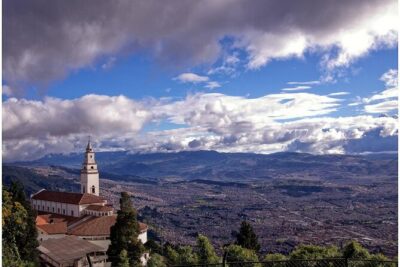
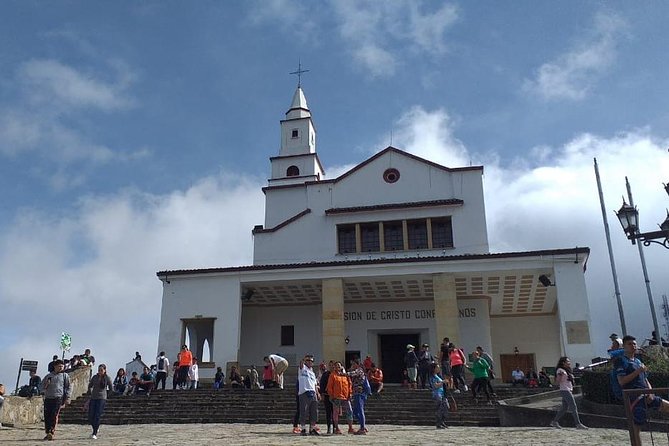
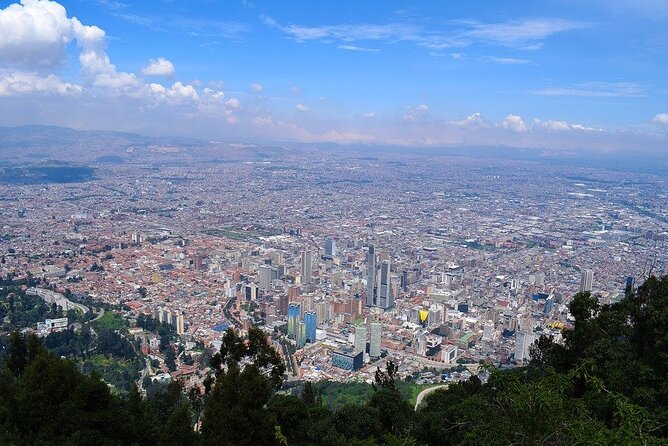
After leaving the underground, the day shifts to altitude and open views. Monserrate sits at 3,152 meters in the Cerros Orientales and is one of Bogotá’s most visited sacred places, guarding the city in a very literal, geographic way.
You’ll get about 1 hour 30 minutes at Monserrate, and you can reach the sanctuary by foot, cable car, or funicular. I like that the route choices give you flexibility. If you’re tired from the morning, cable car or funicular can save energy. If you feel good and want the workout, walking can help you get the views gradually, at your pace.
Inside, the Sanctuary of the Fallen Lord is the key draw, with Catholic pilgrims visiting in large numbers. This stop works well even if you’re not religious, because the experience is also about perspective: you’re looking back at a whole city from a different height, and the significance is visible in how people show up.
Consider this drawback up front: Monserrate can feel like a lot to manage in one day, especially if you’re sensitive to altitude or you don’t love long transitions. Bring a layer. Even if it’s sunny at street level, the elevation can make the air feel different.
Chorro de Quevedo and Plaza de Bolívar, How Bogotá’s Story Lines Up in Real Places
The itinerary then moves into downtown Bogotá, where the city’s past is still visible in public spaces.
Plaza del Chorro de Quevedo (About 20 Minutes)
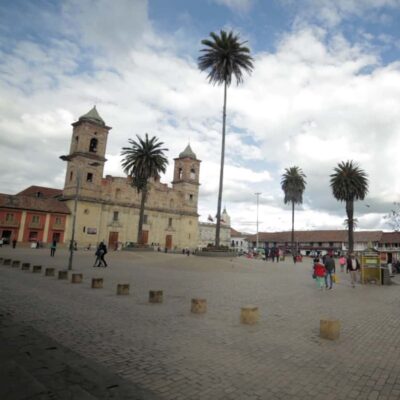
This is a short stop, about 20 minutes, but it’s a useful one. Chorro de Quevedo sits in the Candelario neighborhood and connects the pre-Hispanic past with Bogotá’s founding story. It’s also known for a bohemian vibe, so even if you only have time for a quick walk-through, you’ll feel the neighborhood energy rather than just ticking off a landmark.
Same city, a completely different day:
- La Candelaria, Monserrate and Museums Bogotá Private City Tour
★ 5.0 · 1,567 reviews - Shared Tour of the Historic Candelaria in Bogotá
★ 5.0 · 1,551 reviews - Bogotá: Guided La Candelaria Walking Tour
★ 4.8 · 1,229 reviews - Graffiti Tour: a fascinating walk through a street art City
★ 5.0 · 1,074 reviews
Plaza de Bolívar (About 40 Minutes)
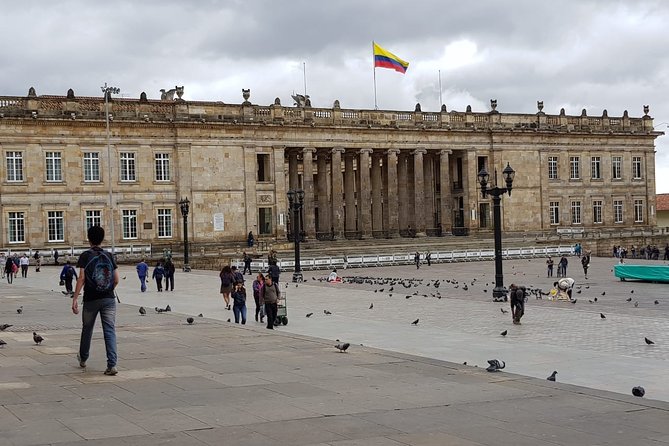
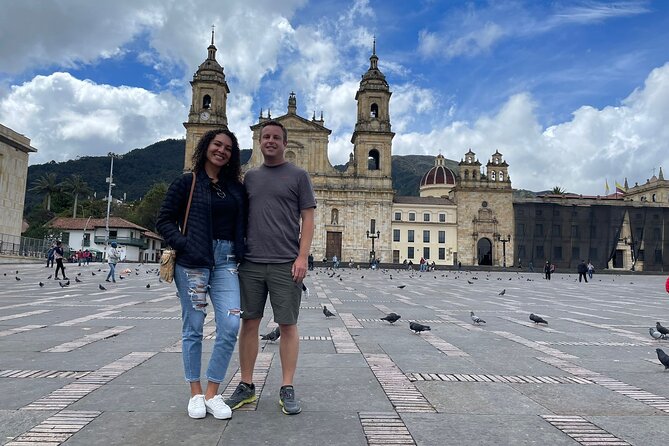
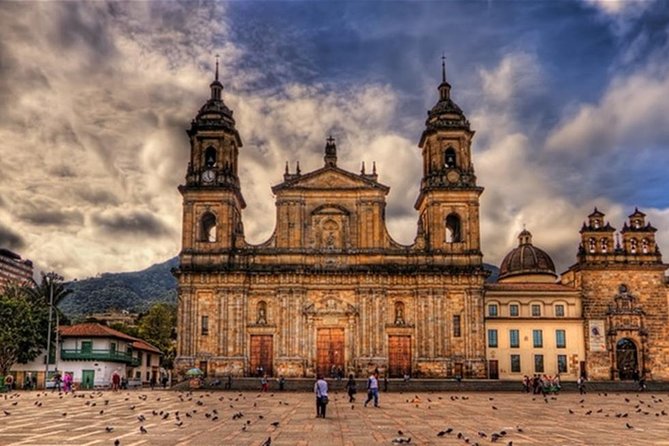
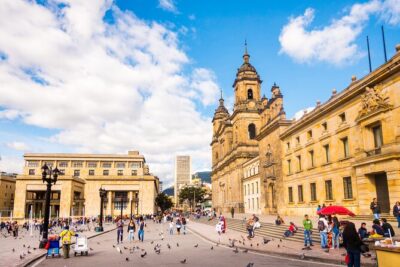
Next comes Plaza de Bolívar, about 40 minutes, and this one is bigger and more formal. The square has been a central stage for Colombian history, functioning over time as a public market and even a bullfighting circus. Even if you don’t focus on the historical layers, the surrounding architecture does the work, with buildings like the Liévano Palace, the National Capitol, and the Primada Cathedral framing the square.
This stop is also practical: you can use it to reset before museums. If you’re sensitive to crowds or fatigue, treat the time here like a short pause, not a marathon.
A holiday note, if you’re visiting around December: the square gets decorated with thousands of colored lights, and that can completely change the feel of the place. Even if it’s not holiday season, the plaza still helps you orient yourself fast, so the rest of the day feels more connected.
Botero Museum and the Museo del Oro, Art and Gold That Explain More Than You Expect
Two museum stops make this itinerary feel like more than just a day of viewpoints.
Museos del Banco de la República (About 1 Hour)
The Museos del Banco de la República includes the Fernando Botero collection. The museum was founded in 2000 after Botero donated works to the Banco de la República, which matters because it’s not just a random exhibit. It’s anchored in the artist’s own legacy and in a major Colombian cultural institution.
You’ll have about 1 hour here. I like that it’s long enough to enjoy the art without feeling trapped in a schedule. Botero’s style is instantly recognizable, and seeing his work in a dedicated setting is a different experience than catching a piece in a mixed display.
Museo del Oro (About 40 Minutes)
Then you hit the Museo del Oro, one of the most compelling history-focused museums in the region. It houses around 34,000 pieces of gold, including objects used by indigenous cultures like the Muisca and Tayrona for everyday life and sacred rituals.
This stop is about 40 minutes, which can sound short until you realize how visually dense the museum is. You’ll likely want to pick a few galleries to focus on rather than trying to see every single display. The good news is that the museum is designed to hold your attention even in shorter visits, because so many objects are so different from each other.
If you care about storytelling, this is where the day often clicks. The salt cathedral represents labor and belief underground, Monserrate represents faith and protection at altitude, and the gold museum shows how indigenous societies expressed identity through objects that were part daily life and part ritual.
The Private Tour Formula, How Comfort and a Bilingual Guide Change the Day
This is a private tour, meaning only your group travels together. That detail matters because it reduces stress around timing. You’re not constantly waiting on other groups, and your guide can shape small moments to your energy level.
You also travel in a private, air-conditioned vehicle, which is not just a comfort perk. In Bogotá, traffic and weather shifts can be real, and having a comfortable base makes the long day easier to tolerate.
The guide is bilingual, and that can be a major upgrade if you want the sites explained, not just pointed at. In practice, English clarity varies by guide, and that’s worth noting. Some guides, like Brenda and Laura, are praised for strong communication and for making sure you get enough time at each stop. But there are also a few reports of guides who struggled with English depth, so if that’s important to you, it’s smart to confirm your guide’s language level when possible.
Drivers also matter on this kind of route. Several experiences mention safe, professional driving, and I take that seriously because you’re moving between distinct zones in one day. When you feel comfortable in the vehicle, the rest of the itinerary feels more enjoyable.
What You Actually Get for $199, and Whether It’s Good Value for One Day
At $199 per person, the value depends on your priorities. If you’re trying to do the Salt Cathedral plus Monserrate plus downtown and two museums in the same day, this price bundles several things that would otherwise cost extra time and money.
Here’s what’s included:
- A private vehicle that covers the travel time between sites
- Bilingual guide support
- Lunch
- Hydration water
- Admission tickets for the Salt Cathedral, Monserrate, the Botero museum, and the Gold Museum
- Hotel pickup and drop-off
What’s not included is also straightforward: alcoholic beverages and additional food. Tips are optional.
The big reason this can feel worth it is simple: one-day itineraries are expensive in a different currency, time. Doing these far-apart stops efficiently is the main advantage of a private format. If you only have one day in Bogotá, you’re paying to protect that limited time.
If you have flexibility and want a slower pace, you might decide to split it into two days. Some people find this kind of itinerary intense because it stacks major highlights back-to-back. Still, the day is structured with realistic visit times, not nonstop sprinting between doors.
Practical Tips for Shoes, Timing, and Energy on a 10-Hour Schedule
Start time is 8:00 am, and the tour lasts about 10 hours on average. That early start is key because you want smoother travel between the city and the Salt Cathedral outside Bogotá.
From there, the day flows like this:
- Salt Cathedral of Zipaquirá, about 2 hours
- Monserrate, about 1 hour 30 minutes
- Chorro de Quevedo, about 20 minutes
- Plaza de Bolívar, about 40 minutes
- Botero museum, about 1 hour
- Gold Museum, about 40 minutes
Plus lunch and travel time between stops.
I’d plan your day like this:
- Wear comfortable shoes. You’ll do walking at multiple locations, and the mine environment is not like a smooth indoor floor.
- Bring layers for altitude at Monserrate. Even if Bogotá feels warm in the morning, the higher air can feel cooler.
- If you’re the kind of person who loves reading every plaque, you may want to focus on key areas inside the museums and not try to absorb everything. This schedule is designed for smart coverage, not a study tour.
Also, if you’re traveling solo, this setup can feel especially efficient. People often like having a guide handle the flow and timing, and private transport reduces the mental load of navigating.
Should You Book This Catedral de Sal and Bogotá in One Day Tour?
Book it if:
- You have one day and you want the biggest Bogotá highlights plus Zipaquirá without spending time figuring out logistics.
- You value included tickets and a planned route that covers both art and history.
- You like private travel, especially in places where traffic and timing can throw off group tours.
Skip or reconsider if:
- You want a slow, deep, museum-like pace where you take your time at every stop.
- You need very detailed English interpretation for every segment. The tour is bilingual, but clarity can vary by guide, so plan accordingly.
- You get worn out by altitude or long, continuous walking. You might still do it, but you’ll want a smart pacing plan and good footwear.
My take: for the price and the time, this is a strong option if you’re trying to make your Bogotá day count. The Salt Cathedral plus Monserrate pairing is the headline, and the downtown squares and museums turn it into a full picture of the city, not just a list of photo stops.
Hot off the list in Bogota
- Tour of Zipaquirá: Visit the Salt Cathedral and the main squares★ 4.5 · 55 reviews
- Zipaquirá and Salt Cathedral Muisca Heritage with Guide – Private★ 4.5 · 23 reviews
- Catedral de Sal desde Bogotá en Tren★ 5.0 · 5 reviews
- Zipaquira Salt Cathedral★ 5.0 · 4 reviews
- LOCAL GUIDE Zipaquirá PRIVATE TOUR – Salt Cathedral and Salt Oven★ 5.0 · 24 reviews
- Zipaquirá Salt Cathedral: An architectural wonder.★ 4.5 · 24 reviews
- Private Zipaquira Salt Cathedral and Guatavita Lagoon Tour from Bogota★ 4.5 · 44 reviews
- Zipaquira Salt Cathedral★ 4.5 · 12 reviews
Bogotá Tours, compared.
La Candelaria, Monserrate and Museums Bogotá Private City Tour
Read our review →
Shared Tour of the Historic Candelaria in Bogotá
Read our review →
Graffiti Tour: a fascinating walk through a street art City
Read our review →