
REVIEW · SAN BASILIO DE PALENQUE TOURS
Experience at the First Free Slave Village of Palenque
Palenque hits you in the heart fast. This day trip from Cartagena is a guided, hands-on look at San Basilio de Palenque, often described as the first free slave community in the Americas, with Benkos Bioho and living traditions front and center, plus music and instruments you can actually experience. I especially like that the tour keeps moving through meaningful stops, not just photo ops, and that you get a included lunch so your day stays easy. One thing to consider: you are out for a full 8-plus hour stretch, so plan for time on the move and a few short stops that are best enjoyed at a relaxed pace.
The best part is how the tour connects big names, like Benkos Bioho and Kid Pambele, to everyday cultural expressions you can see in town. It is offered in English, with an air-conditioned vehicle and bottled water, and the group size is capped at 100. If you want something purely chill, this is still pretty structured, with multiple stops and photo moments planned in.
In This Review
- Key highlights at a glance
- Getting from Cartagena to Palenque, the easy way
- San Basilio de Palenque: walking living culture, not just sites
- Benkos Bioho monument: the anti-slavery story in a focused moment
- Kid Pambele square: local pride beyond the sports headline
- Ancestral medicines stop: what you can see, and what you should plan for
- SIMANKONGO instruments shop: music as a living preservation tool
- Murals, graffiti, and Palenque letters: the photo stops that feel intentional
- Lunch at Restaurante el sazón de la negra: included comfort that keeps the day on track
- Head back to Cartagena: wrap-up and how to pace your energy
- Price and value: is 120 USD fair for this Palenque day?
- Who this tour suits best, and who should think twice
- Should you book this Palenque day trip from Cartagena?
- FAQ
- How long is the Palenque day trip from Cartagena?
- What is the meeting point in Cartagena?
- Is pickup from hotels included?
- Is the tour offered in English?
- What is included in the price?
- Are admission tickets included?
- Are ancestral medicines included?
- Is there a limit on group size?
Key highlights at a glance
- San Basilio de Palenque in one day with a guided walkthrough of the town’s emblematic sites
- Benkos Bioho monument stop with a short historical talk and time to photograph
- Kid Pambele square where the story of Antonio Cervantes connects sports fame to local identity
- Music and instruments at SIMANKONGO through a cultural institution focused on preserving traditions
- Murals and Palenque letters made for photos and street-art style souvenirs
- Included typical lunch at Restaurante el sazón de la negra
Getting from Cartagena to Palenque, the easy way
You start in Cartagena, meeting at Monumento Torre del Reloj at Boca del Puente in El Centro. The tour begins at 8:00 am, and pickup happens about an hour before from hotels (starting at 7:00 am), or you can meet at the designated point if that is simpler.
Then you ride out to Palenque in an air-conditioned vehicle, with bottled water along the way. The drive is about one hour, which is a nice length. Long enough for your day to feel like a true excursion, short enough that you do not waste half the trip just getting somewhere.
This matters because the experience is built around time in San Basilio de Palenque itself. If you hate being rushed, the good news is that the stop durations are mostly balanced between short context moments and longer cultural stops.
More San Basilio de Palenque visits:
- Tour De Palenque, Road to Emancipation.
★ 5.0 · 1,678 reviews - Freedom Tour of Palenque
★ 5.0 · 467 reviews - San Basilio de Palenque History Tour
★ 5.0 · 301 reviews
San Basilio de Palenque: walking living culture, not just sites
Once you arrive in town, the tour shifts from travel mode into guided exploration. You get about two hours touring the most emblematic areas of Palenque, with your guide connecting the dots between historical struggle and preserved community identity.
This is where I think the tour earns its value. You are not just driving past landmarks. You are guided through the place itself, with enough time to absorb what you are seeing and ask questions. Even if you only remember a few stories, the shape of the community starts to make sense.
Practical tip: bring sunscreen and something light for sun, and keep your phone charged. A lot of the day is designed for quick photo stops, like you will want your camera ready at every turn.
Benkos Bioho monument: the anti-slavery story in a focused moment
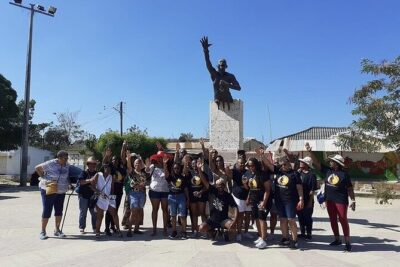
Next comes the Monumento a Benkos Bioho. You will spend around 20 minutes there, including a guided historical review of his life and legacy and time to take photos.
What I like about this stop is the length. It is not a long lecture, but it gives you enough context to understand why Palenque matters. You come away with names and themes that you can connect to what you will see later in town, especially around resilience and cultural survival.
This is also one of those moments where photos are part of the memory, but the talk is the point. If you skim it, you will miss why the monument is not just another photo backdrop.
Kid Pambele square: local pride beyond the sports headline
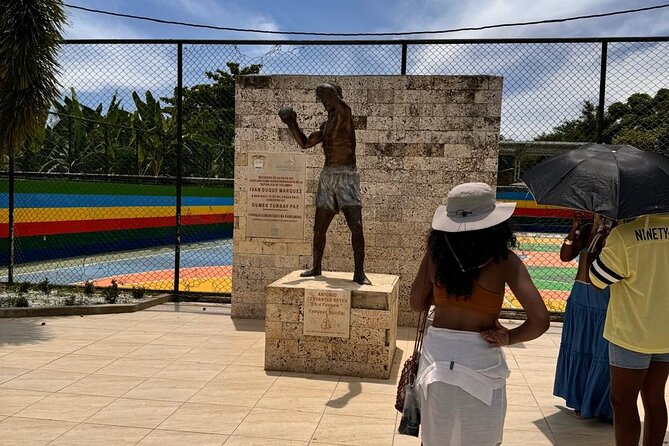
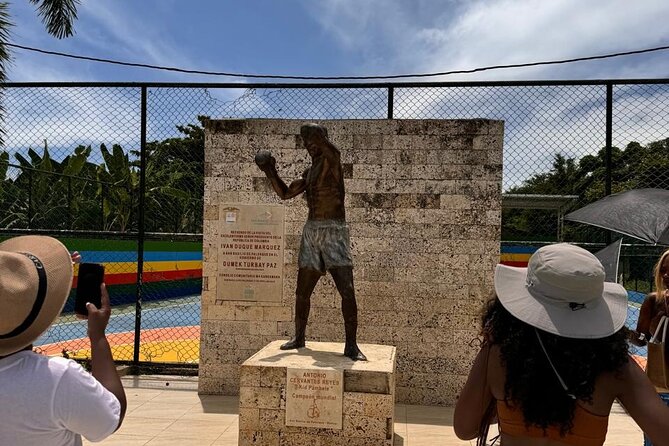
Then the tour heads to the square of Antonio Cervantes, better known as Kid Pambele, recognized internationally as a top junior welterweight. This stop is another short one, about 20 minutes, with a historical review and photo time.
This sounds like a curveball until you see why it works. The connection between a world-recognized boxer and a specific town spotlights how Palenque identity shows up in unexpected ways. It is not only about the past, it is also about reputation, pride, and who the community became over time.
If you love stories that link global fame to local roots, this is a fun stop. If you prefer strictly political history, give yourself permission to enjoy it anyway. It is still part of the same bigger story of identity.
More things to do in Cartagena:
- Cartagena Island Hopping: 5-Stop Rosario Islands Tour with Lunch
★ 4.5 · 4,903 reviews - Cartagena: Historic Center and Getsemaní Shared Walking Tour
★ 4.9 · 2,716 reviews - Cartagena: Rosario Islands Catamaran with Lunch and Snorkel
★ 4.5 · 2,479 reviews - Full-Day Rosario Islands Including Barú, Bocachica & Playa Blanca
★ 4.0 · 1,729 reviews
Ancestral medicines stop: what you can see, and what you should plan for
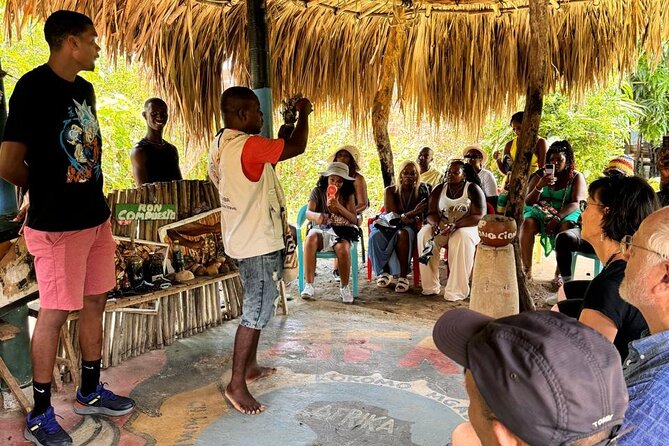
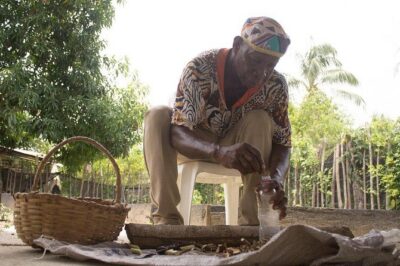
One of the more distinct stops is the visit to a place described as offering ancestral and healing medicines for every occasion. You get about one hour there.
Two important details here. First, the tour is a cultural visit, so you will learn the significance of the place and its mystical history as presented during the stop. Second, the tour listing makes it clear that ancestral medicines are not included.
So you can expect to see and learn, but if you want to purchase something, you should be ready for extra cost. If you are sensitive to spending pressure, keep a firm budget before you go in. Ask what is available and decide calmly.
SIMANKONGO instruments shop: music as a living preservation tool
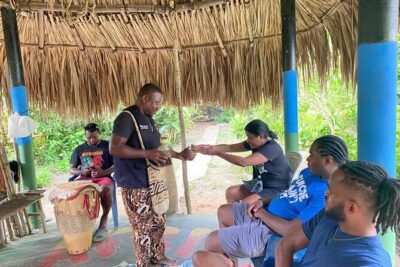
After that, you visit Tienda Depósito SIMANKONGO, described as a House of Instruments. You spend about an hour here, and the point is clear: music is not only entertainment, it is a vehicle for cultural values, customs, and preservation.
This is one of the stops where the tour feels most human. If you enjoy music, you will likely appreciate how the guide explains what you are seeing. If you do not consider yourself a music person, the hour still makes sense because the focus is cultural meaning, not only performance.
I also think this stop is a great pacing break. By now you have had multiple context-heavy moments. This one gives your brain a different kind of input: sound, tools, and tradition.
Murals, graffiti, and Palenque letters: the photo stops that feel intentional
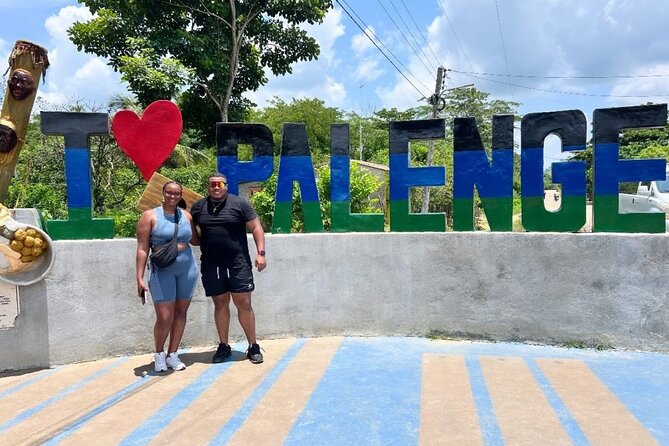
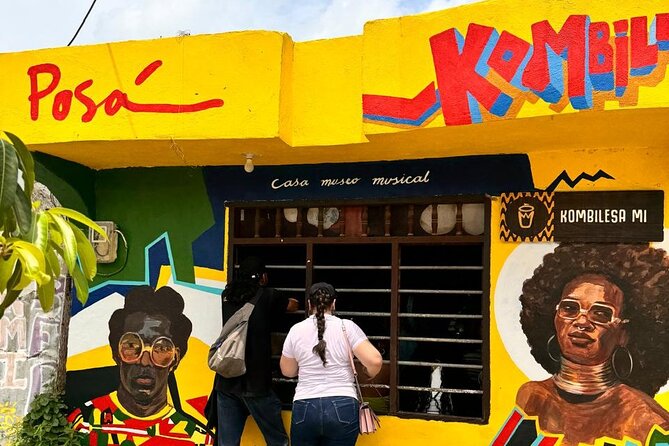
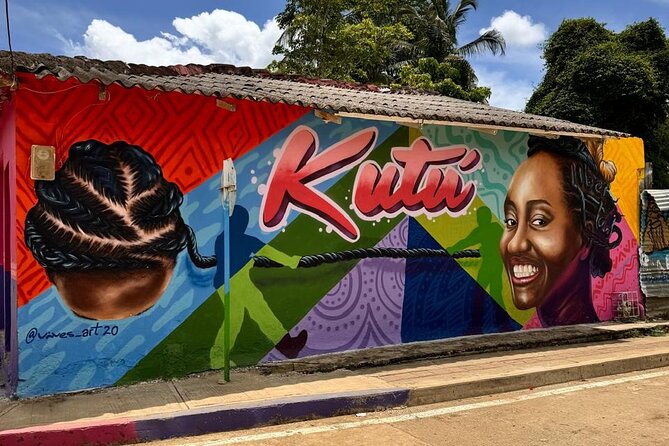
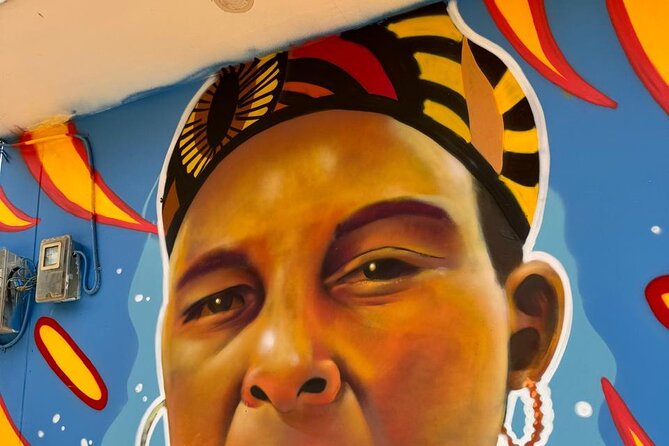
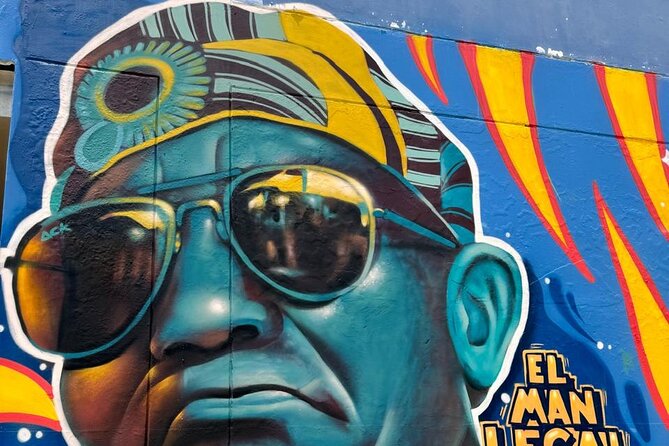
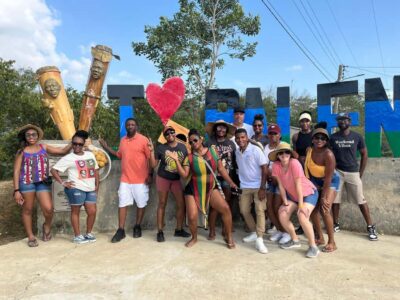
The tour then includes a short walk for murals and graffiti, around 20 minutes, followed by time at the emblematic letters of Palenque, another 20 minutes.
These are easy to dismiss on paper, but I actually like how they are folded in. They let you step back from the heavy historical content and see what Palenque looks like today, in the everyday language of walls and public space. Plus, they are practical photo moments. You get set down in good spots and you have time to take images without sprinting.
If you are the type who collects travel photos with meaning, use this time to capture details, not only group shots. A close-up of a mural section often tells a better story than a wide angle selfie.
Lunch at Restaurante el sazón de la negra: included comfort that keeps the day on track
You will then head to lunch at Restaurante el sazón de la negra. The stop is about one hour, and lunch is included.
This is not a small detail. A day trip like this can be exhausting if you spend time hunting food or dealing with dietary uncertainty. Having lunch planned, included, and timed into the tour helps your day feel smoother, especially if you are traveling with a tight schedule.
What you should keep in mind: because ancestral medicines are not included, and because this is a culturally focused day, you may see areas where you can add extras. Lunch being included is a clear win in controlling costs for the day.
A practical move: if you have dietary restrictions, try to communicate early with your guide before the meal. The day is guided, so you want to avoid awkward last-minute surprises.
Head back to Cartagena: wrap-up and how to pace your energy
After lunch, you return to Cartagena, ending back at the meeting point. The ride back takes about an hour.
By this time, you will likely feel a mix of emotions, especially if Benkos Bioho’s story and the idea of cultural survival hit you like it does for most people. That is part of why the tour is memorable. But you still want to stay comfortable enough to enjoy the last leg.
If you can, pack a small layer for the ride and keep your phone, water, and charger ready. The vehicle is air-conditioned, so it can feel cooler inside even if it is warm outside.
Price and value: is 120 USD fair for this Palenque day?
At $120 per person, this is not a bargain-basement excursion, but it also is not priced like a luxury private tour. The value comes from a few solid anchors:
- Air-conditioned vehicle from Cartagena, plus bottled water
- A guide for the full structured day
- Lunch included, which saves both time and money
- Admission ticket free for the listed stops, meaning you are not juggling payments for each site
For me, the key is that you are paying for interpretation, pacing, and access to a guided experience where stops matter. If you tried to do Palenque on your own, you might save some cash, but you would likely lose the connective tissue between the monument stories, the cultural institutions, and the everyday visuals in town.
The possible drawback is the day’s schedule. If you like long, slow explorations, the short photo and context windows might feel too scheduled. If you are happy with a guided day that hits the essential points, this price starts to look reasonable fast.
Who this tour suits best, and who should think twice
This fits best if you want a single-day experience that explains why Palenque matters, not just where to stand for photos. It is also a good choice if you like cultural stops that include music and community traditions, plus a planned meal.
It may not fit as well if:
- you want a totally free-form day with no structure
- you dislike walking around in the sun for short stretches between stops
- you are looking for an extended time at one single attraction, instead of a “many meaningful stops” approach
Should you book this Palenque day trip from Cartagena?
I would book this if your goal is to understand Palenque through guided context, music, and community identity, all in one day. The combination of Benkos Bioho’s legacy, Kid Pambele’s cultural presence, SIMANKONGO’s instruments focus, and an included lunch is a strong setup for value.
I would pause before booking if you are set on a slow travel pace or you want a deeper, longer stay in only one area. In that case, you might prefer a longer, less scheduled visit.
If you want the essentials done well, with a guide and a comfortable ride, this is a solid choice.
FAQ
How long is the Palenque day trip from Cartagena?
The total duration is about 8 hours 20 minutes, with the schedule built around pickup, travel time, multiple stops in San Basilio de Palenque, and the return to Cartagena.
What is the meeting point in Cartagena?
The meeting point is Monumento Torre del Reloj, Boca del Puente, El Centro, Cartagena de Indias.
Is pickup from hotels included?
Yes. Pickup is offered from hotels, or you can meet at the stated meeting point. Pickup is typically one hour before departure, starting at 7:00 am.
Is the tour offered in English?
Yes, it is offered in English.
What is included in the price?
Included items are an air-conditioned vehicle, bottled water, lunch, and a guide.
Are admission tickets included?
The tour notes that admission tickets for the stops are free.
Are ancestral medicines included?
No. Ancestral medicines are not included.
Is there a limit on group size?
Yes. The maximum group size is listed as 100 travelers.
Hot off the list in Cartagena
- SkyKitchen 2-Hour Cocktail Class in Cartagena★ 5.0 · 23 reviews
- Private Baru Aviary Tour with Lunch Included★ 4.5 · 26 reviews
- Rosario Islands Private Day – Exclusive VIP Escape★ 5.0 · 21 reviews
- CITY WALLED CITY SEGWAY SKATEBOARD TOUR and GETSEMANI★ 5.0 · 30 reviews
- Shore Excursion private Luxury City tour of Cartagena★ 5.0 · 8 reviews
- Cartagena Culinary Private Tour: Local Flavors & Hidden Gems★ 4.0 · 6 reviews
- Zip Through Walled City and Barrio Getsemani by Segway★ 5.0 · 4 reviews
- Shore Excursion Mangroves tour★ 4.5 · 3 reviews
San Basilio de Palenque Tours, compared.

Palenque´s tour, dance show, lunch, pick-Up inclu
Read our review →
Tour a san Basilio de Palenque desde cartagena
Read our review →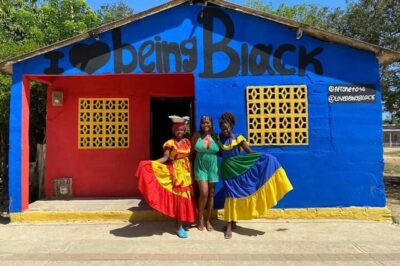
Visit Palenque with natives : history, culture and ancestral legacy
Read our review →Browse the lists this tour appears in