
REVIEW · WALLED CITY TOURS
Historic Center & Getsemaní Shared Tour in Cartagena
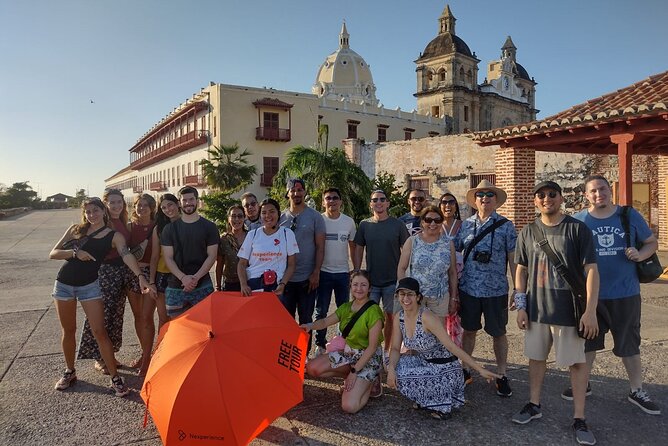
Cartagena’s past walks beside you. This shared walking tour links the walled city to Getsemaní, moving you through story-rich squares, fortifications, and church sites tied to the city’s darker chapters. What I like most is how it mixes big landmarks with small street details, then lands you where the music and color are still alive.
Two things I really appreciate: the tour includes free-entry stops listed for each site, and the guides often bring an energetic, humorous style that keeps the group together even when conditions are tough. One possible drawback is that the route is built for walking through sun and shade on cobblestones, so if you want a totally relaxed, low-effort stroll, you may find the pace a bit much, especially in heat.
In This Review
- Key highlights you’ll feel on this walk
- Price and what you actually get for $11.70
- Meeting at La Matuna, finishing in Getsemaní
- A quick reality check on pace, weather, and comfort
- Camellón de los Mártires and the Clock Tower route: from first peoples to the enslavement corridor
- Portal de los Dulces: a gender lens on slavery-era life
- Plaza de la Aduana: commerce, including enslaved people, and the city’s official power
- Museo de Arte Moderno Cartagena: art from the 50s and three big museum themes
- San Pedro Claver: the church architecture plus a human-rights message
- Baluarte de San Ignacio and Plaza Bolívar: defensive walls, pirate stories, and a breather
- Parque Centenario: shade, old-station vibes, and animals you might spot
- Getsemaní on foot: umbrellas, graffiti, and salsa plus African champeta
- Guides and group size: why the best part is often the person leading
- Who this tour suits best, and who might want to adjust expectations
- Simple tips to get more out of the walk
- Should you book this Historic Center & Getsemaní shared tour?
- FAQ
- How long is the Historic Center & Getsemaní shared tour?
- What is the price per person?
- Where does the tour start and where does it end?
- Is this tour a large group?
- Are there admission tickets included or required for the stops?
- What if the weather is bad?
Key highlights you’ll feel on this walk
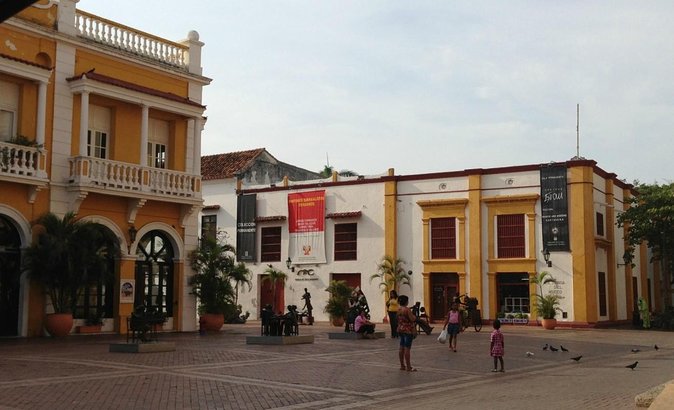
- A tight 2-3 hour route that hits the walled center and Getsemaní without dragging you around all day
- Free-entry stops listed at each major sight, so you pay mostly for the guidance and the flow of the route
- Human-rights history at San Pedro Claver, not just postcard sightseeing
- Fortress viewpoints and pirate-era context from bastions and plazas
- Parque Centenario as a breathing break, with shade plus old-station vibes
- Getsemaní street culture at the finish, with umbrellas, graffiti, salsa, and African champeta mentioned in the route
Price and what you actually get for $11.70
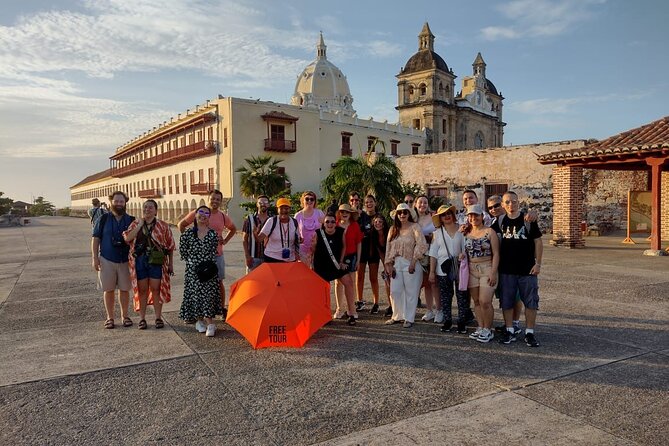
At $11.70 per person for roughly 2-3 hours, this tour is priced like an affordable orientation you can build an itinerary around. The value comes from two places: you get a guided route through multiple named sights, and the itinerary lists admission tickets as free at each stop, so you are not constantly paying extra to enter something.
Because it is a shared tour with up to 25 people, you are not buying a private show. But you are still paying for a guide who can connect the dots: why these buildings sit where they do, what the streets were used for, and how Getsemaní became the cultural corridor it is today.
More Historical Tours in Cartagena
- Cartagena: Historic Center and Getsemaní Shared Walking Tour
★ 4.9 · 2,716 reviews - San Basilio de Palenque History Tour
★ 5.0 · 301 reviews - Cartagena: Cultural tour Bazurto Market Adventure
★ 5.0 · 200 reviews
Meeting at La Matuna, finishing in Getsemaní
The tour begins in La Matuna at Cl. 32 #841, and it ends in Getsemaní at Plaza del Pozo. That end point matters. Getsemaní is where you can keep wandering after the walking tour, grabbing a late lunch, searching for street art, or simply using the new context to explore safely on your own.
The route also makes sense geographically. You start near the historic core, then you work through the old streets and defensive spaces, and you naturally spill out into Getsemaní. It feels like a guided transition rather than two unrelated tours glued together.
A quick reality check on pace, weather, and comfort
This is an easy-to-moderate walking tour, but it is still a walking tour. One guide’s style can help a lot here. I saw examples of guides keeping momentum and group control even when it rained hard, and other examples of guides coping with strong heat by adjusting the tone and reminding people to bring water.
Bring water and something for sun if you are going midday. Even with shade stops, you will spend time on open streets. Also wear shoes you trust on cobblestones.
Camellón de los Mártires and the Clock Tower route: from first peoples to the enslavement corridor
The walk opens at Camellón de los Mártires in Plaza de Cervantes. This start sets the tone by pointing you toward the indigenous people who were here before and around the arrival of the Spanish. It is a good way to avoid starting Cartagena history already trapped inside the colonial viewpoint.
Next comes the Torre del Reloj area, tied to the Golden Key of Cartagena, with a move through plaza spaces linked to the enslavement route. The tour mentions streets such as Porto Carrero and Candilejo, plus Pedro de Heredia as part of the story around where you are standing.
Why this stop sequence works: you begin learning what the city looks like, then you quickly learn what that look was used for. When you later see the grand facades, you will better understand they are tied to power and commerce, not just beauty.
More walks through the walled city and Getsemani:
- Private Walking Tour in Cartagena Walled City & Getsemaní
★ 5.0 · 1,357 reviews - Cartagena Antigua & Barrio Getsemani group with audio system
★ 5.0 · 658 reviews - Getsemani neighborhood in group: art and culture with Audio System
★ 5.0 · 447 reviews - Walled City, San Felipe Castle & Popa Convent Cartagena City Tour
★ 5.0 · 391 reviews
Portal de los Dulces: a gender lens on slavery-era life
The Portal de Los Dulces is framed as a symbol of female activity connected to slavery times and the traditions that descendants carried forward. Even if you are familiar with slavery as a topic, this is a reminder that history is lived through families, work roles, markets, and survival strategies.
This part is short, but the value is interpretive. A quick stop like this can change how you read the city in the rest of your trip. You start noticing how daily labor, not only battles, shaped Cartagena’s streets and economy.
Plaza de la Aduana: commerce, including enslaved people, and the city’s official power
At Plaza de la Aduana, the tour focuses on the commercialization of merchandise, including that of enslaved people. You also see important civic buildings in the area, including the Municipal Hall.
This is one of those moments where a guided explanation adds weight. Without context, a plaza is just a photo spot. With context, it becomes a map of the city’s systems: who profited, where goods moved, and how public power and private profit met.
If you prefer lighter history, this may feel heavy. But it is also the clearest way this tour ties Cartagena’s architecture to human reality, not just old-world aesthetics.
Museo de Arte Moderno Cartagena: art from the 50s and three big museum themes
Next, you step into the Museo de Arte Moderno Cartagena. The route highlights Caribbean and Latin American art from the 50s, and it also notes three museum angles: the Gold Museum with indigenous pieces from Colombia’s Caribbean region, and the Emerald Museum, described as featuring stones considered among the most beautiful in the world and worn by celebrities.
You do not spend forever here, since this is a walking tour. So you are getting a guided sampler rather than a full museum day. That can be a strength. It points you to what might be worth a return visit later if any theme hooks you.
If you are an art lover, this stop can be a pleasant surprise in an otherwise history-heavy schedule. If you are not, you still get a change of pace, and you learn enough to understand why Cartagena’s culture is not stuck in the past.
San Pedro Claver: the church architecture plus a human-rights message
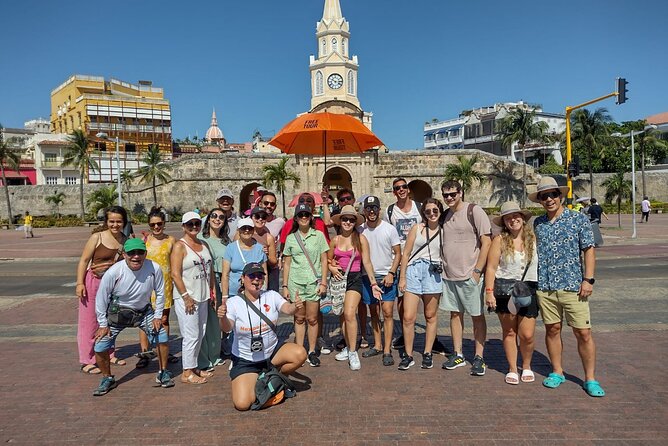
San Pedro Claver is where religion enters the route in a very specific way. The tour calls him Slave of the Slaves and points you to the church architecture and the museum-monastery that bear his name. It also frames the site as a headquarters of human rights.
This stop is meaningful even if you are not religious. It gives you a concrete place to connect faith, charity, and the long arc of advocacy. It is also a reminder that Cartagena’s story is not only about conquest and commerce, it is also about response and moral action.
If you have limited patience for structured indoor stops, you might feel rushed. But this kind of site benefits from a guide’s ability to point out what you are actually looking at.
Baluarte de San Ignacio and Plaza Bolívar: defensive walls, pirate stories, and a breather
From San Pedro Claver, the tour moves to the Baluarte de San Ignacio. The bastion is presented as part of the city’s defenses, specifically guarding the Bay of Souls from pirate attacks. You also get the history behind the walls of Cartagena.
Then you reach Plaza Bolívar, where the tour mentions pirate and corsair feats as part of the storytelling and includes time to refresh yourself. This is a good human moment in the schedule, since the earlier stretches can be mentally intense.
This segment helps you understand why Cartagena looks the way it does. The city’s geometry is not accidental. It is built for defense and control, and you feel that in the way bastions shape the view.
Parque Centenario: shade, old-station vibes, and animals you might spot
Parque centenario serves as the tour’s lungs. The route describes it as one of Cartagena’s most important green spaces, formerly a railway station, and tied to the tropical dry forest. It even mentions the chance to see sloths, squirrels, and iguanas.
Even if you do not see animals, the value is the pause. You get a break from the tight street walls and you get shade from large trees. One strong practical tip that comes through in the guides’ style is to use these breaks. Don’t treat them like just another stop to rush past.
If you like nature mixed into city walks, this is a welcome piece of variety.
Getsemaní on foot: umbrellas, graffiti, and salsa plus African champeta
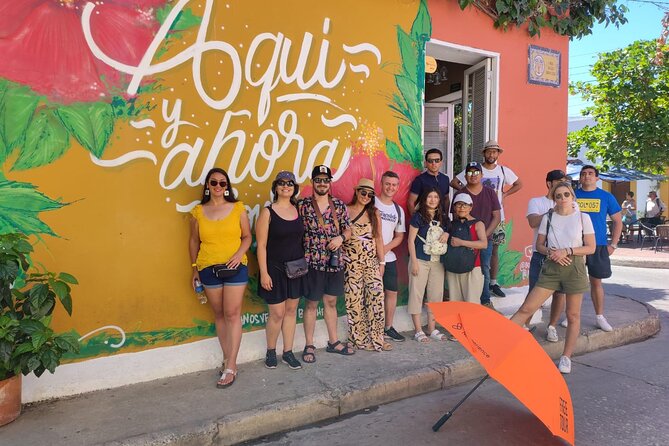
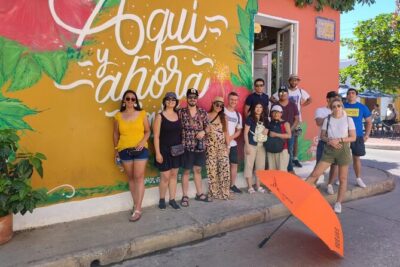
Now you hit Barrio Getsemaní, described as one of the most important colorful cultural corridors, known for umbrellas as a symbol of advertisement, graffiti, and unique architecture. This is where Cartagena shifts from fortress and churches into something more street-level and everyday.
The tour finishes at Plaza de La Trinidad, reaching Callejón Ancho and continuing along Calle San Juan to the sound of salsa and African champeta. It also points out the church and square of the Holy Trinity before the route ends at Plaza del Pozo.
Why the finish here is smart: you end inside the neighborhood where people actually hang out. After a structured tour, that is how you turn knowledge into experience.
Guides and group size: why the best part is often the person leading
The best praise in the reviews is about the guides. People consistently highlight guides like Legxy, Robert, Liz, Alvaro, Dani, Camilo Jose, Mercedes, Leesie, Legacy, Leez, Karen, and Ingrid for being engaging, funny, and energetic. Several guides also get credit for keeping the group together and making sure you do not feel lost.
That matters on shared tours. With up to 25 people, you want someone who can manage timing, stay oriented, and keep the pace comfortable. One review also praised a guide for having strong English and for answering questions openly, which is a big deal if you want to understand more than the script.
One caution from a less enthusiastic comment: there can be confusion when a tour involves optional support or when payment status is checked. If you prepay online, keep a screenshot or confirmation email handy, just in case someone asks for a name to match payment records.
Who this tour suits best, and who might want to adjust expectations
This tour is a great fit if you want an introduction that goes beyond postcard Cartagena. You get slave-era context, human-rights history, defensive architecture, art highlights, and the transition into Getsemaní street culture.
It is also a strong choice if you are planning to explore solo afterward. The route gives you a mental map so you feel more confident wandering on your own in the historic core and especially after you step into Getsemaní.
It may not be perfect if you want a completely light, entertainment-only walk. One person found the tour boring and left early. Taste matters. If you like fast, punchy storytelling, you will likely enjoy the animated guides. If you prefer total freedom to set your own pace, consider how much structure you can handle in 2-3 hours.
Simple tips to get more out of the walk
Start with comfort. Wear hat and sunglasses if the day is bright, and consider a light layer if evenings cool down.
Use the guide as a filter. Ask questions about what you are seeing, especially at the Clock Tower area and San Pedro Claver, where the meaning matters more than the scenery.
When you reach Plaza Bolívar and Parque centenario, take the break seriously. Hydrate, slow your breathing, and let the rest of the tour land, because Getsemaní at the end is where you can enjoy without feeling rushed.
Should you book this Historic Center & Getsemaní shared tour?
I think you should book it if you want a guided, efficient way to understand Cartagena’s two big moods, the walled historic core and the culture-forward streets of Getsemaní. At $11.70 with free-entry stops listed across the itinerary, it is hard to beat as an orientation and context builder, especially if you are only spending a short time in the city.
Book it early if your dates are fixed, since this one is often reserved about 25 days in advance. Also choose it if you enjoy guides who mix humor and history, since that is one of the strongest signals of satisfaction for this experience.
Skip it only if you hate walking in heat, or if you prefer to learn history at your own pace through books, signage, or private tours. Otherwise, this is the kind of tour that makes the rest of Cartagena click.
FAQ
How long is the Historic Center & Getsemaní shared tour?
The tour runs about 2 to 3 hours.
What is the price per person?
The price is listed as $11.70 per person.
Where does the tour start and where does it end?
It starts at Cl. 32 #841 in La Matuna and ends at Plaza del Pozo in Getsemaní.
Is this tour a large group?
It is a shared tour with a maximum of 25 travelers.
Are there admission tickets included or required for the stops?
The itinerary lists admission tickets as free for the stops included on the walk.
What if the weather is bad?
This experience requires good weather. If it is canceled due to poor weather, you will be offered a different date or a full refund.
Hot off the list in Cartagena
- SkyKitchen 2-Hour Cocktail Class in Cartagena★ 5.0 · 23 reviews
- Private Baru Aviary Tour with Lunch Included★ 4.5 · 26 reviews
- Rosario Islands Private Day – Exclusive VIP Escape★ 5.0 · 21 reviews
- CITY WALLED CITY SEGWAY SKATEBOARD TOUR and GETSEMANI★ 5.0 · 30 reviews
- Shore Excursion private Luxury City tour of Cartagena★ 5.0 · 8 reviews
- Cartagena Culinary Private Tour: Local Flavors & Hidden Gems★ 4.0 · 6 reviews
- Zip Through Walled City and Barrio Getsemani by Segway★ 5.0 · 4 reviews
- Shore Excursion Mangroves tour★ 4.5 · 3 reviews
Walled City Tours, compared.
Historic Center and Getsemaní Shared Walking Tour
Read our review →
Private Walking Tour in Cartagena Walled City & Getsemaní
Read our review →
Cartagena Antigua & Barrio Getsemani group with audio system
Read our review →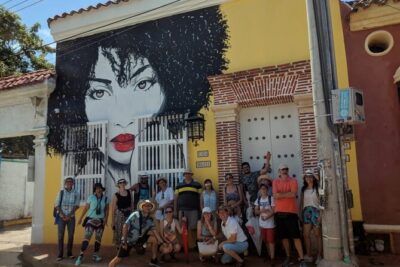
Getsemani neighborhood in group: art and culture with Audio System
Read our review →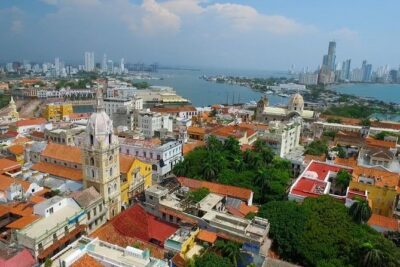
Walled City, San Felipe Castle & Popa Convent Cartagena City Tour
Read our review →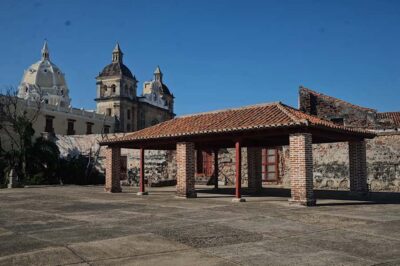
Cartagena Private Tour of the Walled City & Getsemani
Read our review →
Street Food Tour in Cartagena Walled City and Getsemani
Read our review →Browse the lists this tour appears in