
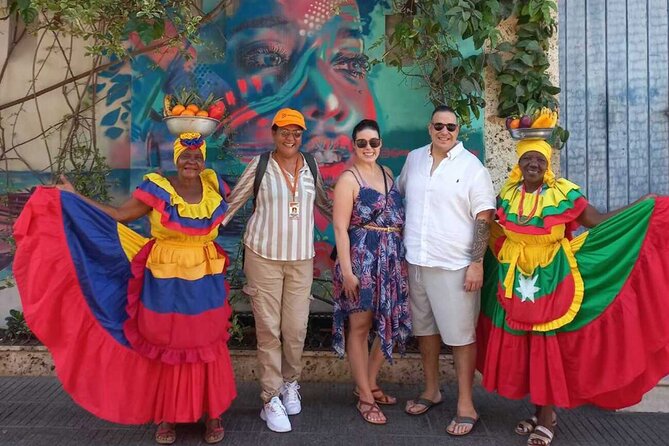
REVIEW · WALLED CITY TOURS
Private Walking Tour in Cartagena Walled City & Getsemaní
Cartagena is small, but its stories are huge. This private walking tour connects the Walled City and Getsemaní through colonial landmarks, independence sites, and street life.
I especially like how it’s paced for you, not a rushed group line, and I love that the guide can shift the focus toward what you care about, from fortifications to music and murals.
One thing to plan for: the walk can feel hot, and the tour is outdoors most of the time. If you go late morning or afternoon, bring sun protection and pace yourself, and keep a light rain layer handy since weather can change fast.
In This Review
- Key moments that make this tour worth your time
- A Private Walk Through Cartagena That Actually Fits Your Day
- Camellón de los Mártires: the start of Cartagena’s layered identity
- Torre del Reloj and the Golden Key, plus Pedro de Heredia’s presence
- Portal de los Dulces and the sweet side of memory
- Plaza de la Aduana: trade, power, and the buildings that survive
- Modern art stops and the museum area you’ll want to remember
- San Pedro Claver: religion and human rights in the same complex
- Baluarte de San Ignacio and Cartagena’s defensive mindset
- Palacio de la Inquisición: a museum that confronts what power did
- Plaza de la Proclamación and Santa Catalina Cathedral
- Centennial Park to Calle San Juan: animals, shade, and pop culture references
- Getsemaní finish: umbrellas, champeta, and pirate echoes at Plaza Bolívar
- Price and logistics, plus the realistic stuff to watch
- Guides, pacing, and what customization feels like in practice
- Who should book this, and who might want a different plan
- FAQ
- How long is the private walking tour?
- Where does the tour start and where does it end?
- Is this a private tour?
- What is included in the price?
- Are there admission tickets to pay for the stops?
- Do I need to book far in advance?
- Can I cancel and get a refund?
- Is the tour suitable for most people?
Key moments that make this tour worth your time
- Camellón de los Mártires to Plaza de Cervantes for the Indigenous roots of Cartagena before Spanish conquest
- Torre del Reloj (Clock Tower) and Plaza del Ecuador for the Golden Key and the start of the old enslavement route
- Portal de los Dulces and Plaza de la Aduana for the painful parts of the past, paired with sweet Caribbean tradition
- Palacio de la Inquisición for a hard-hitting look at colonial persecution, shown through a preserved museum
- Getsemaní streets with umbrellas overhead, street art, and the sound of salsa and African champeta
- Customization with a private guide, so you can linger where your curiosity pulls you
A Private Walk Through Cartagena That Actually Fits Your Day
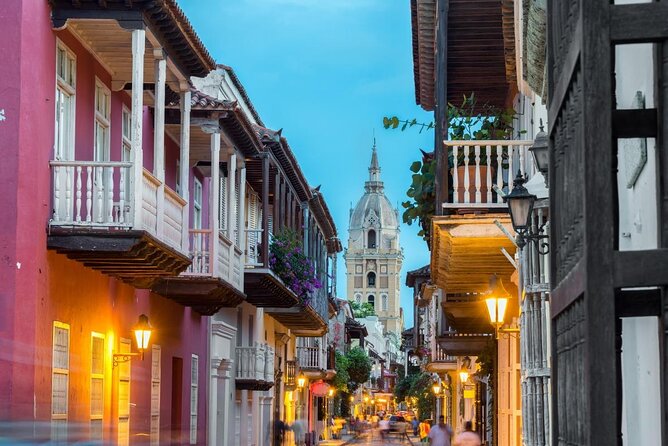
Cartagena is the kind of place where seeing a lot fast can backfire. The streets inside the Walled City are charming, tight, and full of surprises, so a private route works well because you control the tempo.
For me, the biggest win is the guide relationship. You are not just following a script. Your guide confirms your reservation, gives quick orientation, and then shapes the tour based on your interests, which is exactly what you want on a first visit.
The other practical advantage is value for time. At $49 per person for roughly 2 to 3 hours, you get a focused walk plus local context that helps you understand what you are seeing, instead of just collecting photos. Add bottled water and hotel pickup, and it becomes a low-stress way to get oriented without trying to DIY your way through history and directions.
More Walking Tours in Cartagena
- Cartagena: Historic Center and Getsemaní Shared Walking Tour
★ 4.9 · 2,716 reviews - Cartagena: Walled City and Getsemani Shared Walking Tour
★ 4.5 · 352 reviews - Playa Morena Beach Club Whith Lunch And Walking tour of fort San Fernando
★ 5.0 · 218 reviews
Camellón de los Mártires: the start of Cartagena’s layered identity
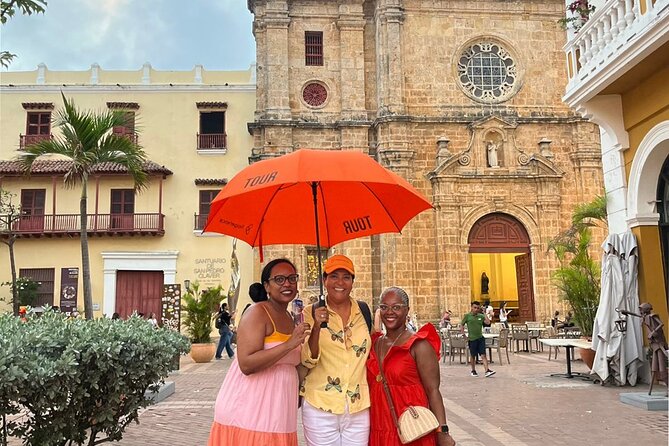
You begin at Camellón de los Mártires, Plaza de Cervantes. This is a smart opening because it frames Cartagena as a place with deep Indigenous presence, long before Europeans arrived.
From there, the tour takes you into the walkable core where stories overlap. You will hear how Indigenous legacy helped shape Cartagena’s multicultural identity, then you move into the colonial era with the guide tying places to people and events. It makes later stops easier to follow, because you already understand the baseline.
Why this matters for your visit: the Walled City can feel like a set of pretty backdrops unless someone gives you the timeline. Starting with this perspective helps you read the city instead of just looking at it.
Torre del Reloj and the Golden Key, plus Pedro de Heredia’s presence
Next comes the area around the Clock Tower at Plaza del Ecuador. Locally, it is part of the symbolism of Cartagena’s main old entry points, and the tour connects it to the old “enslavement route.”
You also get a guided moment tied to Pedro de Heredia, the city’s founder. Whether you are into early colonization or not, this stop helps you understand how Cartagena’s layout linked power, trade, and movement through specific streets.
Then you start walking along the historic routes, including Porto Carrero and Candilejo. The guide’s job here is not just to point. It is to connect what you see to what happened, which is crucial when the subject includes exploitation and forced labor.
Consideration: some of the tour themes are heavy, including the role of enslaved people in colonial systems. If you prefer a lighter sightseeing pace, tell your guide at the start so they can calibrate the depth and your comfort.
Portal de los Dulces and the sweet side of memory
You continue toward Portal de los Dulces, with the tour pausing near spots tied to Miguel de Cervantes and his connection to Cartagena. The interesting part is how the guide links literature and culture to a place that is also marked by difficult history.
At this stage, the tour also addresses slave markets that once operated nearby. Then it moves to the contrast you can actually taste on the street: the sweets under the arcades. Expect traditional Caribbean treats like coconut candies, tamarind balls, and guava-based sweets, with the guide explaining how these food traditions survived and became part of Cartagena’s identity.
There is also a specific cultural note here about female activity during slavery and how descendants continue traditions. That kind of detail turns a “pretty passageway” into something meaningful.
What you will enjoy: this stop gives you a balanced moment, painful context plus lived culture you can still experience in the present.
More walks through the walled city and Getsemani:
- Cartagena Antigua & Barrio Getsemani group with audio system
★ 5.0 · 658 reviews - Historic Center & Getsemaní Shared Tour in Cartagena
★ 5.0 · 620 reviews - Getsemani neighborhood in group: art and culture with Audio System
★ 5.0 · 447 reviews - Walled City, San Felipe Castle & Popa Convent Cartagena City Tour
★ 5.0 · 391 reviews
Plaza de la Aduana: trade, power, and the buildings that survive
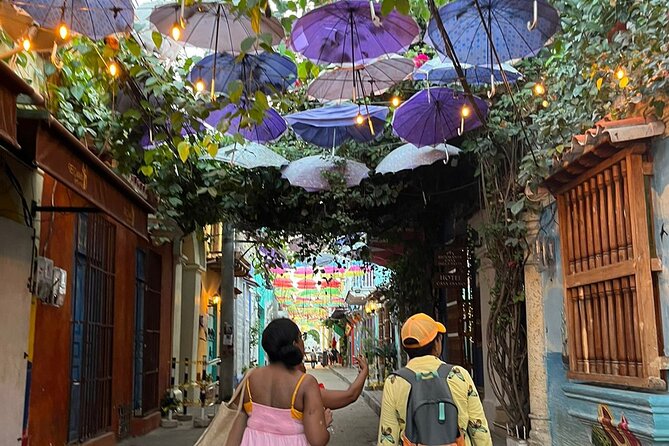
Then you reach Plaza de la Aduana, a key colonial commerce space. The tour frames it as a center for trade in colonial Cartagena, and it does not skip the darker reality that enslaved people were trafficked through systems connected to the port and commerce.
The payoff is the surrounding architecture. The municipal buildings and preserved facades create a real sense of how the city functioned. You get history you can see, not just read.
This is also a good photo stop, but I suggest you keep your phone down for a minute. Let the guide’s explanation sink in, then take photos when you understand which corner ties to which story.
Modern art stops and the museum area you’ll want to remember
As you keep walking, the route passes by the Museo de Arte Moderno Cartagena area. The important part for your planning is that the guide points out the Gold Museum and the Emerald Museum concepts associated with this space.
The tour’s format suggests you stop to take it in as part of the orientation walk, rather than being stuck inside for a long museum block. If you love art and collections, this makes sense as a teaser.
Practical angle: if you might want to return later for a museum visit, ask your guide what is most worth your time. The tour helps you decide later with better information.
San Pedro Claver: religion and human rights in the same complex
One of the more moving stops is Plaza de San Pedro Claver. You see the church and museum-monastery dedicated to San Pedro Claver, described as Slave of the Slaves, and you hear how the site connects to human rights.
This stop works well because it shifts the focus from the machinery of colonial exploitation to people and institutions that responded to suffering. It also gives you a break from street heat while you take in religious architecture.
If you are the type who loves context behind names and symbols, you will appreciate this stop more than you might expect just from the location.
Baluarte de San Ignacio and Cartagena’s defensive mindset
From there, you reach Baluarte de San Ignacio, a fortification built to defend Cartagena’s bay area from pirate attacks. This is where the city’s military engineering becomes visible in a way you can understand quickly.
The guide ties the bastion to the broader strategy of the city. Even if forts are not your main interest, the walls here help you see why Cartagena was so hard for enemies to take.
Why it matters: when you understand the defensive logic, later independence and pirate references make more sense. The city is shaped by who tried to attack it and who built to withstand them.
Palacio de la Inquisición: a museum that confronts what power did
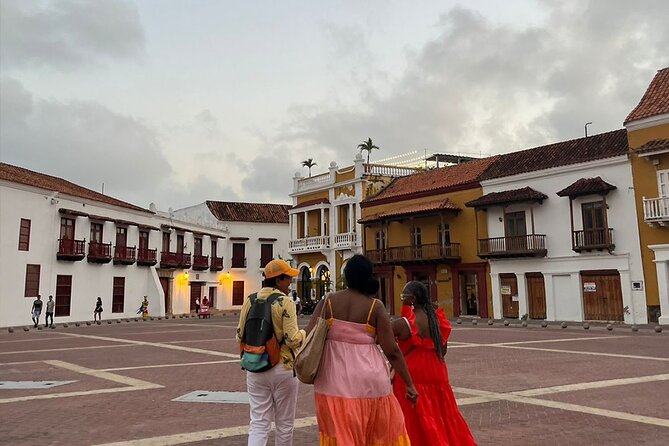
Then comes one of the most intense stops on the route, the Palacio de La Inquisición. The tour explains that in the early 1600s it functioned as the seat of the Holy Office of the Inquisition in Cartagena, and it discusses how suspected heretics and accusations related to witchcraft or blasphemy were treated.
Today, it is preserved as a museum. The guide explains the contrast between the building’s elegant baroque elements and the grim events tied to the site. There are exhibits, including items described as original torture devices.
This is not a light stop. If you want a walk that mostly celebrates romance and color, you might want to pace yourself here or ask the guide to focus on the architecture and public history angle.
Plaza de la Proclamación and Santa Catalina Cathedral
After the museum, the tour moves into the political turning point of the city’s independence story at Plaza de la Proclamación. Here, on November 11, 1811, Cartagena declared independence from Spanish rule, and the guide points out why this is a milestone in Colombia’s broader independence timeline.
You see the surrounding historic buildings, including the Archbishop’s Palace, which helps the scene feel like the living center of the city rather than just a monument.
Then you reach the Catedral Santa Catalina de Alejandría, built between 1577 and 1612. The guide explains its colonial religious architecture and highlights the bell tower and stone facade, which makes it one of the most photographed stops on this route. You also get context about how the cathedral served as a spiritual and social hub for Cartagena residents for centuries.
Tip for your visit: if you only have one church stop in the city, make it this one. The timing and context in the walk make it land.
Centennial Park to Calle San Juan: animals, shade, and pop culture references
Next, the route heads to Parque Centenario, a “lung” area that is also a former railway station. The shade helps, and the guide mentions a tropical dry forest setting where you might see sloths, squirrels, and iguanas.
Even if you do not spot everything instantly, this break is useful because it cools down your pace before you go back into the street energy.
Then you get into Cl. de San Juan #25-25, where the guide shifts from architecture and colonial story to cultural references. Expect talk tying graffiti, café, Blas de Lezo, Gabriel García Márquez, and musicians like Joe Arroyo, plus local names such as Mister Black.
This is a fun change of gear. It helps connect Cartagena’s identity to literature and music, not just wars and walls.
Getsemaní finish: umbrellas, champeta, and pirate echoes at Plaza Bolívar
You then head into Barrio Getsemaní, where the street scene becomes the star. This part of the route emphasizes colorful umbrellas overhead, street art, and a mix of colonial architecture with modern creative expression.
The tour description also points to the soundscape, including salsa and African champeta, so you get a sense that Cartagena never totally stopped being Caribbean. It is not just a museum city.
After that, you move toward Plaza de Bolívar. The guide references pirate and corsair feats and ties them back to bastions and Spanish military constructions you have been seeing along the way. It is a satisfying closing loop, because you started with people and timelines, and now the city’s defense and rebellion themes come together.
You end in Getsemaní, with the route described as finishing around Plaza del Pozo. Your guide can end somewhere else inside the Walled City if you prefer, which is handy if you want an easy return point.
Price and logistics, plus the realistic stuff to watch
For $49 per person with bottled water, private transportation, hotel pickup, and a tour guide, the pricing feels reasonable for a first-pass orientation. You are paying for someone to translate Cartagena into a story you can follow, while also saving your time from mapping and figuring out what matters most.
Two real-world considerations show up in the experience pattern. First is heat. Several guides are praised for setting a good pace, but the walk still gets hot fast. I strongly suggest an early morning start if you can.
Second is comfort around shopping stops. One account reported feeling pressured during souvenir related moments, while the provider response insisted there were no required purchases and that any shop stop was made at the person’s own request. Since that risk exists with any walking tour that passes shops, do this: tell your guide early that you want no shopping time unless you ask. That one sentence can protect your enjoyment.
Also, bottled water is listed as included. One solo visitor reported it was missing. That does not mean it is always a problem, but you should still get a water bottle at the beginning and flag it immediately if you do not.
Guides, pacing, and what customization feels like in practice
This tour’s quality often comes down to your guide. Names you may encounter include Karen, William, Álvaro, Legaxy, Dimas, Elis, Ingrid, and Mercedes. In the positive accounts, the guides are described as friendly, funny, and able to explain history without turning it into a lecture.
I like the fact that your guide can tailor the route. You can focus on colonial architecture, the darker colonial chapters, independence sites, or the cultural beats of Getsemaní. If you are the photo type, many guides naturally build in short stops for viewpoints and street scenes, especially around colorful facades and umbrella streets.
On rainy days, at least one guide is praised for adapting the experience rather than canceling. That tells me you should pack a compact poncho and keep your expectations flexible.
Who should book this, and who might want a different plan
Book it if you want:
- A great first-time introduction to Cartagena’s Walled City and Getsemaní
- A route that mixes architecture, politics, and music
- A guide who can adjust pace and focus for your group
- An efficient use of limited time, especially if you are on a cruise and need to cover the essentials
Consider another option if:
- You want mostly light entertainment and scenery, with less discussion of slavery, the Inquisition, or colonial violence
- You have trouble walking for 2 to 3 hours, even with stops
- Heat is a major issue for you and you cannot start early
If you are on the fence, tell your guide your priorities at the beginning. This private setup is at its best when you communicate what you want to understand.
FAQ
How long is the private walking tour?
It runs about 2 to 3 hours.
Where does the tour start and where does it end?
It starts at Cl. 29 #8b-124 in El Centro, and it ends at Cl. de San Juan #25-25 in Getsemaní. The tour notes that the guide can end in a different location within the Walled City if you prefer.
Is this a private tour?
Yes. It is private, so only your group participates.
What is included in the price?
Included items are bottled water, private transportation, a tour guide, and hotel pick-up.
Are there admission tickets to pay for the stops?
The stop details list admission ticket free at each listed stop.
Do I need to book far in advance?
It is commonly booked about 33 days in advance on average.
Can I cancel and get a refund?
Yes, free cancellation is available up to 24 hours in advance for a full refund.
Is the tour suitable for most people?
The tour states that most travelers can participate.
Hot off the list in Cartagena
- SkyKitchen 2-Hour Cocktail Class in Cartagena★ 5.0 · 23 reviews
- Private Baru Aviary Tour with Lunch Included★ 4.5 · 26 reviews
- Rosario Islands Private Day – Exclusive VIP Escape★ 5.0 · 21 reviews
- CITY WALLED CITY SEGWAY SKATEBOARD TOUR and GETSEMANI★ 5.0 · 30 reviews
- Shore Excursion private Luxury City tour of Cartagena★ 5.0 · 8 reviews
- Cartagena Culinary Private Tour: Local Flavors & Hidden Gems★ 4.0 · 6 reviews
- Shore Excursion Mangroves tour★ 4.5 · 3 reviews
- Zip Through Walled City and Barrio Getsemani by Segway★ 5.0 · 4 reviews
Walled City Tours, compared.
Historic Center and Getsemaní Shared Walking Tour
Read our review →
Cartagena Antigua & Barrio Getsemani group with audio system
Read our review →
Historic Center & Getsemaní Shared Tour in Cartagena
Read our review →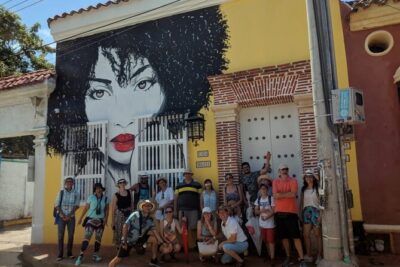
Getsemani neighborhood in group: art and culture with Audio System
Read our review →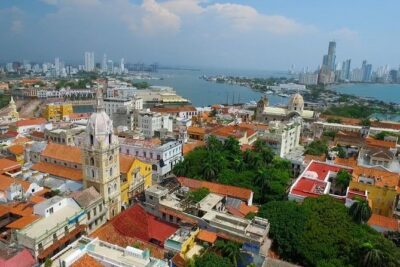
Walled City, San Felipe Castle & Popa Convent Cartagena City Tour
Read our review →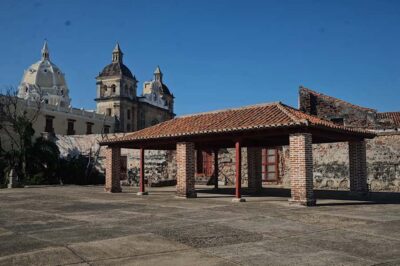
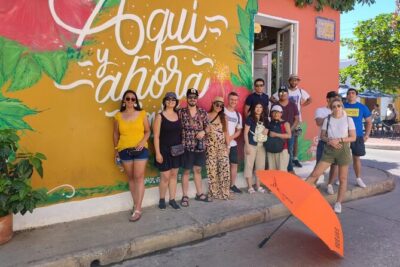
Cartagena Private Tour of the Walled City & Getsemani
Read our review →
Street Food Tour in Cartagena Walled City and Getsemani
Read our review →Browse the lists this tour appears in