REVIEW · BOGOTÁ TOURS
Pedaling in Full Color: Urban Art, and Cultural Diversity
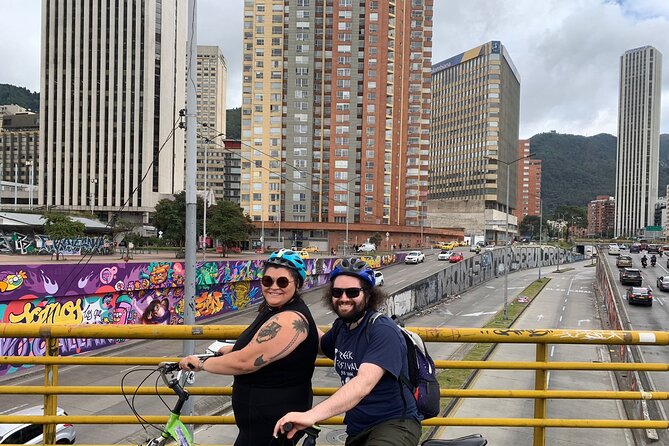
Street art here is a city lesson on wheels. This 3-hour Bogotá bike tour strings together mural after mural, with a local street-artist promoter explaining the ideas behind each wall. I love that the route has a clear story thread about how street art channels Bogotá’s resilient spirit and Colombia’s memory into messages for a better future, and you also get an artist-led perspective instead of generic sightseeing.
I also like that the stops range from technique and indigenous culture to political paste-ups and memorial art, so you get the full spectrum of what Bogotá street art can do. One consideration: it is packed with short stops, so if you want long hangs in each neighborhood, you may find the pace a bit fast.
In This Review
- Quick hits before you pedal
- Entering Bogotá Through Street Art at Cl 26b #4-13
- The tour’s main idea: Why murals act like memory
- Stop-by-stop: what you’ll see and what to notice
- Casa Genoveva and the hyper-real First Wall illusion
- Chorro de Quevedo: indigenous and Afro-Colombian pride in murals
- La Concordia market facade painted with farmers’ culture
- Skal Bogotá and the brooms-and-mops technique mural
- Venado de Oro: Frailejon and the water story of the páramos
- Parqueadero: La Musica es Vida and female singers
- Plazoleta del Rosario: the removed conquistador statue and the debate it triggers
- LAGA: Seventh Pedestrian Avenue political paste-ups
- Panamericana Centro: a Wayuu woman with a weaving-inspired backdrop
- Plaza de Las Nieves: birds in flight as biodiversity storytelling
- BancoColombia Mercantil: a clear anti-banking political mural
- Plaza de Toros Santamaria: murals near the bull ring, including anti-bullfighting messages
- Barrio Armenia: female artists, plus gardens from community effort
- Casa Kilele and the mural for social leaders lost in Colombia
- Centro de Memoria y Reconciliación: Mosaic of Memory for Peace
- Cafe de la fonda break: decriminalization talk and coffee plus beer tastings
- Santa Fe: peace and post-conflict symbolism with cumbia instrument imagery
- The iconic 10-floor compassion wall near Cl. 26 #13-69
- Spotty Bogotá: the tallest mural in Colombia
- The value equation: timing, group size, and what’s included
- Safety and comfort, the things that actually affect your ride
- Who should book this bike mural tour
- Should you book Pedaling in Full Color?
Quick hits before you pedal
- Artist-hosted, story-driven route that connects murals to social themes and future-minded hope.
- Up-close mural viewing on a bike, so you cover multiple neighborhoods without slogging by foot.
- A strong cultural focus, with works highlighting indigenous, Afro-Colombian, and Wayuu perspectives.
- Politics in the open, including protest murals against institutions like banking and debates about colonialism.
- Plenty of variety in art styles, from hyper-realistic spray to stencils, paste-ups, mosaics, and huge walls.
Entering Bogotá Through Street Art at Cl 26b #4-13
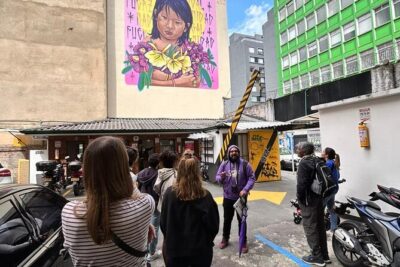
This tour starts at Cl 26b #4-13 with a warm welcome and a personal introduction from your guide, who is a local street artist and promoter. Right away, you get bike security tips, plus the main story argument for the tour, so you know what you are looking for instead of just snapping photos.
You’ll also feel the intent behind the experience. The guide frames street art as more than decoration, as a committed movement that has channeled the city’s resilience and the country’s memory into a message pushing for a better future. That matters, because the murals you see later will make more sense when you treat them like public storytelling rather than random graffiti.
More things to do in Bogota:
- Bogotá Bike Tour
★ 5.0 · 3,329 reviews - Bogota: Bicycle City Tour
★ 4.9 · 2,156 reviews - Zipaquirá: Salt Cathedral Group Tour with Pickup
★ 4.8 · 1,606 reviews
The tour’s main idea: Why murals act like memory
The route keeps returning to one big theme: street art as a kind of public memory. Some walls speak about peace. Others point at conflict, injustice, and colonial history. Even when the imagery is playful, the tour wants you to connect it to what Bogotá is dealing with right now.
That focus changes how you read the art. A duplicated face is not just a cool trick, it is a prompt to think about innocence versus the harshness people expect from cities, and how quick judgments can turn into prejudice. A stencil of an indigenous woman is not just a portrait, it is a reminder that living cultures have always shaped Colombia’s identity, not just its past.
Stop-by-stop: what you’ll see and what to notice
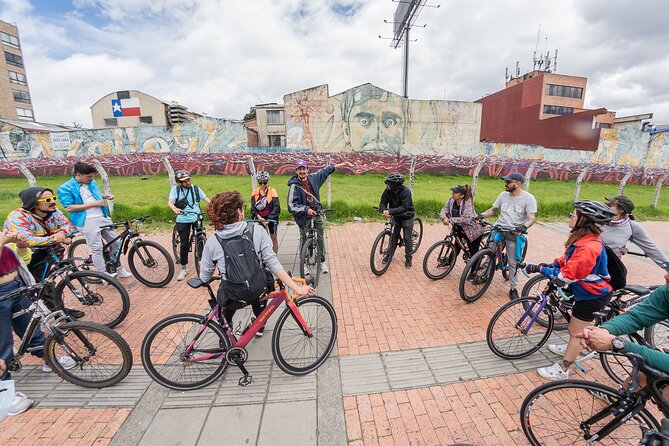
Casa Genoveva and the hyper-real First Wall illusion
At Instituto Distrital de Patrimonio Cultural, Casa Genoveva, you start with a highly realistic spray piece showing a child with a duplicated face. The effect feels like double vision, which makes your brain pause and ask why it is doing that.
The guide uses this as a springboard for a hard but important topic: how the urban environment can distort perception, and how people can make misjudgments about graffiti and minorities. If you like street art that has sharp social thinking under the paint, this first stop sets the tone perfectly.
Same city, a completely different day:
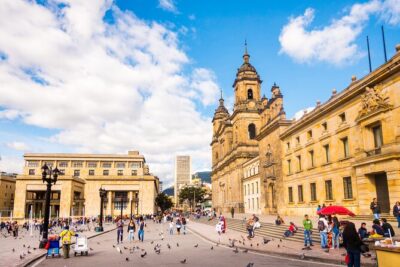
- La Candelaria, Monserrate and Museums Bogotá Private City Tour
★ 5.0 · 1,567 reviews - Shared Tour of the Historic Candelaria in Bogotá
★ 5.0 · 1,551 reviews - Bogotá: Guided La Candelaria Walking Tour
★ 4.8 · 1,229 reviews - Graffiti Tour: a fascinating walk through a street art City
★ 5.0 · 1,074 reviews
Chorro de Quevedo: indigenous and Afro-Colombian pride in murals
Plazoleta Chorro de Quevedo is built for mural lovers. You’ll admire works that celebrate indigenous and Afro-Colombian cultures, and you’ll also learn that the walls you’re seeing were commissioned as part of a mission to support and give back to the local art scene.
This stop is valuable because it is not just about what the murals show, it is about who gets to paint them and why. When a community invests in art, the message tends to stay grounded.
La Concordia market facade painted with farmers’ culture
At Plaza de Mercado La Concordia, the murals transform a farmers market facade. It’s a shorter visit, but it carries a clear message: the people who feed the city also deserve to be seen, not just served.
Look for how the art treats everyday work as culture. That is one reason street art can feel more human than museum-style storytelling. It lives where people already are.
Skal Bogotá and the brooms-and-mops technique mural
At Skal Bogotá, you’ll see a giant mural created with an impressive painting technique using brooms and mops by Bastardilla. The image is a child launching a shooting star with a slingshot, which instantly makes you wonder what the child’s wish might be.
This is one of those stops where you can enjoy the visual energy and still talk about meaning. The technique choice matters too. You are seeing process and scale as part of the message.
Venado de Oro: Frailejon and the water story of the páramos
Edificio Venado de Oro brings nature into the conversation through a mural of Frailejon and Páramos. The guide connects the imagery to the significance of this unique highland wet ecosystem, especially its role in water and biodiversity.
Even if you came for street art only, this stop nudges you toward thinking about environment as part of cultural identity. In Bogotá, nature is not far away, it’s part of what the city depends on.
Parqueadero: La Musica es Vida and female singers
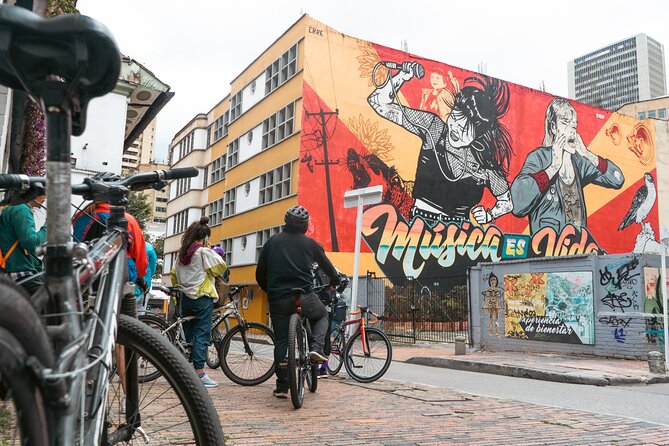
At Parqueadero, you’ll find La Musica es Vida, a giant stencil mural paying homage to female singers in Colombia. This one was commissioned by a major music festival, which helps explain why the style is so crisp and direct.
If you care about representation, this stop lands hard. Stencils are often associated with quick statements, but here the statement is praise, a way of insisting that women’s voices are central to Colombia’s music culture.
Plazoleta del Rosario: the removed conquistador statue and the debate it triggers
Plazoleta del Rosario has a powerful twist. You’ll explore an empty pedestal where the Misak indigenous nation removed a conquistador statue. From there, you’ll talk about political tensions, colonialism, and how recent subjects have inspired artists.
One more detail makes this stop extra thought-provoking. Nearby, you can witness what’s described as the highest vandal graffiti on a nearby skyscraper. The tour uses that contrast to keep the conversation about power and legitimacy going.
LAGA: Seventh Pedestrian Avenue political paste-ups
At LAGA, you’ll hit Seventh Pedestrian Avenue, a collection of political paste-ups. Your job here is part sightseeing, part puzzle solving. Enjoy finding hidden images and subtle meanings.
Paste-ups often carry a different emotional speed than spray or murals. They can feel like messages passed along fast, so you should watch for small clues in the layering.
Panamericana Centro: a Wayuu woman with a weaving-inspired backdrop
On Carrera 7 con 12, Panamericana Centro, the tour showcases a stencil mural featuring a Wayuu indigenous woman, framed by a backdrop inspired by her intricate weavings.
This stop is great if you want portrait art that respects craft. The background pattern is not filler, it’s the visual translation of textile culture into mural language. It also gives you a break from the purely political or memorial works on the route.
Plaza de Las Nieves: birds in flight as biodiversity storytelling
Plaza de Las Nieves is a big mural moment: giant colorful birds in flight representing Colombia and Bogotá’s biodiversity. The visit is short, but it’s designed to reset your brain after heavier themes.
When art turns ecology into an image you can instantly grasp, you remember it. Birds feel universal, but the point here is specific, biodiversity as an identity for the region.
BancoColombia Mercantil: a clear anti-banking political mural
At BANCOLOMBIA MERCANTIL, you’ll see a powerful political mural opposing the influence of the banking industry. It’s direct, and it keeps reminding you that street art is often where public debate spills out when other forums feel closed.
This stop can also be an entry point for conversations you might not hear on traditional city tours. Even if politics is not your thing, the mural gives you a concrete example of what locals argue about.
Plaza de Toros Santamaria: murals near the bull ring, including anti-bullfighting messages
At Plaza de Toros Santamaria, you ride along a street close to the bulls ring arena adorned with 20 murals by national and international artists. Some include messages against bullfighting.
This stop is a lesson in how art can challenge tradition. It also shows you how public art can exist in the same frame as cultural institutions, not neatly separated from them.
Barrio Armenia: female artists, plus gardens from community effort
In Barrio Armenia, the walls feature illustrations by female artists, paired with community-driven work in gardens. It’s a smaller, quieter stop compared with the bigger mural walls, but that makes it feel more personal.
The garden element matters, because it connects the visual art to daily life. It is harder to ignore a mural when the neighborhood is actively shaping the space around it.
Casa Kilele and the mural for social leaders lost in Colombia
At Casa Kilele, you’ll encounter a mural paying tribute to social leaders who have lost their lives in Colombia. You’ll also listen to storytelling and insights about the conflict in Colombia.
This stop is emotionally heavier, and that is intentional. The tour isn’t pretending street art is only fun. It’s also a place where loss gets remembered and names and causes stay visible.
Centro de Memoria y Reconciliación: Mosaic of Memory for Peace
At Centro de Memoria y Reconciliacion, you’ll see the Mosaic of Memory for Peace mural. The artwork is adorned with corn seeds, funded by the Center of Memory, Peace, and Reconciliation, representing the journey toward peace.
Corn seeds are a specific choice. They suggest growth, patience, and continuity, which fits a peace narrative better than vague symbols would.
Cafe de la fonda break: decriminalization talk and coffee plus beer tastings
Cafe de la fonda is your 15-minute break. Here you learn about decriminalization of street art and the decree that supports it. You can also taste local coffee and beer, but this part is not included in the tour price.
This stop is a smart reset. It turns the morning color back into a real-world conversation about how a city decides what counts as vandalism and what counts as culture.
Santa Fe: peace and post-conflict symbolism with cumbia instrument imagery
In Santa Fe neighborhood, you’ll see a mural symbolizing peace and post-conflict in Colombia. It features a monkey transforming blackbirds using a cumbia instrument.
The imagery sounds playful, but the theme is not. The tour uses this kind of unexpected metaphor to show how post-conflict storytelling can be both symbolic and human. It’s not always solemn, but it still points to healing.
The iconic 10-floor compassion wall near Cl. 26 #13-69
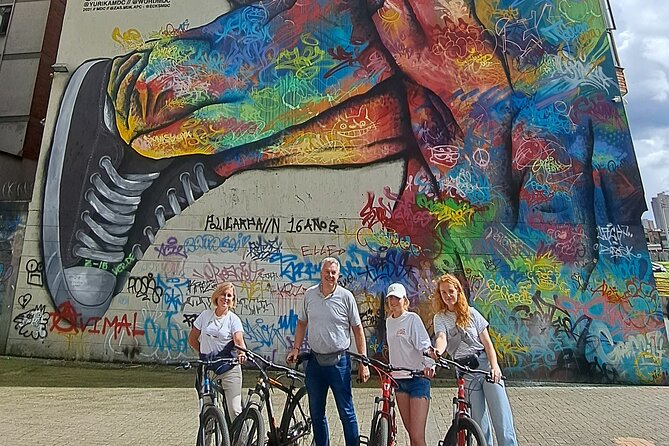
Near Cl. 26 #13-69, the tour highlights the most iconic mural of the city, based on a photograph showing tenderness between two homeless individuals amidst difficult circumstances. It’s described as a 10-floor wall and a powerful representation of compassion.
This is one of the stops where you have to slow down. The message is not hidden in tiny details. It is front and center, and the scale makes it unavoidable.
Spotty Bogotá: the tallest mural in Colombia
You end with Spotty Bogotá, described as the tallest mural in Colombia. It represents cultural and natural diversity through portraits of children from different areas and cultures in Colombia in the downtown area.
This ending works because it ties back to the tour’s future-minded thread. You’re leaving with faces, not just arguments. It’s an optimistic final note.
The value equation: timing, group size, and what’s included
At $56.18 per person for about 3 hours, you’re paying for something more than movement. You’re paying for interpretation, organization, and an artist’s framing of what you are seeing.
Your included basics are clear and useful: a bicycle, a helmet, and a rain poncho. That matters in Bogotá because conditions can change quickly, and the poncho is there so you can keep going instead of cutting the tour short.
Also, most listed stops say admission is free, which helps keep the total cost down. The one thing you’ll likely spend extra on is the Cafe de la fonda tasting, since coffee and other tastings are not included.
One more value point: the group size has a maximum of 15. Smaller groups help you hear the explanations and ask questions when you want to.
Safety and comfort, the things that actually affect your ride
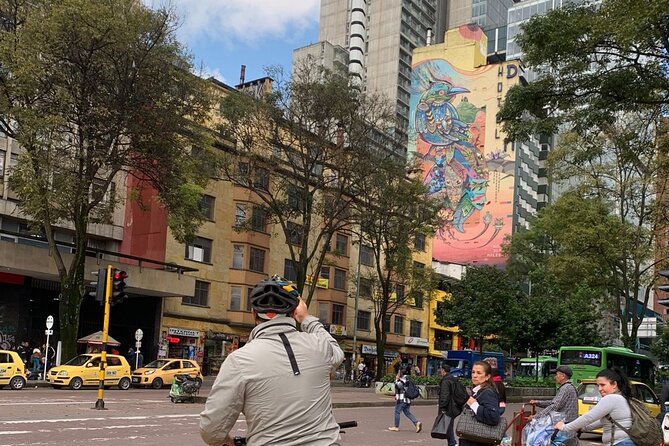
Street art tours can go either way, but this one is designed to keep you feeling secure. You get bike security tips at the start, and the route includes a lot of short mural stops, so you are not riding continuously for long stretches.
From past experiences shared with the tour company, guides such as Diego, Natalia, and Anna have been singled out for friendly, easygoing guidance and clear explanations of each piece’s significance and technique. That “real artist” factor shows up in the way they talk, not just what they show.
If you can, consider doing it on a Sunday. Some versions of the ride happen on days when streets open up for bikes through cyclovia, which can make the biking feel more relaxed and more local.
Who should book this bike mural tour
This is a great pick if you want Bogotá in color, but you also want meaning. It suits you if street art is your way into culture, and if you like your sightseeing with context, social themes, and real neighborhoods.
It’s also a good match for first-time visitors because you cover many areas in a short time. Most travelers can participate, and the structured stop pattern helps you manage energy and attention.
If you only want a light, photo-only tour, you might find the political and conflict-related stops intense. But if you can handle art that has opinions, you’ll likely appreciate the range.
Should you book Pedaling in Full Color?
I think you should book it if you want Bogotá street art explained in a way that connects style to story, from hyper-real spray tricks to stencils, political paste-ups, memorial mosaics, and huge iconic walls. The price feels fair for a guided, bike-based route with useful gear and a tight 3-hour format.
Skip it only if you hate a brisk pace and you want long stops with no commentary. Also, budget a little extra if you plan to try the coffee or beer tastings at Cafe de la fonda, since those are not included.
If your goal is to understand how Bogotá uses walls to talk to itself, this tour gives you exactly that, one mural at a time.
Hot off the list in Bogota
- Tour of Zipaquirá: Visit the Salt Cathedral and the main squares★ 4.5 · 55 reviews
- Zipaquirá and Salt Cathedral Muisca Heritage with Guide – Private★ 4.5 · 23 reviews
- Catedral de Sal desde Bogotá en Tren★ 5.0 · 5 reviews
- Zipaquira Salt Cathedral★ 5.0 · 4 reviews
- LOCAL GUIDE Zipaquirá PRIVATE TOUR – Salt Cathedral and Salt Oven★ 5.0 · 24 reviews
- Zipaquirá Salt Cathedral: An architectural wonder.★ 4.5 · 24 reviews
- Private Zipaquira Salt Cathedral and Guatavita Lagoon Tour from Bogota★ 4.5 · 44 reviews
- Zipaquira Salt Cathedral★ 4.5 · 12 reviews
Bogotá Tours, compared.
La Candelaria, Monserrate and Museums Bogotá Private City Tour
Read our review →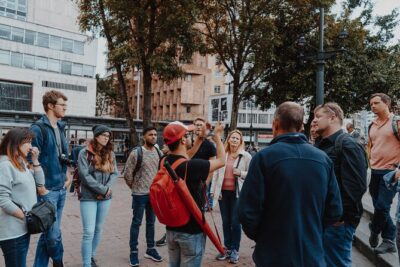
Shared Tour of the Historic Candelaria in Bogotá
Read our review →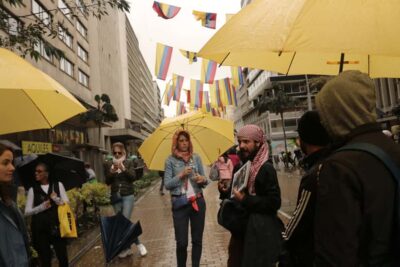
Graffiti Tour: a fascinating walk through a street art City
Read our review →