
REVIEW · LOST CITY TREKS
Santa Marta: Multi-Day Trek to The Lost City
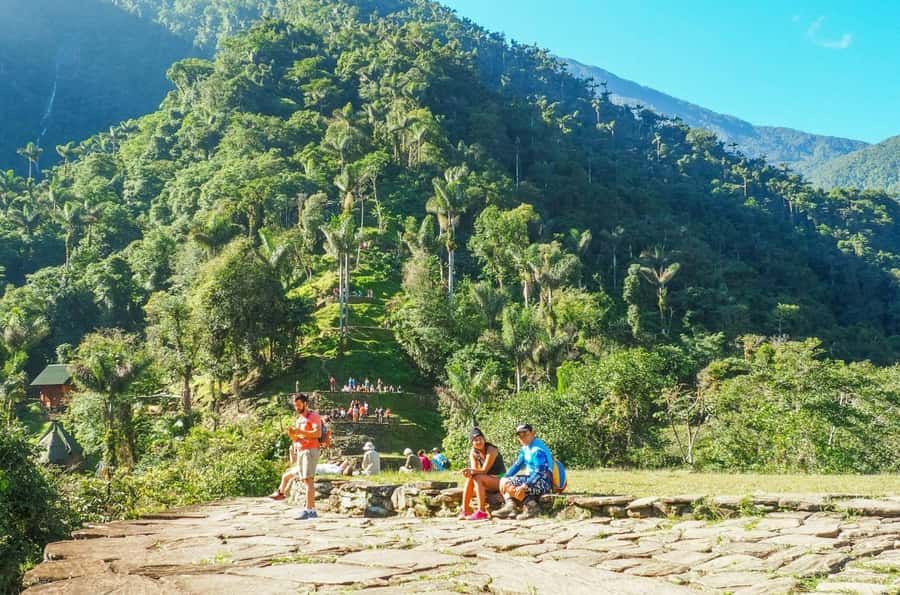
Jungle stairs are not for casual walkers. This Santa Marta to the Lost City trek mixes 1,200 stone steps through dense jungle with a small group pace, plus real interpretation from guides and translators like Arghenith, Francisco, and Emilie. I love how the days are structured so you’re not just walking, you’re also stopping for lookout views, natural pools, and fruit breaks. I also like the cultural angle, with time spent learning about the Tayrona, Wiwa, and Kogui peoples during the trek.
Here’s the main consideration: it is genuinely strenuous. Even with stops for snacks and swims, you should expect heat, humidity, slippery mud, and long hiking hours, not a stroll.
In This Review
- Key things to know before you go
- Santa Marta to the Lost City, what you’re really signing up for
- The Lost City itself: terraces, roads, plazas, and the 1,200-step entrance
- Day-by-day: how the 4, 5, and 6-day options actually feel
- 4-day trek: classic rhythm, big highlight on the steps day
- 5-day trek: the same big climb, plus a breather day
- 6-day trek: shorter walking days and more cultural time
- Camps, food, and the reality of sleeping in the jungle
- Indigenous culture and why it feels different when you’re walking through it
- Price and value: what $713 covers, and when it might feel steep
- Fit level, weather, and the gear checklist that actually helps
- Should you book the Santa Marta Lost City trek?
- FAQ
- How long is the Lost City trek from Santa Marta?
- What time does the adventure start?
- How many steps are there to reach the Lost City?
- What kind of sleeping arrangements are provided?
- Are meals included?
- Where is pickup included from?
- Are drones allowed on the trek?
- Is the trek suitable for everyone?
Key things to know before you go
- 1,200 steps on Day 3 or Day 4: that climb is the moment most people remember most.
- 169 terraces and stone roads: the Lost City is not a single viewpoint, it is a whole built system.
- Choose 4, 5, or 6 days: the longer options add more river time and an extra camp day.
- Camps have electricity, toilets, and showers: jungle sleeping is still basic, but not grim.
- Meals are included, and water is purified: drinks beyond water cost extra, plan your hydration routine.
- Your guide matters: people praise the way named guides and translators like Miguel, Coco, and Bridgette keep things organized and encouraging.
Santa Marta to the Lost City, what you’re really signing up for
The Lost City trek starts in Santa Marta’s Sierra Nevada region, heading out from the city toward El Mamey, then gradually into deeper jungle country. You’re doing the kind of hike that forces you to focus on your breathing, your footing, and your time with your group. That sounds harsh, but it is also exactly why it feels so meaningful.
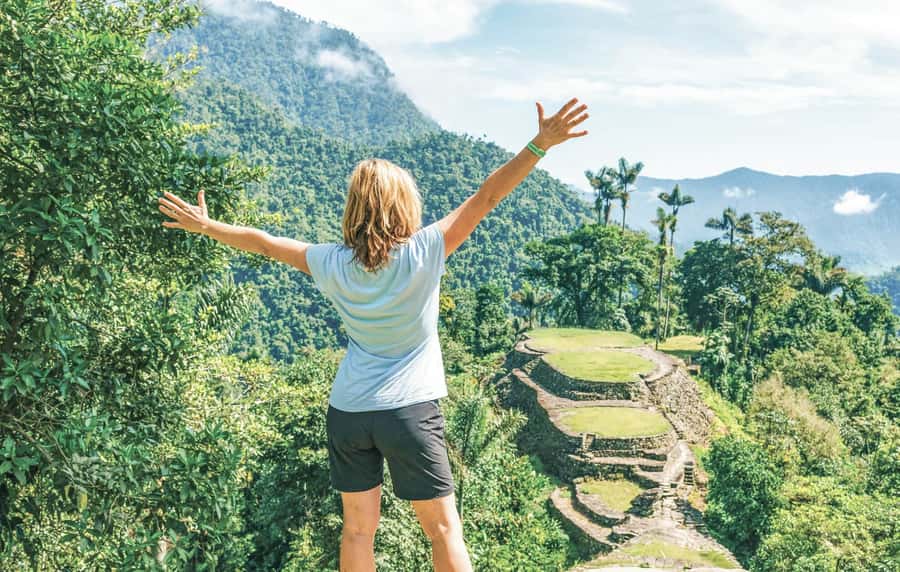
The big draw is obvious: you’re walking to an archaeological site believed to have been founded around 800 CE, roughly 650 years earlier than Machu Picchu. The Lost City itself is made of 169 terraces carved into the mountainside, connected by tiled roads and dotted with small circular plazas. When you finally reach it, you are not looking at one dramatic ruin. You are seeing how a whole city worked, in steep terrain.
And you get to do this with an experienced guide service in Spanish and English, in a group limited to 15 people. That matters because you spend your days in narrow trails, wet sections, and river crossings. Having a guide at all times is also what makes the cultural learning feel more grounded than a quick stop.
If you want a straightforward workout with a strong payoff, this trek fits. If you want a comfy nature walk, pick something gentler.
More Hiking & Trekking in Santa Marta
- Hike for 4 days to the Lost City, Santa Marta
★ 5.0 · 3,308 reviews - Full-Day Hiking Tour in Minca with coffee & Cocoa Workshop
★ 4.5 · 189 reviews - Eco-Hike in Minca: Coffee Tour, Waterfall & Chocolate Experience!
★ 5.0 · 140 reviews
The Lost City itself: terraces, roads, plazas, and the 1,200-step entrance
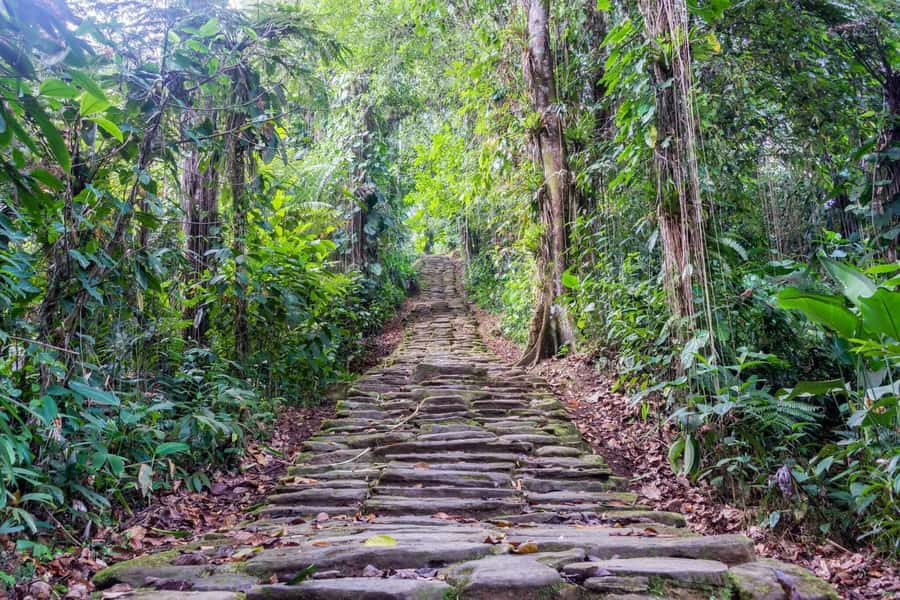
The highlight day is built around one very physical gateway. On the itinerary, you climb up around 1,200 stone steps to reach the Lost City. The steps follow a trail constructed by Tayrona people. It is long, repetitive, and slow if you let it be. If you pace yourself, it becomes manageable.
What makes the Lost City worth the effort is the way it is laid out. As you move through the site with your guide, you’ll see:
- 169 terraces carved into the mountain slope, shaping living and agricultural space.
- A network of tiled roads, so movement through the city is organized, not random.
- Small circular plazas, which help explain the ceremonial and communal layout.
Your guide will show you relics and explain ancestral stories tied to the site. This is also where the cultural component becomes practical. The Lost City is not just a photo stop. It’s a place you understand better because someone gives you context while you’re standing there.
After the morning spent exploring, you retrace your route back toward the camps. That return is part of the mental rhythm of the trek: get your big moment, take it in, then shift back into hiking mode.
Day-by-day: how the 4, 5, and 6-day options actually feel
The core experience is shared across all durations. You start with the Santa Marta to El Mamey transfer by 4WD, then you build hiking days around river camps and, for the key day, the climb to the Lost City. The longer itineraries mainly adjust pacing, add a rest day, and add more time in the indigenous reserve and by the river.
4-day trek: classic rhythm, big highlight on the steps day
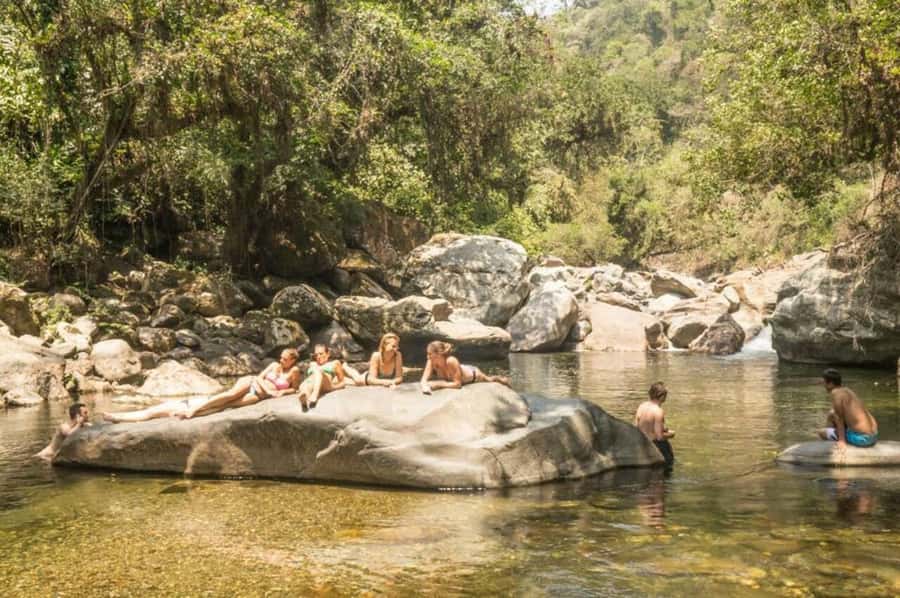
Day 1 starts around 9:30 AM, with a 3-hour 4WD drive to El Mamey. You’ll have lunch there, then begin the hike in search of the sacred place of the Tayronas. The first hiking stretch is described as a smooth walk of about 4 hours (around 7.6 km). You stop at Lookout Las Tres Cruces for a snack and fruit. Later, you’ll reach natural pools and waterfalls where you can cool off before arriving at the first camp in the afternoon. Dinner and overnight follow.
Day 2 begins early with breakfast, then the hike heads toward the Wiwa camp by the Buritaca River. There’s time for a refreshing bath, rest, and lunch. After that, the trail continues through jungle where you’ll encounter houses connected to a Kogui indigenous village called Mutanyi. You finish at the second camp for dinner and overnight. This is one of the longer walking days: about 7 hours (around 14.7 km), mostly uphill with some downhill.
Day 3 is the steepest mental grind. You start very early, eat breakfast, then climb the 1,200 stone steps to reach the Lost City. Your guide walks you through what you’re seeing and explains the site’s relics and ancestral stories. After morning exploration and photos, you begin the trek back to the camp where you started the steps morning, have lunch, then continue to the Wiwa camp for overnight. The day is about 7 hours total, with the uphill and downhill spread over roughly 6 km.
Day 4 starts with early breakfast, then you walk about 2 hours back toward the camp where you spent night one. From there, people on the 4-day plan do the final push: a short rest with fruit and water, then another 4 hours trekking to El Mamey for lunch. You finish with the return 4WD jeep to Santa Marta.
More Lost City treks:
- Lost City – Ciudad Perdida Colombia
★ 5.0 · 1,203 reviews - 4-Day Lost City Small-Group Tour in Santa Marta
★ 5.0 · 254 reviews - 4-Day Walking Tour to Lost City of Sierra Nevada
★ 5.0 · 136 reviews
5-day trek: the same big climb, plus a breather day
If you choose the 5-day option, the itinerary extends Day 4 for an extra night. After walking back toward the first camp, the group splits. The 5-day group gets lunch and spends the rest of the day relaxing at the camp, with time to observe views and interact with others before dinner and overnight.
Your last day continues as the 4-day plan, with an early start, lunch back at El Mamey, and the 4WD return to Santa Marta. The extra day is mainly about giving you more time to recover between the steps climb and the final travel day.
6-day trek: shorter walking days and more cultural time
The 6-day option changes the texture of the experience. Day 1 is the same start, around 9:30 AM and 3 hours by 4WD to El Mamey, with a first hiking stretch of about 4 hours for 7.6 km, plus the Las Tres Cruces lookout, snacks, fruit, and natural pools.
Day 2 is described as a shorter day of about 3 hours on relatively smooth terrain. You head toward an indigenous reserve, where you can learn about the Wiwas and Koguis cultures, then spend time at the second camp by the river.
Day 3 becomes a slower descent and river valley day. After breakfast, you descend toward the Buritaca River valley, pass indigenous housing forming the small Mutanyi community, and then hike to the next camp. There’s time for a river bath, plus breaks for rest and learning about flora and fauna. The camp also includes stories and adventures narrated by the guides.
Day 4 is your steps day. You climb 1,200 steps to the Lost City, explore in the morning, hike back down, have lunch, then continue to the next camp for dinner and overnight. Day 5 gives you another lighter day, about 2 hours to the camp, with lunch and relaxing time with views and social time. Day 6 ends the way you expect: breakfast, walk to El Mamey, lunch, and then the 4WD return to Santa Marta.
If you want more breathing room and more cultural exchange time, the 6-day pacing is the easiest sell.
Camps, food, and the reality of sleeping in the jungle
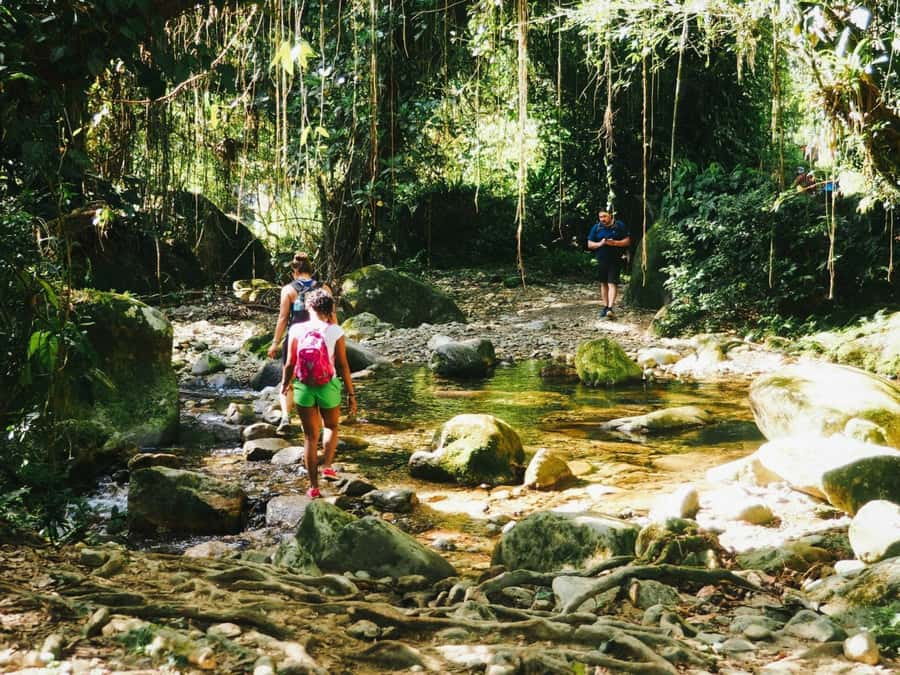
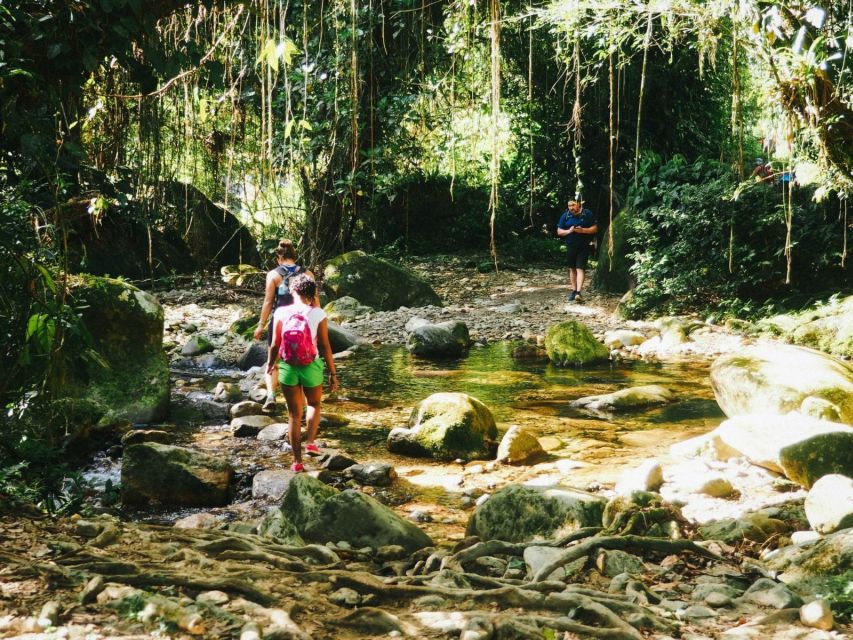
You should go in expecting “jungle basic,” but not “roughing it in the dark.” Camps are described as having electricity, toilets, and showers. You sleep in hammocks or beds with mosquito nets, which is a huge practical difference from older, more primitive treks. You still need your insect repellent. Mosquitos are part of the deal.
Food is included: breakfast, lunch, and dinner. You’ll also have purified water, plus fruits and snacks during the walks. Drinks besides water are not included, so if you like an electrolyte drink or soda, you need to plan for that.
One reason people feel strongly about this trek is that the emotional high moment is balanced by the physical grind. So meals matter. You’ll want to treat breakfast and lunch like fuel, not just food. Eat, hydrate, and then get back on the trail.
Another practical point: conditions can change quickly. Rain often occurs at sunset, and the trail can get slippery and muddy. That affects energy use. If you burn more energy slipping and regaining balance, you’ll feel it later that evening, even if your distance seems similar to another day.
Indigenous culture and why it feels different when you’re walking through it
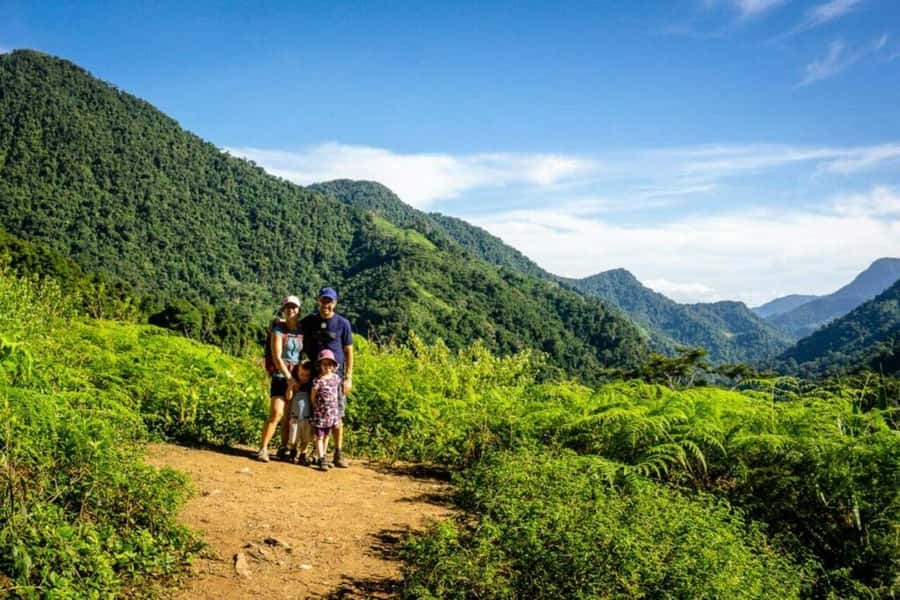
This trek is built around more than ruins. You will interact with ancestral culture of indigenous communities in the Sierra Nevada area. You’ll encounter Kogui and Wiwa communities along the route, and you’ll visit areas tied to Mutanyi.
A standout part is that cultural learning happens while you’re moving through the landscape. You pass houses that form parts of indigenous villages, you rest near rivers connected to daily life, and you learn from your guides as you observe. That creates continuity. It’s not a separate “culture show.” It’s tied to the trail and the rhythm of camp.
Several people praised their indigenous guide and interpreters by name, including Francisco and Emilie, highlighting how the explanations and encouragement made the experience better and easier to handle when tired. That’s a real tip for you: if you want this trek to feel rewarding, lean on your guide early. Ask questions. Use the guide’s explanations to build meaning while your legs are doing the hard work.
Price and value: what $713 covers, and when it might feel steep
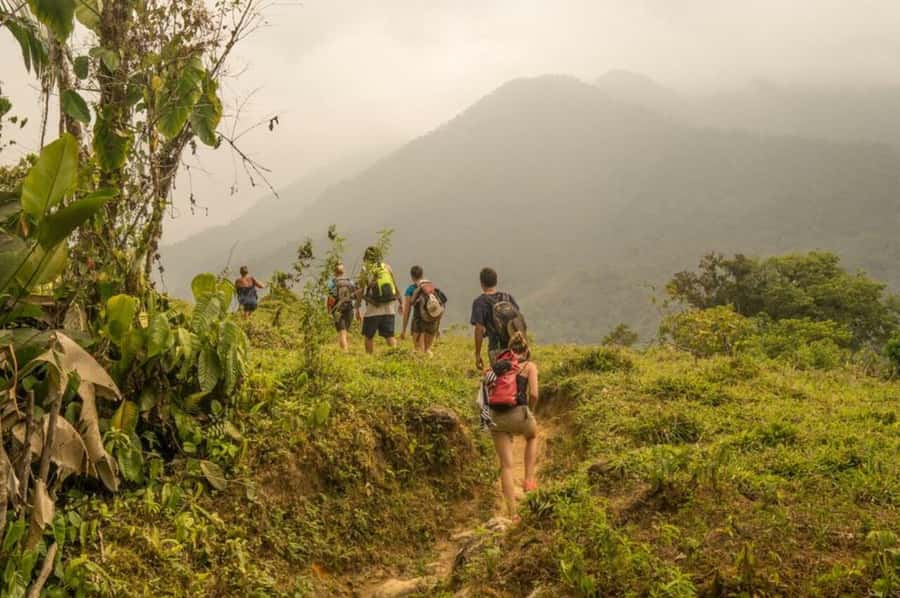
The price listed is $713 per person for the 4-day version. That’s not a bargain price, and it would be weird if you didn’t question value.
Here’s what you are paying for, based on what is included:
- Guide service in Spanish and English, plus accident insurance
- Entrance ticket to the Lost City archaeological site
- Accommodation in jungle camps with mosquito nets
- 4WD transport between Santa Marta and Mamey
- Purified water, fruits, and snacks during the walk
- Contributions for development of indigenous communities of the region
- Suitcase storage during trek days
That bundle explains a lot of the cost. You’re not just hiring someone to walk with you. You’re buying access, logistics, and support for multiple days in a remote area. You also get meals included, which reduces the chance of spending money mid-trek.
Still, it can feel steep if your expectations are that the experience should include more than water and basic snacks, or if you end up comparing your trek to other travel channels and see big price differences among group members. One person reported a noticeable difference in what other participants paid. So if price fairness matters to you, ask the operator how pricing is set when you confirm your booking.
My practical take: if you want the Lost City as a true multi-day journey with indigenous interpretation and organized safety, the included package justifies the cost more than a day-trip ever would. If you’re only chasing the ruins and want to minimize cost, this trek will likely feel expensive.
Fit level, weather, and the gear checklist that actually helps
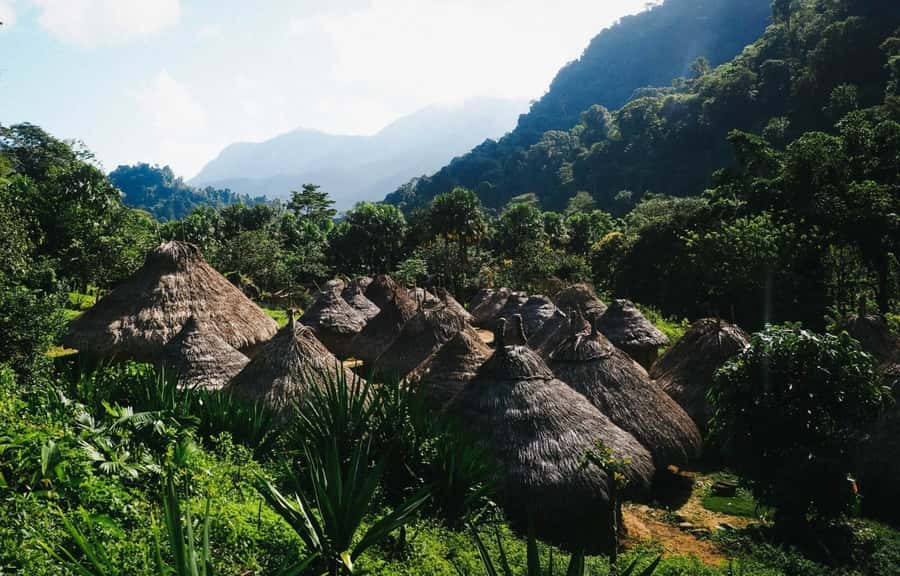
The hardest part is not just distance. It’s repeated elevation gain, the steps, and the hot, humid conditions. The climate is listed around 26°C to 32°C, and nights can cool to about 18°C. Rain can show up around sunset, and trails can turn muddy.
You should bring:
- Hiking shoes (you will want real grip)
- Rain gear
- Insect repellent
- Warm clothing for cooler evenings
- Swimwear, towel, and flip-flops for river pool breaks
- Sunscreen, water, and a daypack
- A flashlight, charged smartphone, cash, toiletries, socks
- Quick-dry clothing and personal medication
Also remember what is not allowed: drones. Leave it at home.
And be honest about who should skip this. It’s not suitable for pregnant women or wheelchair users, as stated. If you have any medical concerns, talk to a professional before you go, especially because the itinerary includes long hikes and major stair climbing.
Should you book the Santa Marta Lost City trek?
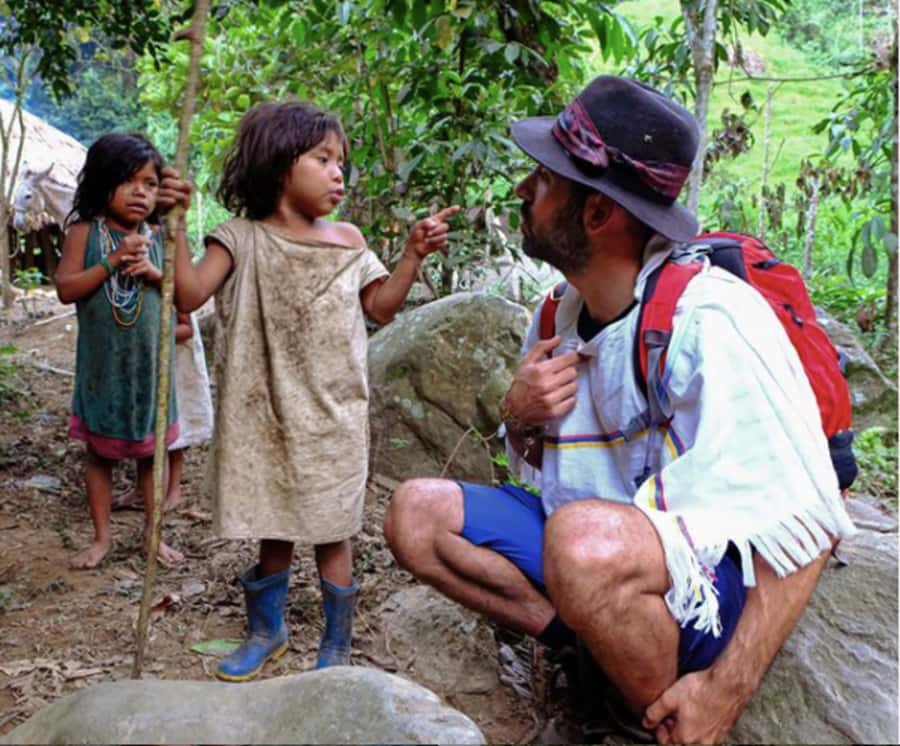
Book it if you want a guided, structured jungle trek that ends at one of South America’s most famous archaeological sites, and you’re ready to work for the payoff. Choose the 6-day option if you want more culture time and more recovery between hiking pushes. Choose the 4-day option if you want the classic rhythm and can handle long days without slowing down.
Skip it if your idea of trekking is short and easy, or if you’re worried about getting tired in humid jungle weather with slippery sections. Also think twice if you expect lots of drink options beyond water, since the trek includes water and you’re responsible for anything else.
If you go in with the right mindset, you’ll end up with a day you can’t forget, the kind where the effort feels worth it once you’re standing among the terraces and stone roads you came to see.
FAQ
How long is the Lost City trek from Santa Marta?
You can choose a 4-day, 5-day, or 6-day trek option.
What time does the adventure start?
The trek typically starts around 9:30 AM with a 4WD drive to El Mamey.
How many steps are there to reach the Lost City?
You climb about 1,200 stone steps on the highlight day.
What kind of sleeping arrangements are provided?
You sleep in hammocks or beds with mosquito nets in the jungle camps. Camps are equipped with electricity, toilets, and showers.
Are meals included?
Yes. Breakfast, lunch, and dinner are included. Purified water, fruits, and snacks are also provided during the walk. Drinks besides water are not included.
Where is pickup included from?
Pickup is included from the Santa Marta urban perimeter, Rodadero, and Taganga. It does not include pickup from Bonda, Minca, Palomino, or areas outside the urban perimeter.
Are drones allowed on the trek?
No, drones are not allowed.
Is the trek suitable for everyone?
It is not suitable for pregnant women or wheelchair users, based on the activity restrictions provided.
Hot off the list in Santa Marta
- Tour en Velero a Bahía Concha Parque Tayrona★ 3.5 · 4 reviews
- TOUR DE 2 DIAS AL CABO DE LA VELA, LA GUAJIRA★ 4.4 · 14 reviews
- Tayrona Park & Playa Cristal★ 3.8 · 4 reviews
- Tayrona Park & Cabo San Juan★ 3.5 · 20 reviews
- SPEEDBOAT TOUR TO TAYRONA CRISTAL BEACH★ 3.7 · 7 reviews
- Sierra Minca Day Tour★ 5.0 · 10 reviews
- SANTAMARTA: White Night Tour in Katamaran with open bar★ 3.8 · 6 reviews
- SANTAMARTA: TOUR Remanso, Taganga, Playa Grande Lunch and Snorkeling Included★ 3.5 · 4 reviews
Lost City Treks, compared.
Hike for 4 days to the Lost City, Santa Marta
Read our review →
4-Day Lost City Small-Group Tour in Santa Marta
Read our review →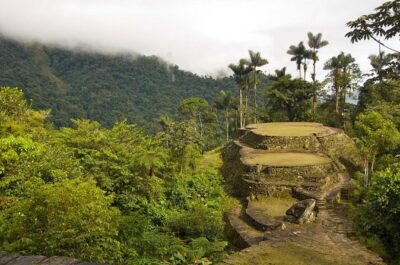
4-Day Walking Tour to Lost City of Sierra Nevada
Read our review →Browse the lists this tour appears in