REVIEW · BOGOTÁ TOURS
Shared Tour Colombian Conflict: war, drug trafficking and peace
Bogotá has a war-history lesson on the move. This 3-hour walking tour takes you past major places tied to Colombia’s conflict and the search for peace, using an engaging route around La Candelaria. I especially like how the guide keeps things interactive, turning street-level history into a conversation you can ask about.
I also love the practicality of the format: mostly free entry stops, short time at each location (about 18 minutes), and a clear guided storyline rather than a museum slog. One thing to consider is the pricing and tipping setup, since the $13 shown online is tied to a suggested tip rather than a traditional paid tour fee, and one guest reported being asked for an additional 50,000 pesos per person at the end.
In This Review
- Key things that make this tour worth your time
- A Bogotá conflict tour you can actually process on foot
- Starting point at the Gold Museum, then straight into the story
- Santander Park, where protest and the conflict’s shadow start showing
- Avenida Jimenez, Bogotá’s main axis during tense times
- Jorge Eliecer Gaitán monument, the 1948 turning point
- Peace talks in plain sight: the Ministry of Agriculture and Desarrollo Rural
- Edificio Murillo Toro, government institutions and the conflict’s pressure
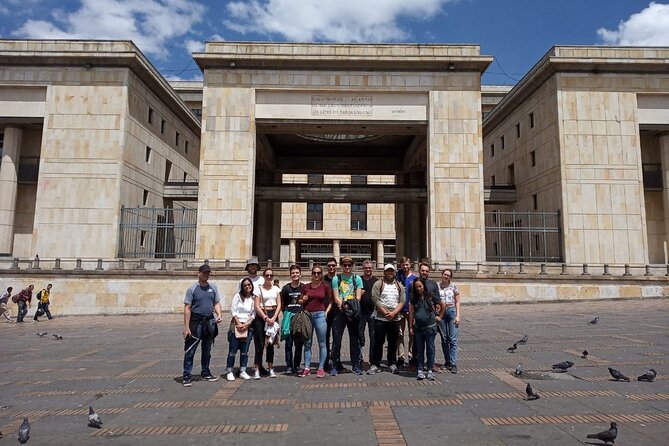
- Palacio de Justicia, one of the conflict’s most violent seizures
- Liévano Palace, how Bogotá’s leadership and politics evolved
- Colegio Mayor San Bartolomé, education and training future leaders
- Rosario Square and the Teatro Colón finish
- Guides, style, and why names matter
- Price and tipping in real life (the $13 question)
- What to expect during the 3-hour walk
- Is this tour right for you?
- Should you book this Bogotá conflict tour?
- FAQ
- Where does the tour start and end?
- How long is the tour?
- What is included in the price?
- Are entry tickets included for all stops?
- What time does the tour begin?
- Is cancellation free?
Key things that make this tour worth your time
- Conflict history told on real political buildings, not just general lecture vibes
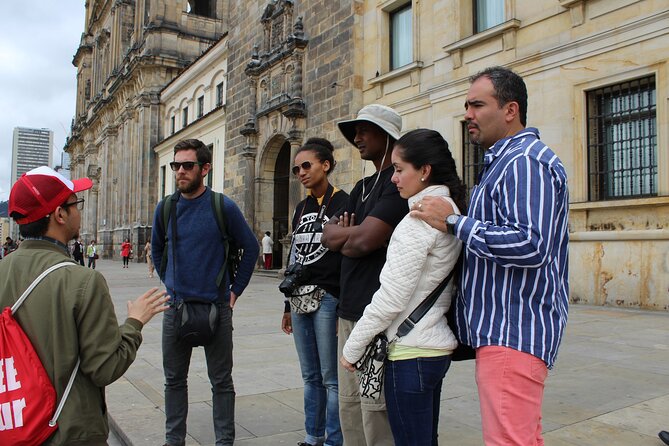
- Interactive Q and A style, so you can ask what you actually want to understand
- A structured walk with short stops, about 18 minutes each for momentum
- Most stops are free to enter, which helps you stay in budget
- You’ll end at Teatro Colón, where culture closes the loop on the story
A Bogotá conflict tour you can actually process on foot
If you’re in Bogotá for just a few days, you can easily end up seeing a lot of pretty buildings without getting the why behind them. This tour fixes that. You walk through parts of the city where Colombia’s modern story feels physically present, from public squares and government offices to the sites connected to major turning points.
The pacing matters here. You’re not stuck at one place for a long time. Instead, you get quick context, then you move. That makes it easier to keep the thread, especially if you’re new to Colombia and the timeline feels overwhelming at first.
You’ll also notice the guide is aiming for clarity and balance. The conflict is discussed as a complex mix of politics, violence, and negotiations, not as a single villain or a simple one-line explanation. That approach helps you connect what you’re hearing to what you’re seeing.
More things to do in Bogota:
- Bogotá Bike Tour
★ 5.0 · 3,329 reviews - Bogota: Bicycle City Tour
★ 4.9 · 2,156 reviews - Zipaquirá: Salt Cathedral Group Tour with Pickup
★ 4.8 · 1,606 reviews
Starting point at the Gold Museum, then straight into the story
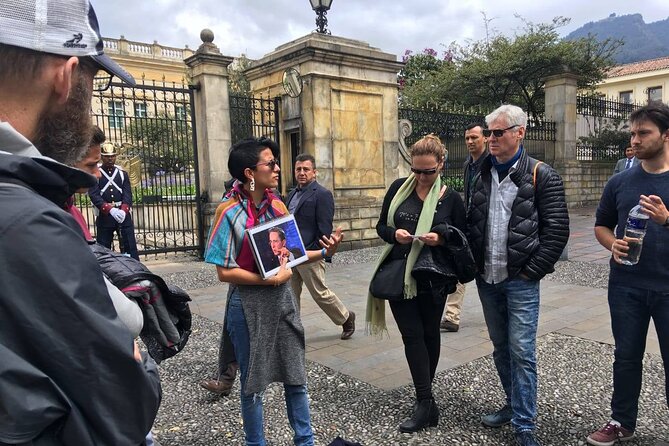
The tour meets near the Gold Museum in Santa Fé (Cra. 6 #15-88), with a 10:00 am start and about 3 hours total. This is a good launch area because it puts you in central Bogotá quickly, without wasting time on long transit.
From the first moments, you’re primed to look at the city differently. You stop asking, What is this building? and start asking, What role did this place play in public life when tensions rose? That shift is the whole point of the walk.
The group stays small enough to feel like a real tour, not a crowd herding experience. There’s a stated maximum of 25 travelers, and the size helps the guide keep it conversational.
Santander Park, where protest and the conflict’s shadow start showing
Your first stop is Santander Park, one of those Bogotá locations people associate with historical moments. The guide connects the park to demonstrations and protests and to the period that marked the beginning of the armed conflict in Colombia.
What I like about starting here is the atmosphere. Parks are supposed to be calm. When you hear the story of how public gatherings became part of the conflict-era pattern, the space feels different. You start to see how political pressure moves into everyday life, not just into headlines.
Practical note: admission here is free, so you’re not juggling ticket concerns at the beginning.
Avenida Jimenez, Bogotá’s main axis during tense times
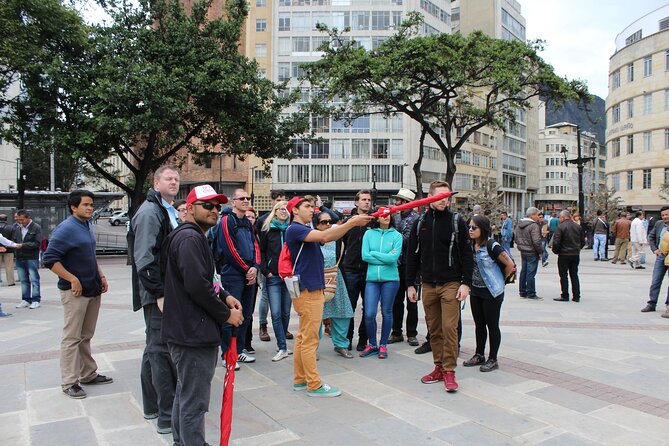
Next you’re walking to Avenida Jimenez, Bogotá’s kind of forever main street. The tour uses Jimenez Avenue as a way to talk about clashes and demonstrations during the conflict period.
This stop is about cause and effect. If you understand why certain streets become gathering points, you’ll understand why violence and politics can cluster around the same places again and again. It also helps you place La Candelaria in your mental map, because this is the route through which a lot of city movement happens.
Again, no tickets are required for this stop, keeping the focus on the walk and the guide’s explanation.
Same city, a completely different day:
- La Candelaria, Monserrate and Museums Bogotá Private City Tour
★ 5.0 · 1,567 reviews - Shared Tour of the Historic Candelaria in Bogotá
★ 5.0 · 1,551 reviews - Bogotá: Guided La Candelaria Walking Tour
★ 4.8 · 1,229 reviews - Graffiti Tour: a fascinating walk through a street art City
★ 5.0 · 1,074 reviews
Jorge Eliecer Gaitán monument, the 1948 turning point
Then comes one of the most famous names in Colombia’s modern political story: Jorge Eliécer Gaitán. You visit his monument and learn why his assassination in 1948 is described as a before-and-after moment, triggering events that influenced the armed conflict.
I like this stop because it gives you a human anchor. Even if you’ve never studied Colombian history, the fact pattern is clear: one assassination, then a chain reaction. The guide’s job here is to connect that turning point to what came after, so you’re not left with a standalone tragic event.
This is also where the Q and A often becomes most useful. If you ask what changed politically after 1948, you’ll usually get a clearer mental timeline for the rest of the tour.
Admission for this stop is free.
Peace talks in plain sight: the Ministry of Agriculture and Desarrollo Rural
After the political shock of the 1948 story, the tour moves into negotiation territory at the Ministerio de Agricultura y Desarrollo Rural.
This stop matters because it turns peace from a vague idea into something you can picture in a real place. The guide explains the role this building played in important peace negotiations. That’s a big shift in tone: you go from conflict-era tension to attempts at solutions.
For me, this is where you start seeing the tour’s balance. Conflict is discussed, yes, but the narrative includes the country’s work toward peace agreements and political outcomes.
This stop is also free to enter.
Edificio Murillo Toro, government institutions and the conflict’s pressure
Next you visit the Edificio Murillo Toro, which has hosted different government institutions across time. The guide explains why it’s important to Colombian political life, and how it was affected by the armed conflict.
This location works well because it’s not a single-purpose monument. It represents government itself, and the message is clear: the conflict wasn’t isolated to distant battlegrounds. It pressured institutions, too.
Even if you don’t remember names from a textbook, you’ll walk away with a sense of how state power and conflict intersect. The guide helps make that connection feel logical instead of abstract.
Free admission here.
Palacio de Justicia, one of the conflict’s most violent seizures
The tour then heads to the Palacio de Justicia, a site connected to one of the most violent seizures during the armed conflict. The guide discusses what happened and the consequences.
This stop is heavier, and that’s appropriate. It’s also the kind of place where you benefit from asking questions, because the context can be emotionally intense and easy to misunderstand if you only hear fragments.
I found it helpful that the tour frames the event in terms of outcomes and long-term impact. That’s what turns a tragedy into something you can hold in your mind without feeling lost.
Free admission for the stop itself.
Liévano Palace, how Bogotá’s leadership and politics evolved
Then you visit Palacio Lievano, where the Mayor of Bogotá has lived for many years. Here the tour shifts from conflict events toward political change and city evolution.
This stop helps you answer a subtle but important question: after violence and upheaval, how does governance change? What does leadership look like when institutions are tested?
If you’re interested in how the city functions today, this is a good moment to connect past and present. You’re standing where power is exercised, and the guide helps you see how the role of leadership evolved alongside Colombia’s broader political shifts.
Free admission.
Colegio Mayor San Bartolomé, education and training future leaders
Next is Colegio Mayor San Bartolomé, one of Bogotá’s oldest educational institutions. The guide explains its history and its role in training political and social leaders.
This stop is easy to overlook if you’re expecting only dramatic conflict stories. But it adds a different layer. You get reminded that political movements, conflict, and peace negotiations also depend on the people shaped by education and civic life.
It’s a useful counterweight. You’re not just hearing about violence. You’re hearing about how leaders are formed and how public life develops over time.
Free admission.
Rosario Square and the Teatro Colón finish
The walk continues to Plazoleta del Rosario, described as a calm oasis in the heart of Bogotá, and connected with Rufino Cuervo Square and a monument to the Colombian philologist.
Then, the tour ends at Teatro Colón, a major cultural symbol in Bogotá. You’ll see its neoclassical architecture and hear the history of why it matters for the city’s cultural life.
This ending makes sense for the theme. Conflict and peace might dominate the walk, but you finish with a place that represents public cultural identity. It’s not pretending everything is only about art, but it leaves you with a fuller view of what Bogotá is.
Important practical detail: the Teatro Colón stop has admission ticket not included. So if you want to go inside, plan for that additional cost.
Guides, style, and why names matter
One of the best signals that this tour is built well is the guide consistency in reviews. I saw multiple guide names praised for clarity and balance, including Leo, Sergio, Santiago, Angie, and Gina.
The recurring theme is how well they explain modern history without making it feel like propaganda or a simplified script. Guides like Santiago and Sergio are specifically highlighted for being open to questions and for handling a lot of political material in a way that stays organized.
If you care about getting unbiased context, this is exactly the kind of guide you want in charge of your first pass through the conflict timeline.
Price and tipping in real life (the $13 question)
The tour is listed at $13.00 per person and runs for about 3 hours. You also get a certified professional guide and a free tour map. For a walking tour that covers multiple major sites, that can be good value.
But here’s the practical part you should plan for: the experience is presented as a free walking tour, and the amount you pay in advance is tied to a suggested tip for the guide (with Viator commission deducted). That means you should treat the upfront payment as the start of your guide support, not as the total cost of the experience in the traditional sense.
One review notes an expectation for an additional 50,000 pesos per person at the end, and another points out surprise at how the cost is framed. So my advice is simple: bring some extra cash for tipping, and keep it flexible. If you want exact guidance for your group, ask your guide early in the meeting.
Also, if you are thinking about language, one review reported that Spanish may require booking a private tour. So it’s worth checking language availability before you go, especially if Spanish is your preference.
What to expect during the 3-hour walk
The tour structure is straightforward. You move through about 10 stops, with time allocated per location. That means the guide can cover a lot of ground while still giving you enough context to connect each place to the conflict and the peace process.
You’ll also spend a good portion of the time looking outward, not just listening. The city is your visual aid. When a building is tied to peace negotiations, you pay attention to how it fits into the civic center. When a palace is tied to a violent seizure, you pay attention to what kind of institution it is. It changes how you perceive the city after.
Bring comfortable shoes. You’re walking, and you’re moving at a steady pace.
Admission is free at most stops. The exception is Teatro Colón, where a ticket is not included.
Lunch isn’t included, so if you’re hungry after, plan a nearby meal. The tour finishes around Teatro Colón, in La Candelaria, which is handy for continuing your day.
Is this tour right for you?
This works best if you want:
- A first, organized understanding of Colombia’s conflict and peace process
- A route through Bogotá that connects politics to real places
- An opportunity to ask questions instead of just taking notes
It may not be ideal if you want a purely visual walk with minimal discussion. This is a history and politics tour, and you should expect serious topics.
If you’re traveling solo, as a couple, or with a small group, it’s also a good value. The price is low, the sites are significant, and the format is designed to help you learn fast without feeling overwhelmed.
Should you book this Bogotá conflict tour?
Yes, if you’re visiting Bogotá for the first time and want context that makes the city make sense. The route is efficient, the guide-led discussion format helps you absorb modern history, and the stops are tied to the story of conflict and peace in ways that feel grounded.
Just go in with one mindset: this is a walk, but it’s also a conversation about difficult national chapters. If you’re comfortable with that, and you budget for tipping expectations, you’ll get far more from your time in Bogotá than a standard sightseeing loop.
FAQ
Where does the tour start and end?
The tour starts at the Gold Museum (Cra. 6 #15-88, Santa Fé, Bogotá) and ends at Teatro Colón Bogotá (Cl. 10 # 5-32, La Candelaria, Bogotá).
How long is the tour?
The tour lasts about 3 hours.
What is included in the price?
You get a certified professional guide and a free tour map.
Are entry tickets included for all stops?
Admission is free for most stops listed, but the Teatro Colón ticket is not included.
What time does the tour begin?
The start time is 10:00 am.
Is cancellation free?
Yes, free cancellation is available. You can cancel up to 24 hours in advance for a full refund.
Hot off the list in Bogota
- Zipaquirá and Salt Cathedral Muisca Heritage with Guide – Private★ 4.5 · 23 reviews
- Catedral de Sal desde Bogotá en Tren★ 5.0 · 5 reviews
- Tour of Zipaquirá: Visit the Salt Cathedral and the main squares★ 4.5 · 55 reviews
- Zipaquira Salt Cathedral★ 5.0 · 4 reviews
- LOCAL GUIDE Zipaquirá PRIVATE TOUR – Salt Cathedral and Salt Oven★ 5.0 · 24 reviews
- Zipaquirá Salt Cathedral: An architectural wonder.★ 4.5 · 24 reviews
- Private Zipaquira Salt Cathedral and Guatavita Lagoon Tour from Bogota★ 4.5 · 44 reviews
- Zipaquira Salt Cathedral★ 4.5 · 12 reviews
Bogotá Tours, compared.
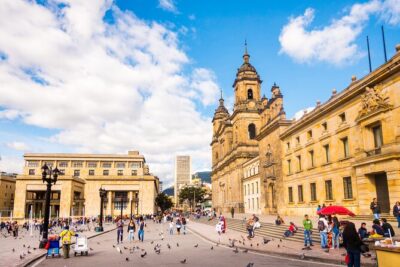
La Candelaria, Monserrate and Museums Bogotá Private City Tour
Read our review →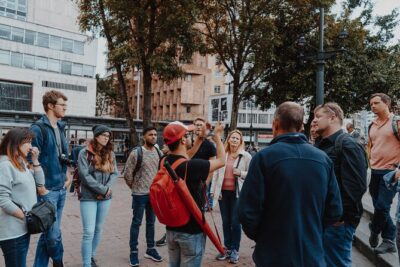
Shared Tour of the Historic Candelaria in Bogotá
Read our review →
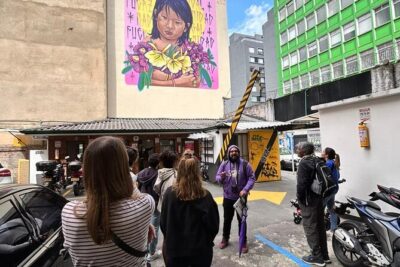
Graffiti Tour: a fascinating walk through a street art City
Read our review →