REVIEW · BOGOTÁ TOURS
Shared Tour Colombian Conflict War, Drug Trafficking & Peace
Bogotá has scars you can still walk. This shared, 150-minute tour uses the historic center to explain how Colombia’s so-called Violence Era took shape, with Bogotazo (1948) as a turning point you’ll understand better than before. I like that it frames the story in an objective way, not a talking-point parade, so you can follow the timeline without feeling pushed into someone else’s political box.
Two things I really value here are the clear cause-and-effect storytelling and the guide style. From independence and the military dictatorship to the creation of guerrillas like FARC, ELN, and M-19, you get the “how we got here” connections, and guides often keep you involved with questions and quick checks for understanding. (In past groups, names like Lorenzo, Hector, Santi, and Daniel have led, and their common thread is making a hard subject feel organized and human.)
One consideration: this is a dense topic in a short time, so if you want very granular, up-to-the-minute detail on today’s political moves, you may need extra reading after the tour. You’ll leave with the big picture and the main actors, but not every recent twist will land with the depth you might hope for.
In This Review
- Key Things to Know Before You Go
- What You’re Booking: a street-level history of Colombia’s armed conflict
- Meeting Point at Museo del Oro: start where the story feels grounded
- The walking plan, 9 km of context, and how to handle the pace
- Why the Bogotazo (1948) isn’t just a dark chapter
- Independence, rivalry, and the military dictatorship period
- Guerrillas and why they formed: FARC, ELN, and M-19
- Peace with FARC and the armed groups still in motion
- Politics taught without taking sides: what the objectivity promise means
- Price and value: $13 for a hard topic, plus what you get
- What to bring, what’s not allowed, and small details that matter
- Who this Bogotá conflict tour is best for
- Should you book this tour?
- FAQ
- How long is the tour?
- How much does it cost?
- Where do I meet the tour?
- Is the tour in English?
- What is included in the price?
- Are drinks, food, or souvenirs included?
- Do I need tickets or entrances?
- What should I bring?
- Is it suitable for children or for wheelchair users?
- Is there a cancellation option?
Key Things to Know Before You Go
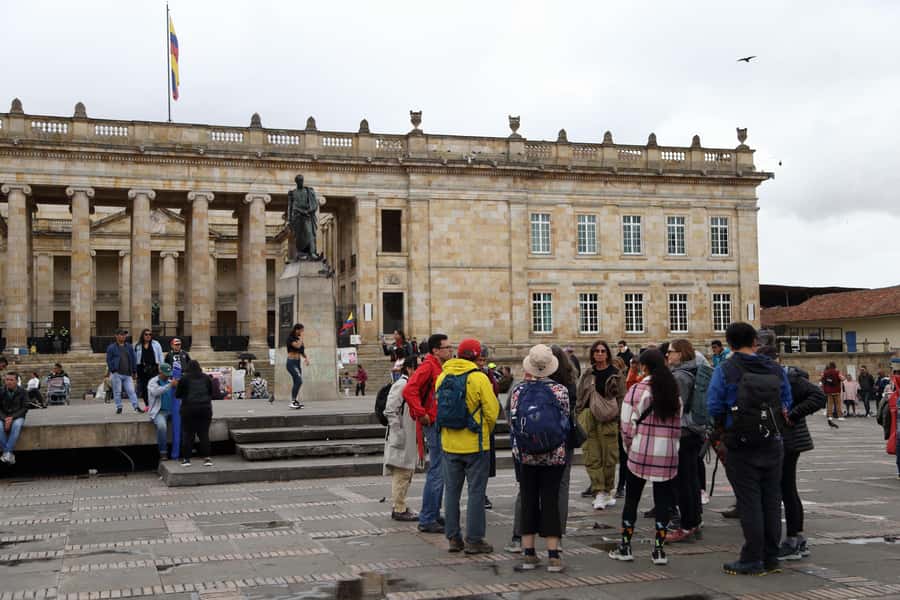
- A conflict timeline built around the streets of Bogotá’s historic center, so dates and names stick.
- Bogotazo 1948 explained with context, not just as a dramatic headline.
- Peace agreement with FARC in the real-world frame, including what it changed and what didn’t.
- Why guerrillas and paramilitary groups fight, explained as motivations, not just labels.
- Objective guidance promised, designed to help you form your own understanding.
- A long walk (about 9 km) with resting stops, so bring comfort gear and water.
What You’re Booking: a street-level history of Colombia’s armed conflict
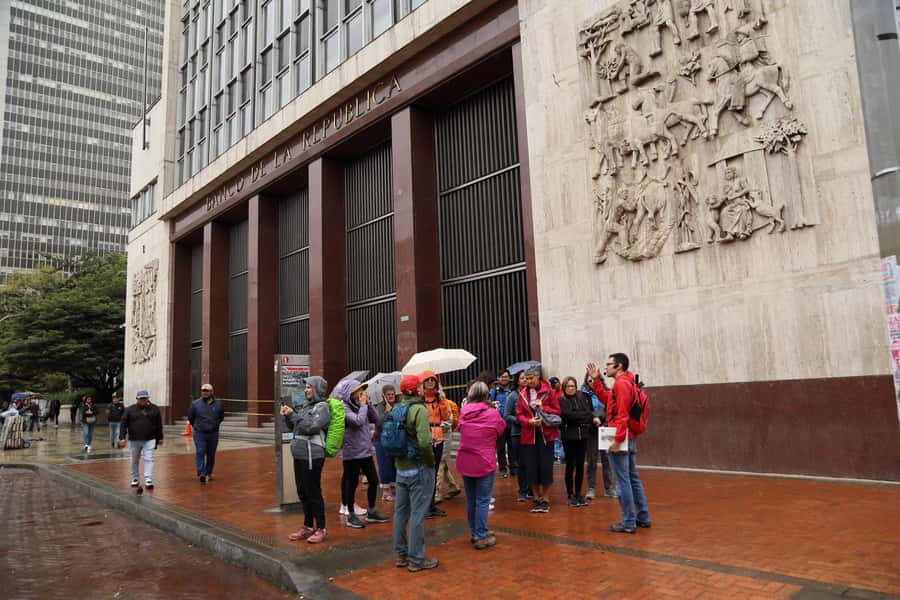
This is not the kind of tour where you only pass pretty facades. It’s a guided walk through Bogotá where the story is political conflict, drug trafficking connections, and the long chain of decisions that fed violence over decades.
The tour’s themes are laid out in a way that helps you build a mental map. You start with the roots of what people call the Violence Era, then step into the controversial Bogota Riot of 1948, and onward to the military dictatorship period. From there, you move into how guerrilla movements formed, including FARC, ELN, and M-19, and how the peace process with FARC fits into the broader picture.
For value, what matters is that the guide ties events together. History tourism can turn into a list of dates. Here, the goal is more practical: you’ll learn why certain groups emerged, why they gained support, how political rivalry shaped the country, and why the modern conflict isn’t a clean, one-time event.
More things to do in Bogota:
- Bogotá Bike Tour
★ 5.0 · 3,329 reviews - Bogota: Bicycle City Tour
★ 4.9 · 2,156 reviews - Zipaquirá: Salt Cathedral Group Tour with Pickup
★ 4.8 · 1,606 reviews
Meeting Point at Museo del Oro: start where the story feels grounded
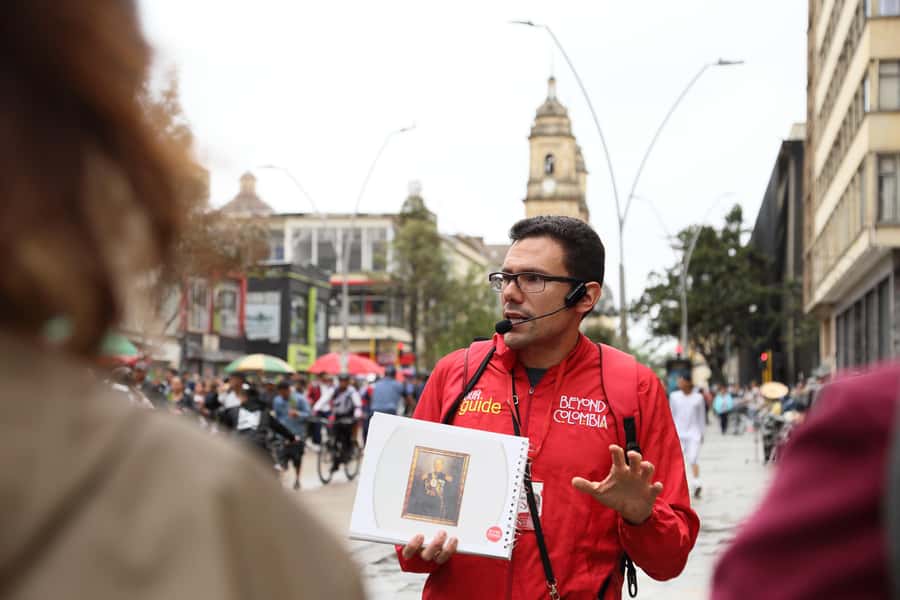
You meet right in front of the Museo del Oro with Beyond Colombia’s red umbrellas. That’s useful for two reasons. First, it’s a clear visual landmark in a city where “meet near the church” can get messy. Second, starting at a major cultural site helps set the tone: you’re in the historic center, not in some far-off classroom.
The tour lasts about 150 minutes (roughly 3 hours). It’s a shared group format, so you’ll be walking with others and pausing together for listening stops. If you like interaction, this is a good match. The tour description emphasizes a real, interactive experience, and one of the strongest signals from the guide feedback is how often they answer questions and pull people in.
The walking plan, 9 km of context, and how to handle the pace
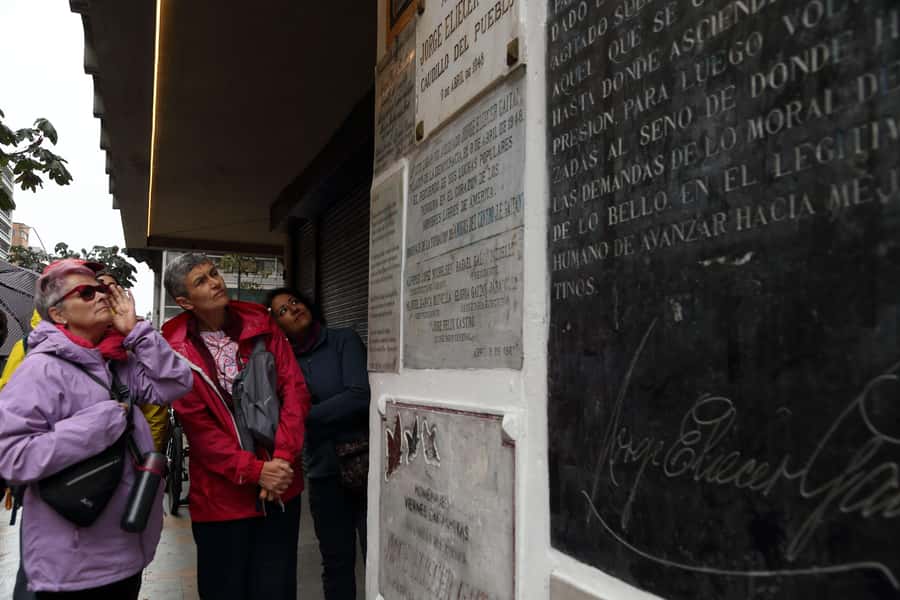
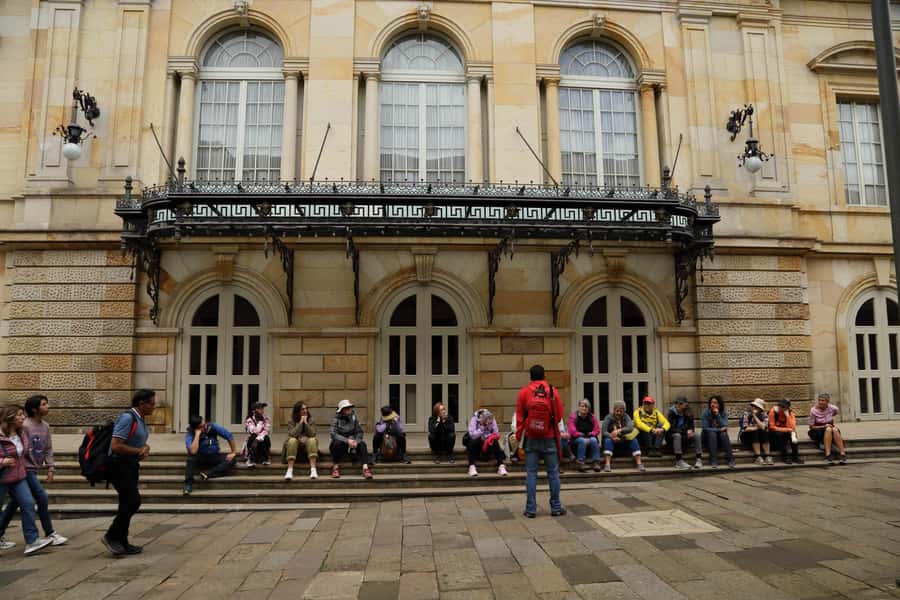
Comfort matters because this isn’t a short stroll. You’ll walk about 9 km, with resting stops built into the route for listening. That distance is the main practical constraint, so plan around it.
Here’s what you should do:
- Wear comfortable shoes you can stand and walk in for a while.
- Bring water or your preferred hydration. Drinks and food are not included.
- Add sunscreen and a hat, since this is outdoors and weather can be relentless.
Also, bring rain coverage. The tour notes you should bring an umbrella or rainproof coat, and they can’t control the weather. If you go in with the mindset of “I’ll be wet and fine,” the whole experience stays smoother.
Safety-wise, the tour mentions you’ll visit some crowded areas, so keep belongings close and stay aware. This is smart street travel advice, not paranoia.
Finally, note the accessibility wording. The activity is listed as wheelchair accessible, but it also states it is not suitable for wheelchair users and people with mobility impairments. If you’re dealing with mobility needs, treat this as a red flag to confirm with the provider before you book.
Why the Bogotazo (1948) isn’t just a dark chapter
The tour highlights the controversial Bogota Riot of 1948, often tied to what people call the Bogotazo. For you, the value is in understanding it as a consequence, not a random burst of chaos.
You’ll connect the riot to the broader timeline of political conflict. The tour frames it as part of the road that leads into Colombia’s Violence Era, where violence became a repeated mechanism in political life rather than a single rupture. That shift is what you want to grasp. Once you see it, later topics like guerrilla formation and peace negotiations make more sense.
Even if you know the Bogotazo name, the tour’s strength is context. It’s less about memorizing and more about interpreting what happens when political tensions meet real social conditions.
Same city, a completely different day:
- La Candelaria, Monserrate and Museums Bogotá Private City Tour
★ 5.0 · 1,567 reviews - Shared Tour of the Historic Candelaria in Bogotá
★ 5.0 · 1,551 reviews - Bogotá: Guided La Candelaria Walking Tour
★ 4.8 · 1,229 reviews - Graffiti Tour: a fascinating walk through a street art City
★ 5.0 · 1,074 reviews
Independence, rivalry, and the military dictatorship period
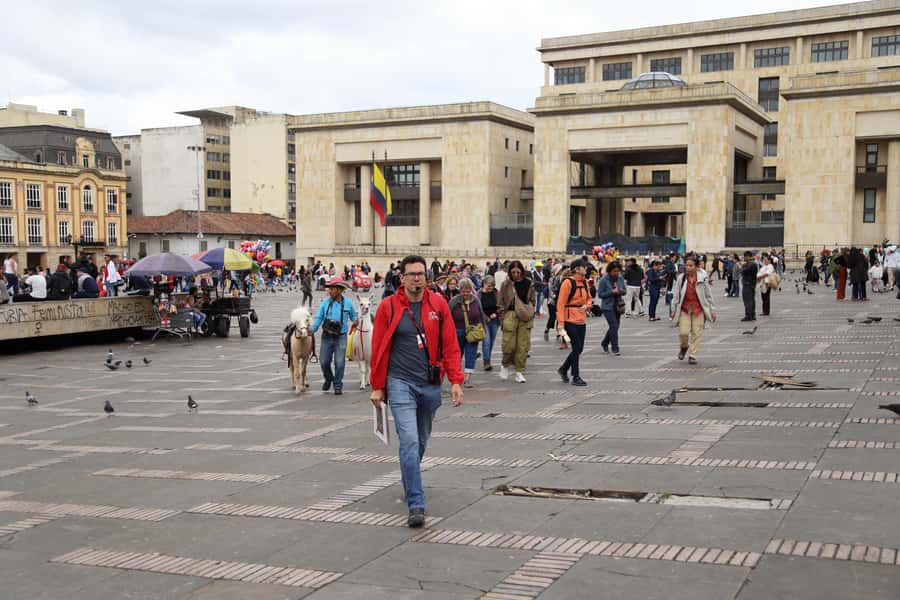
The tour includes the independence process, then moves into the struggle for Liberal versus Conservative supremacy and the military dictatorship period. In conflict history, these aren’t just “earlier events.” They’re the machinery that shaped institutions and loyalties.
For practical learning, here’s how you can think about this part as you walk:
- Independence sets the stage for power and identity.
- The Liberal versus Conservative struggle shows how politics can harden into factions.
- The military dictatorship helps explain how force entered the governance picture more directly.
If you like cause-and-effect stories, this is one of the most satisfying sections. You’ll watch the narrative evolve from political rivalry into a landscape where armed movements become more likely over time.
Guerrillas and why they formed: FARC, ELN, and M-19
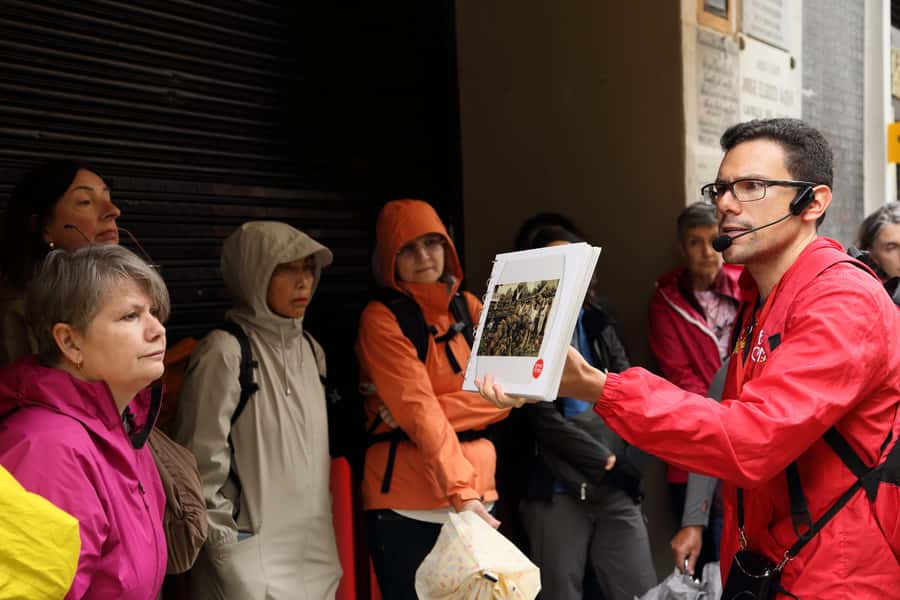
One of the tour’s biggest draws is the portion on creation of guerrillas, including FARC, ELN, and M-19. The important part is not just that these groups existed. It’s why they formed, how they gained traction, and what roles politics and conflict played.
The tour also explicitly frames ties to drug trafficking, which is crucial to understanding modern armed conflict in Colombia. You’ll learn how economic incentives, regional power struggles, and political objectives can overlap, leading to a complicated environment where motivations can be both ideological and practical.
This section is where you can feel the tour’s “big picture” approach: it keeps pulling you back to the central idea of how conflict developed over decades instead of treating each event as an isolated headline.
Peace with FARC and the armed groups still in motion
Peace is a big theme, and the tour includes the ongoing Peace Agreement signed with FARC. The key for you is that peace agreements do not erase power overnight. They change incentives, shift negotiations, and often create new gaps that other armed actors try to fill.
The tour also covers the current Guerrillas and Paramilitary groups’ fighting reasons. That’s a tough subject, but the way it’s presented matters: it aims for understanding over moral sorting. You’ll get explanations that help you see the conflict as a system with multiple players, rather than as a single villain-and-hero storyline.
For travelers, this is the moment where you decide what you want from your trip. If you want to understand how Colombia’s present day grew out of its past, this section gives you the foundation. If you want a simple narrative, you may find it harder, because the real world rarely cooperates with simplicity.
Politics taught without taking sides: what the objectivity promise means
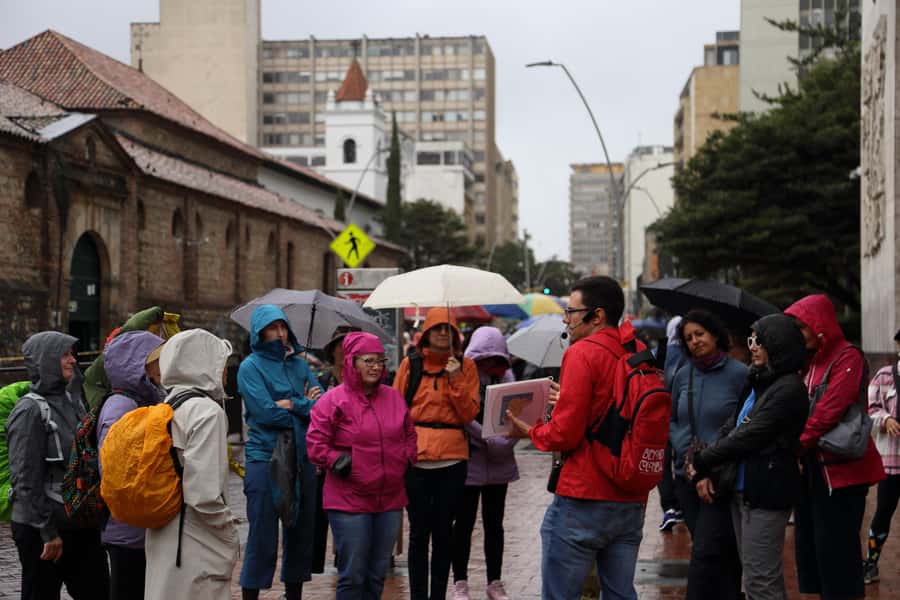
The tour states it offers accurate and objective knowledge, promising not to take sides. That’s a big deal for a topic like this.
What you’ll likely notice in practice is how the guide handles descriptions of political actors and armed groups. Instead of pushing a single conclusion, the guide’s job is to connect dots and explain context. You should still form your own opinions, but you’ll have a clearer base to work from.
One thing I like about this approach is that it helps you keep control of your brain. You can be moved by the suffering and still stay analytical. And because the tour is interactive, you can ask follow-up questions when something feels unclear.
If you’re the type who gets frustrated when tours just recite facts, you may enjoy the group Q-and-A rhythm. Names that have popped up as guides include Lorenzo, Hector, Santi, and Daniel, and the common thread is that they answer questions directly and keep energy up with humor and clear connections.
Price and value: $13 for a hard topic, plus what you get
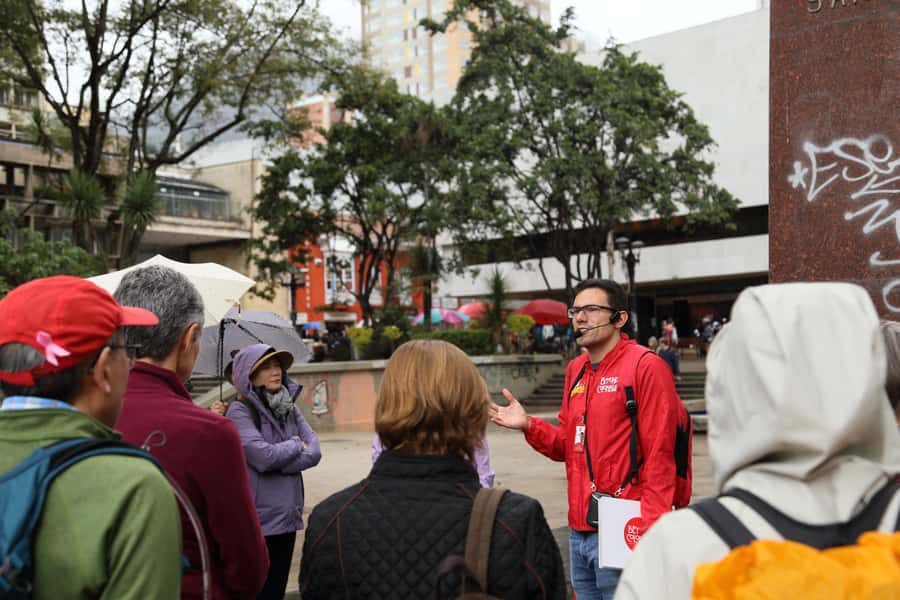
At $13 per person for about 150 minutes, this is good value for what the tour attempts: a structured walk through several major phases of Colombia’s conflict history.
Here’s what you’re paying for, realistically:
- A guided explanation in English
- Sightseeing in Bogotá’s historic center framed by conflict history
- Objective interpretation and interactive Q&A
- Recommendations for materials to stay informed afterward
And here’s what you should budget for separately:
- Food and drinks are not included
- No transportation from your hotel
- No tickets or entrances are included, and they avoid places with sudden extra charges
In other words, you’re getting paid storytelling plus a walk. You’re not paying for luxury pacing, museum tickets, or a car ride. If that matches how you like to travel, the value is strong.
What to bring, what’s not allowed, and small details that matter
This tour’s own list is practical, so follow it closely. Bring comfortable shoes, hat, camera, sunscreen, and water. The tour also asks you to bring a rainproof coat or umbrella because weather can’t be controlled.
Not allowed: smoking, alcohol, and drugs. It’s a respectful rule for a serious topic.
Also, keep your belongings secure in crowded areas. That’s not a Colombia-only thing, it’s just smart city travel.
Suitability is another issue. The tour notes it is not suitable for children under 5. It also flags concerns for wheelchair users and people with mobility impairments, even while the activity is listed as wheelchair accessible. If you’re traveling with anyone who needs mobility accommodations, confirm before booking.
Who this Bogotá conflict tour is best for
I’d point you to this tour if you want:
- A guided introduction to Colombia’s conflict history with clear timeline beats
- An English-speaking guide who ties politics to real locations in the historic center
- A neutral-ish approach where you can form your own conclusions
It’s a great fit for curious adults, history-minded travelers, and anyone who plans to keep learning after Bogotá through books, documentaries, or news.
If you prefer light, scenery-first tours with minimal politics, this probably won’t feel like the right match. This is a “why the country looks the way it does” walk.
Should you book this tour?
Book it if you want a structured, street-level understanding of Colombia’s conflict story, especially the shift from political rivalry to violence, the Bogotazo, guerrilla formation, and the peace process with FARC. The $13 price makes it an easy risk to take, and the guide style described by past groups suggests good pacing and room for questions.
Skip it, or at least reconsider, if you need very accessible, low-walking mobility or if you’re looking for ultra-current political analysis. The tour is built for the big picture, not for breaking down every modern decision in granular detail.
If you do book, go in with an open mind, bring water and rain gear, and wear shoes ready for a long walk. You’ll come away with a map of how Colombia’s past shaped its present, and that makes later conversations in Bogotá far easier to follow.
FAQ
How long is the tour?
The tour lasts about 150 minutes, roughly 3 hours.
How much does it cost?
The price is listed as $13 per person.
Where do I meet the tour?
You meet in front of the Museo del Oro with Beyond Colombia’s red umbrellas.
Is the tour in English?
Yes, it’s an English-speaking tour guide.
What is included in the price?
Included are an English-speaking guide, sightseeing of essential places in Bogotá’s historic center framed in conflict history, recommendations for materials to stay informed, and a wristband at the end with benefits and discounts from recommended partners.
Are drinks, food, or souvenirs included?
No. Drinks, food, and souvenirs are not included.
Do I need tickets or entrances?
No tickets or entrances are included, and the tour states it will not take you to places with sudden extra charges.
What should I bring?
Bring comfortable shoes, a hat, a camera, sunscreen, and water or your preferred form of hydration.
Is it suitable for children or for wheelchair users?
It is not suitable for children under 5. It also states it is not suitable for wheelchair users and people with mobility impairments, even though wheelchair accessibility is listed, so you should check directly with the provider if you have mobility needs.
Is there a cancellation option?
Yes. Free cancellation is available up to 24 hours in advance for a full refund.
Hot off the list in Bogota
- Tour of Zipaquirá: Visit the Salt Cathedral and the main squares★ 4.5 · 55 reviews
- Zipaquirá and Salt Cathedral Muisca Heritage with Guide – Private★ 4.5 · 23 reviews
- Catedral de Sal desde Bogotá en Tren★ 5.0 · 5 reviews
- Zipaquira Salt Cathedral★ 5.0 · 4 reviews
- LOCAL GUIDE Zipaquirá PRIVATE TOUR – Salt Cathedral and Salt Oven★ 5.0 · 24 reviews
- Zipaquirá Salt Cathedral: An architectural wonder.★ 4.5 · 24 reviews
- Private Zipaquira Salt Cathedral and Guatavita Lagoon Tour from Bogota★ 4.5 · 44 reviews
- Zipaquira Salt Cathedral★ 4.5 · 12 reviews
Bogotá Tours, compared.
La Candelaria, Monserrate and Museums Bogotá Private City Tour
Read our review →
Shared Tour of the Historic Candelaria in Bogotá
Read our review →
Graffiti Tour: a fascinating walk through a street art City
Read our review →