REVIEW · BOGOTÁ TOURS
Weaving Peace: Taste and understand what is happening in Colombia
Peace in Bogotá comes with context.
This tour is built around real places tied to Colombia’s conflict and its ongoing change, from the streets around Avenida Jimenez to the art called Fragmentos by Doris Salcedo. I love how it mixes thoughtful stops with everyday life, and I really liked the way you taste and meet people connected to peace work, not just read about it. One thing to consider: this is weather-dependent, and the walking pace through the center of Bogotá is part of the experience, so comfy shoes matter.
You’ll also leave with a clearer mental map of why certain locations matter, especially when your guide connects events like the Bogotazo in 1948 and later political violence to what you’re seeing on the street. The group format is private, so your questions can actually get answered, and you get a structured flow over several hours without feeling rushed. If you want only light sightseeing, this is still approachable, but it’s not a fluffy day.
In This Review
- Key things you’ll notice on Weaving Peace
- Why this Bogotá peace tour feels different
- Starting at Arte y Pasion Café, a gentle kickoff
- Avenida Jimenez and 7th Avenue: where the story starts moving
- Museo Nacional de Colombia: Fragmentos and the power of a counter-monument
- Centro Cultural Gabriel García Márquez and Selva Nevada: peace through everyday choices
- Plaza de Bolívar: a Q&A space for old violence and new politics
- The 6-hour option: La Casa de la Paz and meeting peacebuilding leaders
- Chapinero and Salvo Patria lunch: food as peace work
- Price and value: is $72 a good deal?
- What to bring and how to plan your day
- Who this tour is best for
- Should you book Weaving Peace?
- FAQ
- How long is the Weaving Peace tour in Bogotá?
- What is included in the shorter version?
- What additional stops are included in the 6-hour tour?
- Is there pickup from Bogotá hotels?
- Do I need to buy tickets for the attractions?
- What kind of guide language is offered?
- Is the tour dependent on weather?
- Can I cancel for a refund?
Key things you’ll notice on Weaving Peace
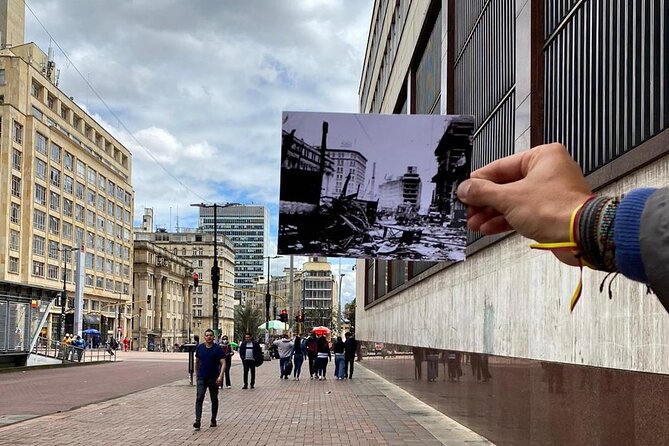
- Peace told through places, not just timelines, with street-level context around major sites in central Bogotá
- Fragmentos by Doris Salcedo, a counter-monument made from melted rifles, designed to feel unsettling in a meaningful way
- Food and drink with purpose, including ice cream from Selva Nevada and, on the longer option, craft beer at La Casa de la Paz
- A Q&A at Plaza de Bolívar, where modern demonstrations and older events share the same stage
- Former FARC members in dialogue spaces, specifically La Casa de la Paz (included on the 6-hour tour)
Why this Bogotá peace tour feels different
Bogotá can overwhelm you fast. Streets look like streets, and then someone points to one corner and suddenly it all clicks, why people remember, why the country still talks about it, and why peace is not a slogan. This experience is designed to help you see the political conflict in the city layout, not just learn names and dates.
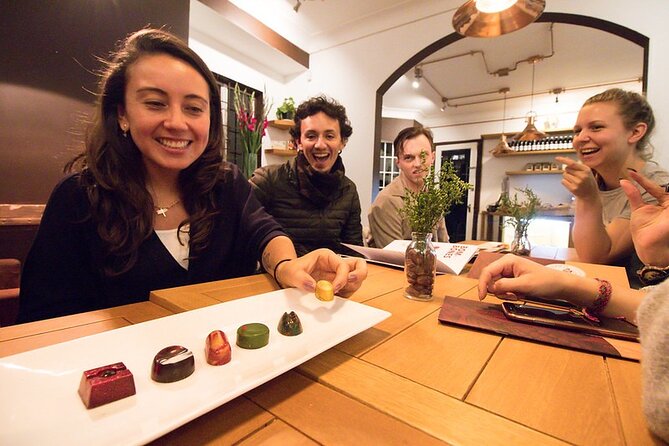
The big value for you is the balance. You get historical grounding, but you also get lived culture. The stops include art, religious and civic landmarks, and modern community spaces tied to peacebuilding. And yes, you also get coffee, ice cream, and potentially craft beer and lunch, because understanding land and people is easier when you’re not running on pure facts.
For most people, the pacing works because it’s stop-based. You are not stuck in one museum room for hours, and you are not forced into constant walking without breaks. Still, it’s a city-center walking route, so I recommend shoes that can handle sidewalks and quick turns. Also, the specific gallery you visit can have closures on certain weekdays, so your schedule may shift slightly depending on the day.
More things to do in Bogota:
- Bogotá Bike Tour
★ 5.0 · 3,329 reviews - Bogota: Bicycle City Tour
★ 4.9 · 2,156 reviews - Zipaquirá: Salt Cathedral Group Tour with Pickup
★ 4.8 · 1,606 reviews
Starting at Arte y Pasion Café, a gentle kickoff
Your meeting point is Arte y Pasion Café, a café in Bogotá’s center area (Cl. 10 #8 – 87). The first stop lasts about 30 minutes and includes a free admission ticket.
This is a smart opening. Instead of dropping you straight into political sites, you start with something familiar. You get to settle in, meet your group, and get a sense of how your guide will connect coffee culture and daily life to bigger national themes.
If you’re the type who likes grounding moments, this helps. And since the start is a café setting, you can also get oriented before heading into the walking portion toward Avenida Jimenez.
Avenida Jimenez and 7th Avenue: where the story starts moving
Next you walk toward Avenida Jimenez and 7th Avenue. This stop is about 30 minutes and includes free entry tickets. The idea here is to get a clear idea of how political conflict played out on the streets, especially through the riots of the Bogotazo in 1948.
As you move along, you also visit a cluster of landmarks that matter in different ways:
- Santander Plaza
- The San Francisco church
- The Jorge Eliécer Gaitán memorial
You’ll also see the eclectic architecture of the city center. I like this mix because it trains your eye. You start noticing how a city can hold multiple eras at once. The visual variety also makes the route feel less like a textbook and more like a real walk you can remember.
Possible consideration: this portion is still part of the city’s core walking zone. If you’re sensitive to noise, crowds, or traffic-adjacent sidewalks, plan for that. It’s not unsafe, just urban.
Museo Nacional de Colombia: Fragmentos and the power of a counter-monument
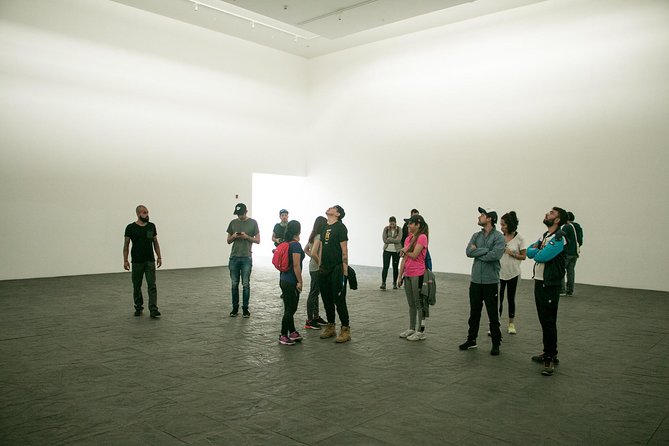
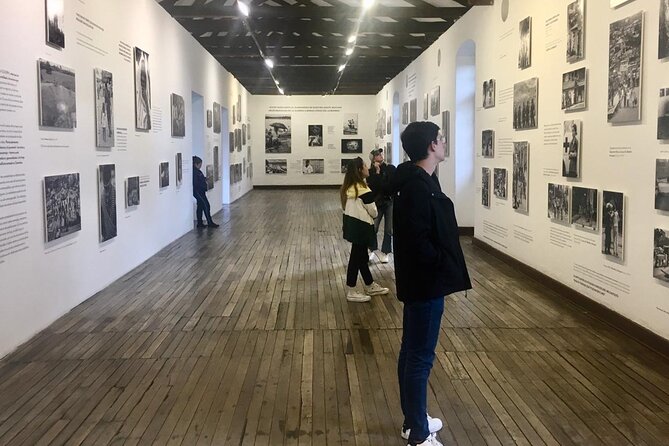
One of the most memorable stops is Fragmentos, an artwork inside the Museo Nacional de Colombia (the gallery is closed on Mondays). This segment is about 1 hour, and admission is free.
Here’s what makes this stop hit differently. Fragmentos is a counter-monument built by the artist Doris Salcedo and a group of women who were victims of Colombia’s armed conflict. It uses melted rifles from former FARC members as raw material. The piece remains on display for the same number of years that the armed conflict lasted.
That choice matters. It’s not a statue that tells you to admire and move on. It’s designed to feel uncomfortable, because the material is literally connected to violence. It’s also designed to last, so the conflict is not treated like a closed chapter.
If you’ve visited memorials elsewhere, you may be used to clear symbolism like named dates and heroic figures. Fragmentos works differently. It asks you to sit with absence, weight, and transformation. I found that it gave me a better sense of what people mean when they talk about peace as something you build, not something you declare.
Practical note: since the gallery can be closed on Mondays, ask your guide for what the alternative plan is on that day. The tour says changes can happen due to external factors, and you should be told ahead of time.
Same city, a completely different day:
- La Candelaria, Monserrate and Museums Bogotá Private City Tour
★ 5.0 · 1,567 reviews - Shared Tour of the Historic Candelaria in Bogotá
★ 5.0 · 1,551 reviews - Bogotá: Guided La Candelaria Walking Tour
★ 4.8 · 1,229 reviews - Graffiti Tour: a fascinating walk through a street art City
★ 5.0 · 1,074 reviews
Centro Cultural Gabriel García Márquez and Selva Nevada: peace through everyday choices

After Fragmentos, you take a short walk to Centro Cultural Gabriel García Márquez. This stop is about 15 minutes, and the admission is included.
Here, the tour connects to Selva Nevada, a company focused on preserving biodiverse crops across Colombia. The approach is community-based: it works with farmer communities who are vulnerable to conflict, and it does so through fair trade and association.
Then comes the part you’ll actually remember later when you’re hungry: ice cream. The ice cream here includes both traditional flavors and exotic options. It’s not just a treat. It’s a practical example of how sustainable crops, fair trade, and local income can be part of stability.
If you’re trying to choose between doing this tour or another sightseeing option, I like that this stop adds a softer, more hopeful layer. It reminds you that peacebuilding is not only about political agreements and memorials. It’s also about what people can grow and sell, and whether their work keeps them connected to their communities.
Plaza de Bolívar: a Q&A space for old violence and new politics
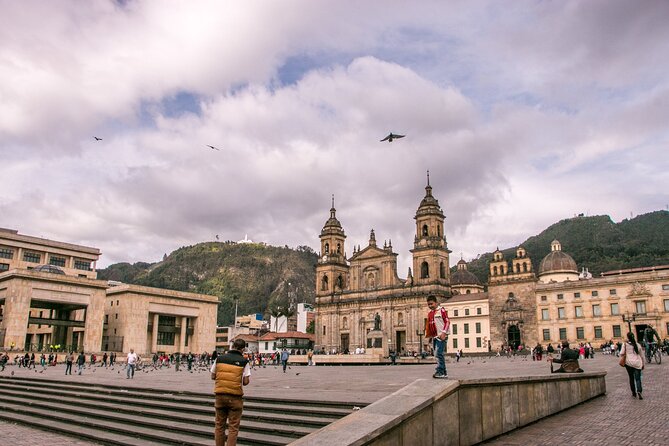
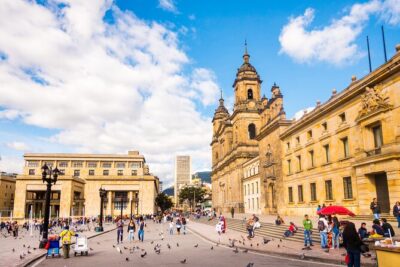
You arrive at Plaza de Bolívar de Bogotá, Colombia’s main plaza. This stop lasts about 30 minutes and includes free admission tickets.
This is where the tour shifts into discussion mode. There’s a Q&A session, and the guide ties what you’re seeing to major events tied to the plaza, including:
- The siege of the Palacio de Justicia in 1985, one of the most remembered and bloody episodes in the country
- Demonstrations in favor and against the 2016 Peace Agreement signing
- Other events that shaped the country’s current situation
I appreciate this format. When a guide gives context while you stand in the exact location, you stop treating history like something that happened far away. Instead, it feels present. The plaza becomes a stage for both memory and debate.
If you like to ask questions, this is your moment. Think about what you want clarified: what changed, what did not, and what peace agreement talks mean in everyday life. Your guide’s job is to connect the dots without making it feel like a lecture.
The 6-hour option: La Casa de la Paz and meeting peacebuilding leaders
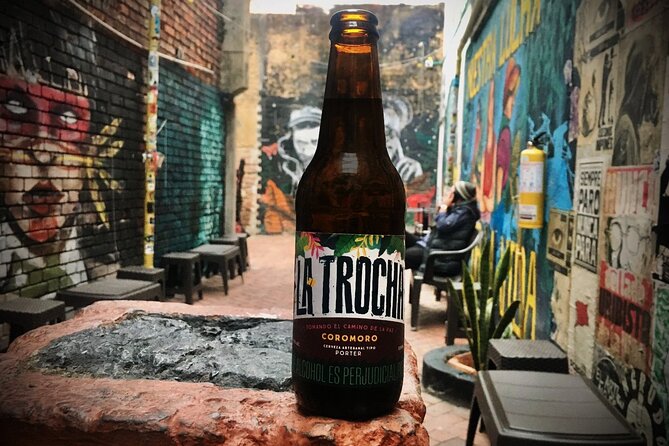
If you choose the longer 6-hour tour, you’ll add La Trocha – La Casa de la Paz. This is about 1 hour 15 minutes and includes the relevant admission.
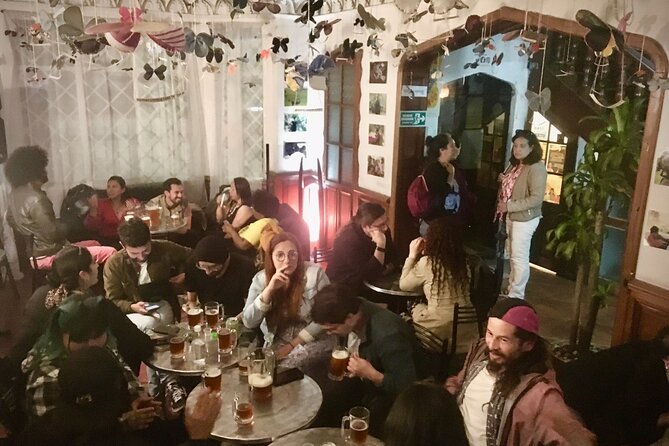
La Casa de la Paz, also known as the House of Peace, is an open for dialogue space owned by former FARC militants who are now part of society. This is not a distant museum concept. You get a chance to meet people from different parts of the country who were directly affected by conflict, and today they work as leaders, artists, and owners of different entrepreneurship projects.
You also can visit their craft shop, which matters because it turns conversation into something tangible. It’s a small but real connection between dialogue and livelihoods.
And then there’s the beer. You’ll taste La Trocha ale porter, described as one of the best craft beers in Colombia, and you’ll be able to meet the people in the space as you drink. That combo is the smart part: you get the social setting of a brewery, without losing the serious context of why the space exists.
If you’re the type who worries that these experiences will feel staged, I’d focus on how the tour frames the space. The key here is dialogue and community involvement, not just a quick stop for photos.
Chapinero and Salvo Patria lunch: food as peace work
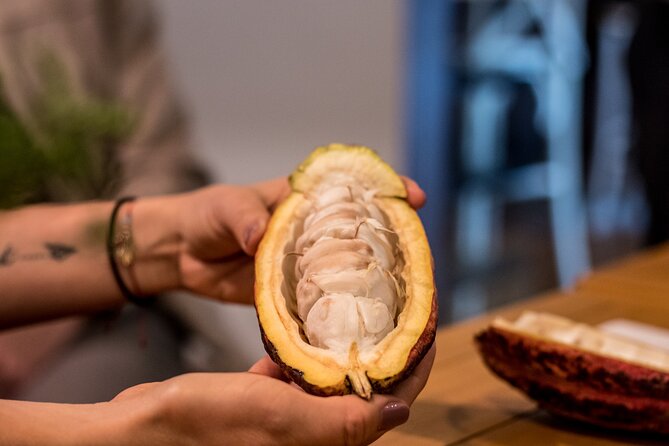
In the same 6-hour option, the tour finishes with Chapinero. You’ll have lunch at Salvo Patria, a farm-to-table restaurant. This stop is about 1 hour, and lunch is included.
Salvo Patria contributes to peacebuilding communities through its unique food. The tour doesn’t spell out every program detail, but the concept is clear: they use food, supply chains, and community ties to support people affected by conflict.
I like the placement of lunch at the end. After the heavier stops, eating something thoughtfully prepared gives you a reset. It also keeps the day from feeling like a nonstop seminar.
Price and value: is $72 a good deal?
At $72 per person, this tour is priced like a true guided experience, not just a long walk. You’re paying for several things that add up:
- A structured route through multiple meaningful sites
- A guide in English (and in the language preference you select during booking)
- Free admission tickets at stops where applicable
- Included food items you would likely spend money on anyway (especially if you pick the 6-hour version with craft beer and lunch)
- Hotel pickup and drop-off for the 6-hour tour option
So the value is strongest if you actually take advantage of the included food and the longer peacebuilding stops. If you only want a short taste of the route, you might feel less satisfied, depending on your expectations. But if you like your sightseeing to explain the why behind the where, $72 starts to feel fair.
Also, the tour is private, meaning it’s only your group. That often improves the experience because your questions can stay on track and your pace can match the group.
What to bring and how to plan your day
Wear comfortable clothes and comfortable shoes. You’ll be walking in the city center between stops, and shoes make the difference between you remembering the content and you remembering your feet hurt.
If you’re doing the longer version, plan for a full half day. The itinerary is designed to last about 7 hours in general, but you can spend more time in stops as long as you keep within your total duration limit. That flexibility helps if a specific site genuinely grabs you.
Finally, understand the weather factor. The experience requires good weather, and if it’s canceled due to poor weather, you’ll be offered another date or a full refund.
Who this tour is best for
This is a great fit if you want meaningful context in Bogotá and you’re okay with a day that includes serious topics. You don’t need to be an expert. You just need curiosity and enough patience to let the story unfold street by street.
You’ll likely enjoy it most if:
- You like walking tours with a point
- You care about contemporary peace and not only old ruins
- You enjoy art that has a real political and human connection
- You’re open to meeting people connected to peacebuilding
If you prefer only scenic views and light commentary, this may feel heavier than you want.
Should you book Weaving Peace?
I think you should book it if you want your Bogotá time to mean something. The combination of historical grounding, art that confronts violence, and peacebuilding spaces where dialogue is happening now is the standout strength.
Pick the 6-hour option if you’re interested in the human side of peace work, including craft beer at La Casa de la Paz and lunch at Salvo Patria. Choose the shorter option if you want the core city-center route focused on memorials and the Fragmentos experience.
Either way, you’ll leave with a clearer map in your head and a better sense of why Colombia’s conversation about peace is still active, not finished.
FAQ
How long is the Weaving Peace tour in Bogotá?
It runs for about 3 to 6 hours, depending on the version you choose.
What is included in the shorter version?
You get hotel pickup and drop-off for the 6-hour tour, a guide in the language of your preference, entry tickets and the food mentioned, and the itinerary stops outlined in the route. The tour includes free admission at the stops that list free tickets.
What additional stops are included in the 6-hour tour?
The 6-hour option adds La Trocha – La Casa de la Paz (including a beer tasting) and a lunch at Salvo Patria, finishing in Chapinero.
Is there pickup from Bogotá hotels?
Yes. Pickup is offered from Bogotá hotels and accommodations for the 6-hour tour. Pickup from other towns may cost extra.
Do I need to buy tickets for the attractions?
No, entry tickets for the listed stops are included, and the tour notes the admission for each stop where it applies.
What kind of guide language is offered?
The tour is offered in English, and the tour includes a guide in the language of your preference when booking.
Is the tour dependent on weather?
Yes. The experience requires good weather. If it’s canceled due to poor weather, you’ll be offered a different date or a full refund.
Can I cancel for a refund?
Free cancellation is available. You can cancel up to 24 hours in advance for a full refund, but cancellations within 24 hours of the start time are not refunded.
Hot off the list in Bogota
- Tour of Zipaquirá: Visit the Salt Cathedral and the main squares★ 4.5 · 55 reviews
- Zipaquirá and Salt Cathedral Muisca Heritage with Guide – Private★ 4.5 · 23 reviews
- Catedral de Sal desde Bogotá en Tren★ 5.0 · 5 reviews
- Zipaquira Salt Cathedral★ 5.0 · 4 reviews
- LOCAL GUIDE Zipaquirá PRIVATE TOUR – Salt Cathedral and Salt Oven★ 5.0 · 24 reviews
- Zipaquirá Salt Cathedral: An architectural wonder.★ 4.5 · 24 reviews
- Private Zipaquira Salt Cathedral and Guatavita Lagoon Tour from Bogota★ 4.5 · 44 reviews
- Zipaquira Salt Cathedral★ 4.5 · 12 reviews
Bogotá Tours, compared.
La Candelaria, Monserrate and Museums Bogotá Private City Tour
Read our review →
Shared Tour of the Historic Candelaria in Bogotá
Read our review →
Graffiti Tour: a fascinating walk through a street art City
Read our review →