

REVIEW · HISTORICAL TOURS
Cali: Walking tour of the historic center
Cali is best learned on foot. This walking tour strings together historic landmarks, salsa culture, and a few small surprises with a local guide, all at a smart pace. I particularly like the small group size that keeps questions close, and the way free-to-enter stops let you focus on the places instead of ticket hassles.
One thing to consider: it is a steady walk through central streets, so comfortable shoes and sun protection actually matter.
If your mental image of Cali is only salsa, this tour gives you the rest of the story. You’ll connect colonial churches and city plazas with the names and music that shaped modern Cali. The tour also includes a typical drink, and you get a taste of local flavors along the route.
Expect a guide-led experience that feels human, not scripted. In recent visits, guides like Julio and Marcela were praised for clear English and a friendly, upbeat style that made the stops land. If you’re short on time but want context, this is a great fit.
In This Review
- Key highlights at a glance
- A short walk that stitches together Cali’s old center and salsa identity
- Price and what $41 really buys you
- Small group pace, easy meeting point, and what that means for you
- Stop-by-stop: what you’ll see and why it matters
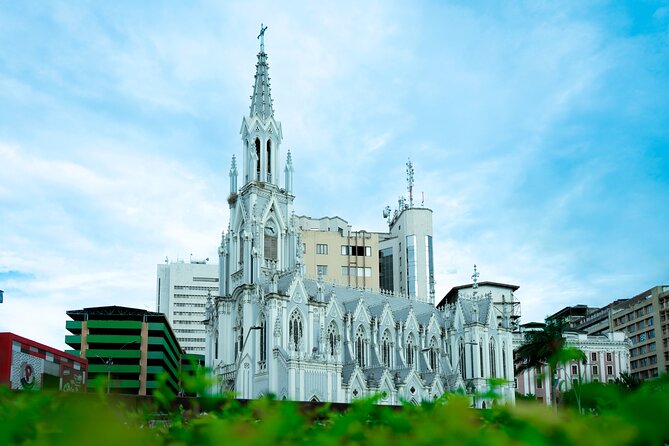
- 1) Iglesia La Merced, the “birthplace” story of Cali
- 2) Museo del Oro Calima, gold craft and the El Dorado link
- 3) Teatro Municipal Enrique Buenaventura, classic form in a city center
- 4) Plaza de la Gobernación and San Francisco Church
- 5) St. Peter the Apostle Cathedral, Cali, the church and state relationship
- 6) Plaza de Caicedo, palm trees and Cali’s main square
- 7) La Calle del Sabor, salsa music in the street
- 8) Puente Ortiz, river views and photo-friendly arcs
- 9) Parque Paseo Bolivar, independence history plus la Lulada caleña
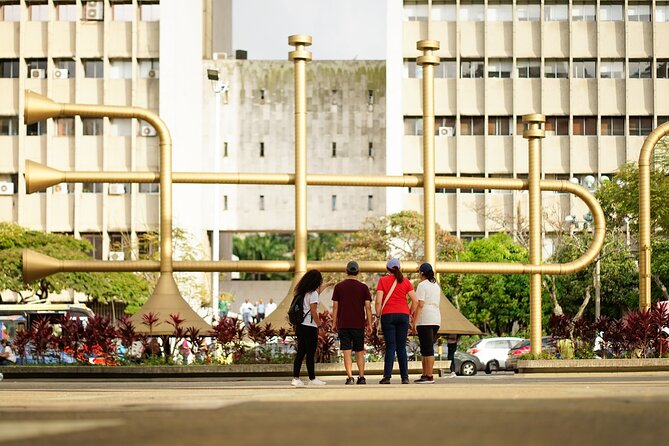
- 10) Plazoleta Jairo Varela, Grupo Niche influence and the trumpet monument
- 11) Parque Simón Bolívar, birds, palms, and fruit shade
- 12) Bulevar del Río Cali, church views and culture buildings
- 13) Calle de la Escopeta, color, street art, and local flavors
- Guides like Julio and Marcela, and what makes their style work
- Food and drinks: included soda, plus a Cali classic you can plan around
- Views and city texture: why the bridge and river stops are more than photos
- Who should book this walking tour?
- Practical tips so the walk feels easy
- Should you book this Cali historic center walking tour?
- FAQ
- How much does the Cali historic center walking tour cost?
- How long is the tour?
- How many people are in the group?
- Where does the tour start?
- What is included in the price?
- What drinks are included during the tour?
- Are there admission tickets for the sites?
- What should I bring for the tour?
- What happens if it rains?
- Can I cancel for a full refund?
Key highlights at a glance
- Small group, up to 7 people, so the walk stays personal and flexible
- Free admission listed for the main stops, meaning you spend money on the tour, not entry fees
- Gold and indigenous history at the Museo del Oro Calima, with artifacts tied to the El Dorado legend
- Real salsa culture on the street, including Calle del Sabor and a visit to the Jairo Varela Square
- Views over the river from Puente Ortiz, plus a scenic photo moment near Torre de Cali
- A typical drink stop (including la Lulada caleña) that matches the city’s laid-back rhythm
A short walk that stitches together Cali’s old center and salsa identity
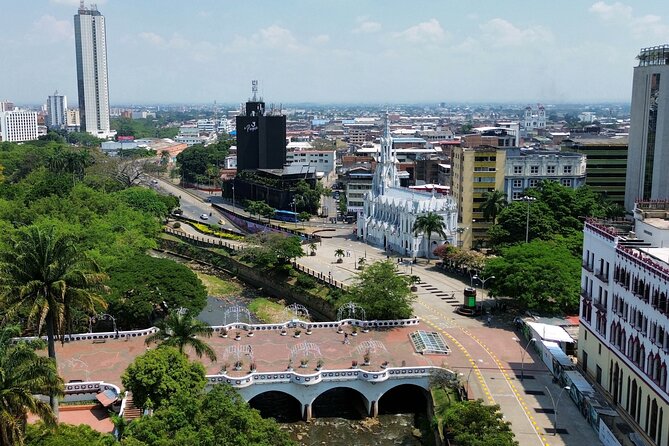
Cali can feel like it moves fast, especially if you only skim the big sights. This tour slows that down in a good way. You start in the heart of the historic center and keep moving link by link, church to museum to plaza to river, so the city starts making sense as one connected place.
What makes it work is the mix. You’re not just looking at buildings. You’re learning why these sites matter, how the city grew, and why salsa culture is tied to specific corners, monuments, and names. That matters because Cali’s music identity is not abstract. It has addresses, streets, and public spaces.
More Historical Tours in Cali
- Shared Tour of the Historical and Cultural Center of Cali
★ 5.0 · 211 reviews - Shared Tour Cali’s Historical Downtown
★ 4.8 · 143 reviews - Historical Shared Tour Salsa, Graffiti & Resistance in Cali
★ 5.0 · 107 reviews
Price and what $41 really buys you
At $41 per person for about 2 to 3 hours, the value comes from three parts: guided context, a smart route, and at least one included drink. You also get a local guide and a walking tour through the historic center as part of the ticket.
On top of that, many of the listed stops show free admission, so your money goes to the guide experience rather than covering multiple entry fees. If you like the idea of learning a city without turning it into an expenses checklist, this is a practical setup.
One more value point: recent feedback highlights English clarity and guide energy. When a guide can switch smoothly between history, culture, and music without losing the thread, you end up feeling like you got your time back.
Small group pace, easy meeting point, and what that means for you
The tour runs with a maximum of 7 travelers, and it meets at Valley Adventours, Cra. 5 #3-02, Comuna 3, Cali. It ends back at the same spot. That sounds simple, but it helps. You’re not being herded all over town with long transit breaks, and the walk stays manageable for a couple of hours.
You also get the basics for a comfortable visit: wear comfortable walking shoes, use sunscreen, and bring a water bottle. If it might rain, bring an umbrella. The tour is not canceled just because of rain, so plan for weather rather than hoping for perfect skies.
Also, the tour is described as suitable for most travelers, which usually means the walking is realistic and not overly punishing. Still, it’s a walking tour, so pace yourself and don’t plan a marathon after.
Stop-by-stop: what you’ll see and why it matters
Here’s the route, translated into real-world meaning. Think of these stops as the tour’s chapter titles.
More Walking Tours in Cali
- The Cali Street Food Walking Tour
★ 5.0 · 81 reviews - Afro Walking Tour. The colors of Cali.
★ 5.0 · 61 reviews - Cali: Walking tour of the historic center
★ 4.9 · 18 reviews - Cali: Walking Tour of the 11 Neighborhoods of Commune 20
★ 5.0 · 10 reviews
1) Iglesia La Merced, the “birthplace” story of Cali
You start at Iglesia La Merced. The stop is framed as a key moment in Cali’s beginning, with a local storytelling detail about a dream cross connected to seven rivers. That kind of myth-infused origin story is worth paying attention to because it shows how communities anchor identity.
You’ll also see colonial-style church architecture and get the chance to view Cristo Rey from inside the city center area. Even if you’re not a hardcore architecture person, churches like this work as visual landmarks. They give you a mental map fast.
Practical note: the listed admission is free, so this is a low-friction start.
2) Museo del Oro Calima, gold craft and the El Dorado link
Next is Museo del Oro Calima. This is where the tour turns from “pretty buildings” to “how people lived and what they believed.” You’ll see pieces with more than 4,000 years of existence, and you’ll learn how the craftsmanship of indigenous communities is connected to the El Dorado legend.
The legend usually gets told like it’s pure fantasy. This stop grounds it in skill, artistry, and cultural meaning. For you, that means the story becomes less Hollywood and more human.
Admission is listed as free, which makes this a strong value stop.
3) Teatro Municipal Enrique Buenaventura, classic form in a city center
A short stop takes you to Teatro Municipal Enrique Buenaventura, a neo-classic public theater in the historic city center and cultural area of Cali. You’re there for the setting as much as the building.
Why it matters: theaters often become “cultural punctuation marks” in a city. They show where public life gathered and which forms of art got official support. Even if you don’t go inside, the location helps you understand how culture is distributed across Cali, not stuck in one neighborhood.
4) Plaza de la Gobernación and San Francisco Church
Then you walk the streets to Plaza de la Gobernación. From there, you can enter San Francisco Church.
This stop connects two themes: power and faith. You’ll feel that the plaza layout and surrounding institutions weren’t random. Public spaces like this were designed to shape daily life, not just to look nice.
Again, admission is listed as free, so it’s an easy add-on without extra budgeting.
5) St. Peter the Apostle Cathedral, Cali, the church and state relationship
You continue to San Pedro Apostol Cathedral, described as Cali’s main church. The focus is on the “deep relationship between church and state.”
That phrase gets used in history classes, but on a walking tour it becomes practical. You start to see how religious architecture and civic authority overlap in the same geography. It’s not just trivia. It explains why the city center looks the way it does.
Admission is listed as free for this stop too.
6) Plaza de Caicedo, palm trees and Cali’s main square
You move to Plaza de Caicedo, Cali’s major square. You’ll find it surrounded by palm trees and framed by the National Palace.
This is the kind of stop that helps you learn the city’s rhythm. Squares like this are where people gather, where stories get told out loud, and where the past meets the daily present.
7) La Calle del Sabor, salsa music in the street
Now the tour shifts to sound. La Calle del Sabor is described as Cali’s most iconic salsa-related street. The guide points you toward why the street feels tied to music: la clave, trumpets, and the bell.
This is not a lecture stop. It’s a “walk in time with the culture” stop. If you want Cali to feel like Cali and not just a list of landmarks, this is one of the best moments.
8) Puente Ortiz, river views and photo-friendly arcs
Next is Puente Ortiz, the first bridge above the Cali River. You get views of Torre de Cali, the city’s tallest building, and Three Crosses Hill.
You’ll also be able to take photos inside the arches across the bridge. That matters because it gives you a strong visual contrast: modern skyline height on one side, riverside perspective on the other.
Admission is listed as free and this is naturally included by being outside, so it costs you nothing extra.
9) Parque Paseo Bolivar, independence history plus la Lulada caleña
At Parque Paseo Bolivar, you visit the statue of Simón Bolívar and walk around the park. You’ll learn the independence history behind the area, and you get shade from ceiba trees while enjoying la Lulada caleña, a typical Cali drink.
This is one of those “slow down for five minutes” moments that makes the rest of the tour feel smoother. You’re not just learning about the city, you’re tasting it.
10) Plazoleta Jairo Varela, Grupo Niche influence and the trumpet monument
At Plazoleta Jairo Varela, the tour focuses on why Jairo Varela and Grupo Niche matter to salsa culture in Cali and worldwide. You’ll also see the musical magic around the trumpet monument.
If salsa music feels personal to you, this stop usually lands. It gives a name and a place to what you might otherwise experience only through recordings.
11) Parque Simón Bolívar, birds, palms, and fruit shade
You continue with Parque Simón Bolívar, taking in nature inside the city. You’ll notice birds, palm trees, tributes to the rivers in Cali, and fruit trees that provide shade.
This stop breaks up the “stone and story” feeling from earlier church stops. It helps you reset, which is important because you’re still on a walking schedule.
12) Bulevar del Río Cali, church views and culture buildings
Now the tour shifts along Bulevar del Río Cali, including a look at La Ermita Church, the Coltabaco building, and the Jorge Isaacs Theater.
This part is good for understanding that Cali’s cultural life is not only in squares and museums. It’s threaded along the river corridor too.
13) Calle de la Escopeta, color, street art, and local flavors
You end at Calle De La Escopeta, known for vibrant color, street art, and a woven roof. The tour framing also mentions the colonial neighborhood feel and the flavors that flow around there.
This ending matters. It’s a sensory wrap-up after the history stops. It’s the kind of street where you can keep walking after the official tour, if you want more atmosphere.
Guides like Julio and Marcela, and what makes their style work
The standout pattern in feedback is how strongly the guide shapes the experience. Julio gets called out for strong engagement and English that works well. Marcela is praised for knowing how to keep people interested, with the tour described as covering culture, life, food, and salsa.
That matters because a historic-center walk can easily become a timeline dump. Here, the route is built to connect story to street. The guide role is to keep that connection clear, and recent reports suggest they do.
If you’re the kind of person who asks why one church is positioned like that, or why a salsa name shows up on a plaza, you’ll probably feel seen on this tour.
Food and drinks: included soda, plus a Cali classic you can plan around
You’re included with a soda/pop typical drink as part of the tour. And at Parque Paseo Bolivar, you get la Lulada caleña.
The tour also describes sampling typical local fruit and drinks during the experience. Specific fruit types are not listed, so treat it as a tasting moment rather than a full meal plan.
Practical advice: since this is short, don’t plan to treat it as your only food stop for the day. Use it to set your appetite. Afterward, you’ll be primed to seek out more local fruit drinks and street food in the surrounding historic area.
Views and city texture: why the bridge and river stops are more than photos
Puente Ortiz and Bulevar del Río Cali are not just scenic breaks. They change your perspective on the whole city.
From Puente Ortiz, you see how Torre de Cali rises while the river and hills give Cali depth. It makes the city feel layered instead of flat. Then, along Bulevar del Río, you’re reminded that culture buildings and landmarks line up against the river view, shaping how people move and gather.
If you want Cali to feel real, these moments help you picture how the city works day to day.
Who should book this walking tour?
This tour is a good match if you:
- want a 2 to 3 hour plan that covers major historic and cultural areas without being exhausting
- care about how churches, plazas, and music connect in Cali
- enjoy guided context, especially when the guide can explain in clear English
- prefer a small group experience rather than a large bus tour
It may be less ideal if you strongly dislike walking, or if you want a tour that stays purely outdoors or purely museum-based. This one is mixed by design.
Practical tips so the walk feels easy
A few things make a real difference:
- Wear comfortable shoes. This is a walking route across the central streets.
- Bring water and sunscreen. You’ll spend long enough outside that you’ll feel it.
- Pack an umbrella. Rain isn’t described as a reason for cancellation, so be ready.
- Have your camera ready for Puente Ortiz arches and the skyline view near Torre de Cali.
Also, if you’re picky about language, recent feedback highlights English ability from guides like Julio. Still, if English is essential, consider booking early so you can confirm expectations.
Should you book this Cali historic center walking tour?
I’d book it if you want Cali to click fast. For $41, you get a guided route through free-entry landmarks, a strong salsa and music connection, and a taste of Cali through drinks like la Lulada caleña.
The main reason to pass is simple: if you already know Cali well and you want deeper museum time or a slower day, this might feel a bit “many stops, limited dwell.” But if you’re visiting for the first time and you want a guided orientation that blends history with the city’s salsa heartbeat, this is an excellent use of a half day.
FAQ
How much does the Cali historic center walking tour cost?
The tour costs $41.00 per person.
How long is the tour?
It lasts about 2 to 3 hours.
How many people are in the group?
The tour has a maximum of 7 travelers.
Where does the tour start?
The start point is Valley Adventours, Cra. 5 #3-02, Comuna 3, Cali, Valle del Cauca, Colombia.
What is included in the price?
Included are a local guide, the walking tour through the historic center, and a soda/pop typical drink.
What drinks are included during the tour?
You’ll receive a typical drink as part of the tour, and one of the listed drink stops includes la Lulada caleña.
Are there admission tickets for the sites?
The listed admission for the main stops is free, and the tour includes visits inside several churches and a museum.
What should I bring for the tour?
Wear comfortable walking shoes and sunscreen, and bring a water bottle, hat, and umbrella.
What happens if it rains?
The tour will not be canceled because of rain. The advice is to bring an umbrella or proper rain clothing.
Can I cancel for a full refund?
Yes. You can cancel up to 24 hours in advance for a full refund.
Hot off the list in Cali
- Trekking to Pico de Loro★ 4.5 · 14 reviews
- Private Transfer from Cali Airport (CLO)★ 5.0 · 4 reviews
- Trekking & Rivering Reserve Pericos★ 5.0 · 5 reviews
- Sugar Cane Hacienda El Paraiso & Nature Day Tour★ 4.0 · 6 reviews
- Friday Night Street Salsa and Bar Crawl in Cali, Colombia★ 4.5 · 24 reviews
- Saturday Night Bar Crawl in Cali, Colombia★ 5.0 · 20 reviews
- San Cipriano & River Adventure Day Tour★ 4.5 · 11 reviews
- San Cipriano River Tubing Relax Day★ 5.0 · 4 reviews
Historical Tours, compared.
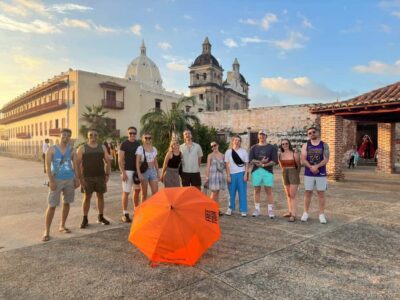
Historic Center and Getsemaní Shared Walking Tour
Read our review →
Shared Tour of the Historic Candelaria in Bogotá
Read our review →
Historic Center & Getsemaní Shared Tour in Cartagena
Read our review →
Shared Tour Historic Center of Medellin with Audio System
Read our review →
Medellín Essential: history & local life on E-bike
Read our review →
Medellin Historic Walking Tour with Expert Guide
Read our review →
Browse the lists this tour appears in