
REVIEW · HISTORICAL TOURS
African History in Cartagena
Cartagena has scars in plain sight. This short, well-paced tour uses landmarks in the historic center to explain African history in Cartagena and how it shaped Colombia’s story. You’ll move through key squares and walls, not just pose for photos.
What I like most is the way the stops are linked, so the tour feels like one continuous lesson. I also love the private, local feel, with a guide who can adjust to your group’s pace and keep things engaging without turning it into a lecture.
One thing to consider is the route is mostly around the older streets and viewpoints, so comfortable shoes help. Also, pickup is limited to certain neighborhoods, so you may need to meet at the pier if you are staying outside the pickup zone.
In This Review
- Highlights you will feel fast
- Price and logistics: what you actually get for $45
- Start at the walls: reading Cartagena from the gate
- Plaza de la Aduana: the trade in enslaved people
- Plaza de San Pedro Claver: Haiti’s influence on independence
- Baluarte de San Francisco Javier: fortifications with context
- Catedral Santa Catalina de Alejandría: faith and power in one building
- Parque Centenario: a pause in the shade
- Plaza de La Trinidad and Getsemaní streets
- What the guides are really doing well (and why you will feel it)
- Who this tour suits best
- Small practical notes that make a big difference
- Should you book African History in Cartagena?
- FAQ
- How long is the African History in Cartagena tour?
- What is the price per person?
- Is the tour private?
- Does the tour include admission tickets to the stops?
- Is pickup included?
- Where does the tour start and end?
- What time is the tour available?
- What language is the tour offered in?
- Is lunch included?
- Is return to the hotel included?
Highlights you will feel fast
- Seven carefully chosen stops that connect enslaved trade, Haitian influence, and Cartagena’s defenses
- Free admission for each major site on the route, so you are not constantly budgeting entry fees
- A guide who blends facts with stories, reported as fun, professional, and easy to follow
- A private setup that works well for couples, families, and solo travelers
- Finishes in Getsemaní, so you can keep exploring afterward without backtracking
Price and logistics: what you actually get for $45
At $45 per person for about 2 hours and 35 minutes, this is good value for Cartagena’s historic-center walking. You get private transportation, bottled water, and a guided route that hits the main “big meaning” places, including spots tied directly to the enslaved trade and Afro-Caribbean influence.
The tradeoff is the tour is not a full-day, do-everything package. It is built for focus. You will likely want lunch afterward on your own, since lunch is not included. And while return to your hotel is not included, the tour does end in Getsemaní, which is often a convenient springboard for an afternoon of your own plans.
If you are on a cruise day, this length is one of the reasons it can work. It is short enough to fit a port schedule, but long enough that you are not just speeding past history.
More Historical Tours in Cartagena
- Cartagena: Historic Center and Getsemaní Shared Walking Tour
★ 4.9 · 2,716 reviews - Historic Center & Getsemaní Shared Tour in Cartagena
★ 5.0 · 620 reviews - San Basilio de Palenque History Tour
★ 5.0 · 301 reviews
Start at the walls: reading Cartagena from the gate
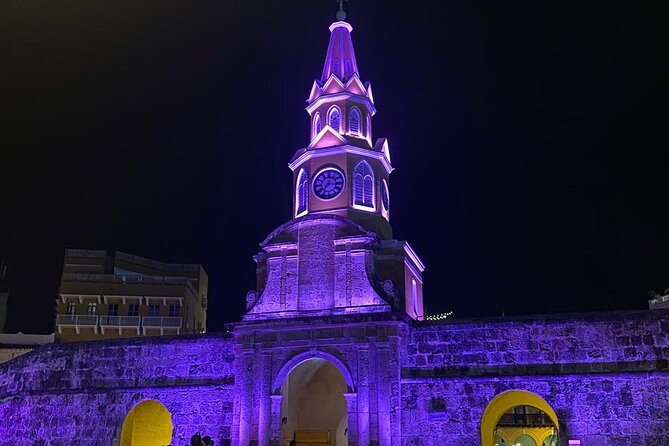
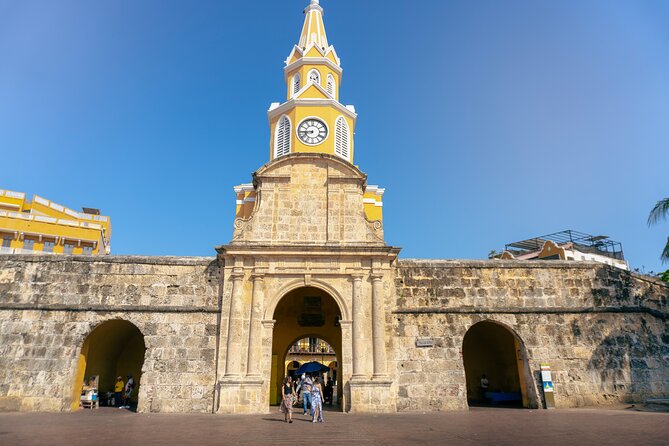
You begin at Cartagena Pegasus PierCentro, then you work your way toward the walled city core and key public squares. The first stop is Torre del Reloj, the clock tower that functions as the main gate into the walled area. This is where you get your bearings quickly. The architecture tells you this is a city designed to protect people, trade, and power.
From a history point of view, this matters because the walled city is not just a pretty postcard. It is the container for what came next: commerce, control, and the forced movement of people that fed the economy. Even if you know Cartagena is tied to colonial trade, standing at the gate helps the story feel real and physical.
You only spend about 15 minutes here. The goal is to orient you, not linger. If you tend to stop for every photo, keep an eye on the time so you do not slow the rest of the group down.
Plaza de la Aduana: the trade in enslaved people
Next comes Plaza de la Aduana. This square is directly linked to the trade of enslaved people. The value of this stop is how it shifts your attention. Instead of viewing the city as a neutral historic site, you see the economic system behind it.
Practically, this is also a grounding moment because it anchors the tour’s theme. The rest of the walk builds outward, but Plaza de la Aduana is the “center of gravity” for understanding why African history is not a side note in Cartagena. It is part of the foundation of the city’s past.
You are in this area for around 20 minutes. I recommend taking a slow look around even if you are eager to move on. Sit with what the square represents for a moment, then let the guide connect it to the next stops.
Plaza de San Pedro Claver: Haiti’s influence on independence
Then you head to Plaza de San Pedro Claver. Here, you talk about the influence of Haiti on Cartagena and Colombia’s independence. This is one of those history connections that can surprise people, because it reframes the story of independence as something shaped by events beyond local borders.
You will not just hear a name-drop. The stop is set up to show cause and effect, why Haiti mattered, and how that influence connects back to Afro-descended histories in the region. It is a strong counterbalance to the earlier theme of forced labor and trade.
This is another 20-minute segment. It is also a good time to ask questions if your guide invites them. The tour format and pacing make it feel like a guided conversation more than a one-way talk, especially based on the style reported in past visits.
A few more Cartagena plans worth comparing
- Cartagena: Cultural tour Bazurto Market Adventure
★ 5.0 · 200 reviews - Historic and Movie Bike or Walking Tour
★ 5.0 · 189 reviews - Visit Palenque with natives : history, culture and ancestral legacy
★ 5.0 · 53 reviews - Cartagena Instagrammable History
★ 4.5 · 29 reviews
Baluarte de San Francisco Javier: fortifications with context
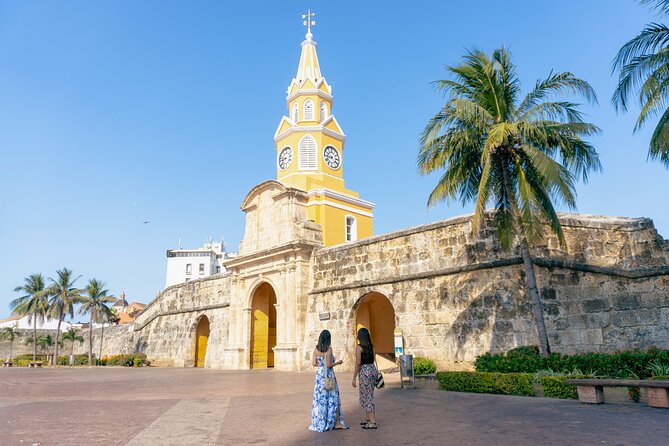
Baluarte de San Francisco Javier is next. This is where you learn Cartagena’s fortifications history. Forts and walls can feel like generic “defense stuff” if you do not know what they were defending. On this tour, you get context for why these fortifications were important for trade and for maintaining control in a port city under pressure.
This stop is about 15 minutes. It is short, but it helps you understand that Cartagena’s walls were not only for battles. They were part of a system, tied to who had power and who moved through the city.
If you like architecture, you will likely enjoy this stop more than you expect. The guide’s framing makes you notice details instead of just looking at a viewpoint.
Catedral Santa Catalina de Alejandría: faith and power in one building

The tour includes Catedral Santa Catalina de Alejandría, described as the most important Catholic church in the city. This kind of stop can go two ways on tours: either it becomes a rushed photo moment, or you get useful context. Here, the intent is to help you connect religion, colonial influence, and how major institutions shaped everyday life.
You spend about 15 minutes at the cathedral. Plan to look at it as more than a landmark. It is a statement of authority. In a tour focused on African history and colonial trade, that matters, because faith and power were intertwined during the colonial period.
If you tend to visit churches quietly, this is a good fit. If you get distracted by details, bring the tour theme back to mind: what kind of world produced these institutions?
Parque Centenario: a pause in the shade

Then you go to Parque Centenario, often described as the lung of the historic center because it is surrounded by trees. This stop is about rhythm. After squares and stone structures tied to heavy history, you need a breather.
It lasts around 15 minutes, which is enough time to reset without feeling like you are wasting time. I like that the tour uses this kind of pause. It helps you absorb the earlier information and keeps the walk from becoming exhausting.
Practical tip: if the weather is warm, this park stop can feel like the best part. Use it to drink the included bottled water, and take a moment to cool down before the final leg.
Plaza de La Trinidad and Getsemaní streets
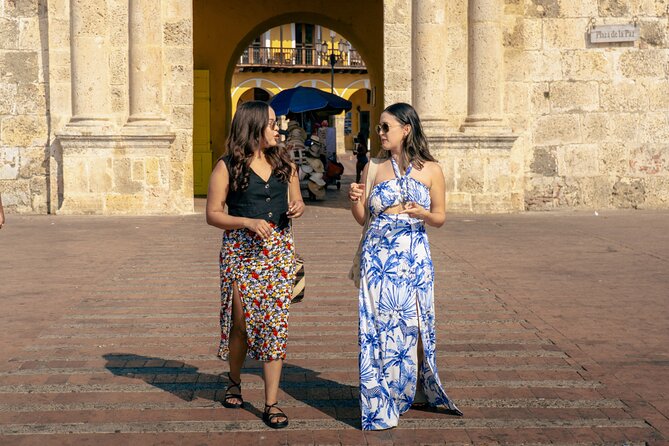
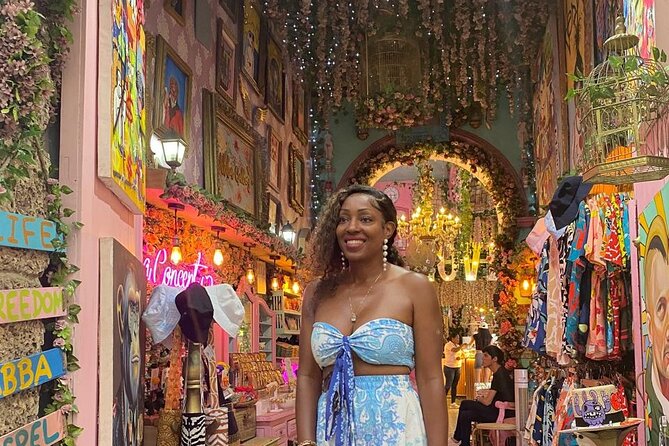
The last major stop is Plaza de La Trinidad. From there, the tour tours the colorful streets of Getsemaní. This is where you shift gears from “institution and system” to lived neighborhood energy.
Even if you only know Getsemaní for its street life, the tour helps you see it as more than scenery. You leave with a better sense of how the historic forces you learned about show up in a place’s cultural identity.
This segment runs about 20 minutes. Since it ends in Getsemaní, you can keep going after the tour without having to fight traffic back toward the start. It is often the easiest part of Cartagena to explore on foot.
What the guides are really doing well (and why you will feel it)
The reviews paint a clear picture of the guide style. In past tours, Dani has been described as fun, engaging, and professional, with the vibe of touring with a good friend. That matters because Cartagena history can be intense. If the guide keeps the tone human and the explanations clear, you get the learning without getting overwhelmed.
Another guide, Nuria, was praised for adjusting to an elderly person walking slowly. That tells you the tour is not just a rigid checklist. It can flex within the route to keep the experience comfortable for different groups.
So if you are a solo traveler, you get more than a headset tour. You get someone actively translating the city’s meaning for you. If you are traveling with mixed ages, that flexibility can be a real benefit.
Who this tour suits best
This one is a great match if you want a focused introduction to African history in Cartagena without doing a full multi-day program. It is also ideal if you like your sightseeing tied to a theme, not random highlights.
It tends to work well for:
- Solo travelers who want a guided narrative through the historic center
- Couples who want meaning without spending the whole day
- Families and multigenerational groups, since the tour is designed to be approachable
- Cruise stop visitors who need a solid half-day plan
If you are the type who wants extremely slow museum-style pacing, you might find the time at each stop on the brief side. But for most people, the structure is exactly what keeps the story coherent.
Small practical notes that make a big difference
Because the itinerary is tight, timing matters. You should keep your phone handy for maps and photos, but avoid turning every stop into a 30-photo event. The tour is built around short site visits, around 15 to 20 minutes at most stops.
Also, remember what is not included: lunch and return to the hotel. Build those into your plans now, especially if you want to squeeze in a second activity after the tour.
Finally, the tour is in English, and service animals are allowed. It is also described as near public transportation, which can help if you need to get to the meeting point efficiently.
Should you book African History in Cartagena?
Yes, if you want a short, high-impact way to understand Cartagena through African history, the enslaved trade, and Haiti’s influence on independence. This is not just pretty streets, it is explanation with landmarks. For $45, the free entry tickets at each key stop, bottled water, and private transportation make it feel efficient and fair.
I would skip it if you only want casual sightseeing with zero heavy context, or if you need a long sit-down pace at fewer sites. Otherwise, this is a smart choice, especially if you are short on time, want a private guide, and want your Cartagena day to mean something beyond photos.
FAQ
How long is the African History in Cartagena tour?
It lasts about 2 hours and 35 minutes.
What is the price per person?
The price is $45.00 per person.
Is the tour private?
Yes, it is a private tour/activity, with only your group participating.
Does the tour include admission tickets to the stops?
Admission is listed as free for the stops on the route.
Is pickup included?
Pickup is offered only in the Walled city, Boca Grande, Marbella, and Manga neighborhoods. If you are outside those areas, you should plan to meet at the start location.
Where does the tour start and end?
It starts at Cartagena Pegasus PierCentro, Cartagena, Bolivar, Colombia, and ends at Cl. 29 #9119, Getsemaní, Cartagena de Indias, Bolívar, Colombia.
What time is the tour available?
The listed opening hours are Monday to Saturday, 7:00 AM to 3:30 PM (for the stated date range).
What language is the tour offered in?
The tour is offered in English.
Is lunch included?
No, lunch is not included.
Is return to the hotel included?
Return to the hotel is not included. The tour ends in Getsemaní.
Hot off the list in Cartagena
- SkyKitchen 2-Hour Cocktail Class in Cartagena★ 5.0 · 23 reviews
- Private Baru Aviary Tour with Lunch Included★ 4.5 · 26 reviews
- Rosario Islands Private Day – Exclusive VIP Escape★ 5.0 · 21 reviews
- CITY WALLED CITY SEGWAY SKATEBOARD TOUR and GETSEMANI★ 5.0 · 30 reviews
- Cartagena Culinary Private Tour: Local Flavors & Hidden Gems★ 4.0 · 6 reviews
- Shore Excursion private Luxury City tour of Cartagena★ 5.0 · 8 reviews
- Zip Through Walled City and Barrio Getsemani by Segway★ 5.0 · 4 reviews
- Shore Excursion Mangroves tour★ 4.5 · 3 reviews
Historical Tours, compared.
Historic Center and Getsemaní Shared Walking Tour
Read our review →
Shared Tour of the Historic Candelaria in Bogotá
Read our review →
Historic Center & Getsemaní Shared Tour in Cartagena
Read our review →
Shared Tour Historic Center of Medellin with Audio System
Read our review →
Medellín Essential: history & local life on E-bike
Read our review →
Medellin Historic Walking Tour with Expert Guide
Read our review →
Browse the lists this tour appears in