
REVIEW · WALKING TOURS
Cartagena Walking Tour
Cartagena hits different when you walk it. This private 2-hour route threads UNESCO-listed Walled City sights with Getsemaní streets, so you get the story behind the colors, plazas, and walls. You move through layers of Cartagena, from conquest and colony to the republic era and the 21st-century vibe inside the Corralito de Piedra.
I especially love the right-length pacing. Two hours is long enough to understand the big themes without turning the whole day into a march. I also like that you get a guide who can connect the dots, from indigenous presence to African and Caribbean influences, without making it feel like a lecture.
One thing to plan for: cruise-day traffic can crush arrival timing. One guest got stuck in taxi queues and heavy congestion right after ship arrival, so give yourself real buffer time if you are port-bound.
In This Review
- Key Things You’ll Notice on This Cartagena Walk
- A 2-Hour Private Walk Through the Walled City and Getsemaní
- Starting at the Clock Tower, Then Getting Oriented Fast
- Camellón de los Mártires to the Torre del Reloj: Indigenous Roots and Colonial Control
- Pedro de Heredia and Portal de los Dulces: Names, Literature, and Daily Traditions
- Plaza de la Aduana and the Market System: Where Commerce Included Enslavement
- Museo de Arte Moderno Cartagena: Art Museums With a Trade-Era Connection
- Plaza de San Pedro Claver: Religion and Human Rights in One Complex
- Baluarte de San Ignacio and Plaza Bolívar: Bastions, Pirates, and Strategy
- Plaza de la Proclamación and the Inquisition Palace Area: Famous Spots Mentioned, Not Fully Included
- Barrio Getsemaní: Umbrellas, Graffiti, Champeta, and Real Street Life
- Parque Centenario and Calle de San Juan: A Green Break and a Music-Laced Walk
- Callejón Ancho, Holy Trinity, and the Final Salsa Step in Plaza de La Trinidad
- Price and Value: What $74 Covers, and Where Time-Savers Matter
- Who This Tour Suits Best (and Who Might Want Something Else)
- Practical Tips That Make It Smoother
- Should You Book This Cartagena Walking Tour?
- FAQ
- How long is the Cartagena Walking Tour?
- Is the tour private?
- Where do we meet?
- Does the tour return to the meeting point?
- What is included in the price?
- Are food and drinks included?
- Are tickets included for all attractions mentioned?
- How many people are in the group?
- Is the tour suitable for most people, and are service animals allowed?
- Can I cancel and get a refund?
Key Things You’ll Notice on This Cartagena Walk
- Private for just your party (max 15), so you can ask questions and set a comfortable pace
- Most admissions are included, saving time and ticket hassles at several major stops
- The tour explains slavery-era landmarks directly, including markets and religious sites linked to human rights
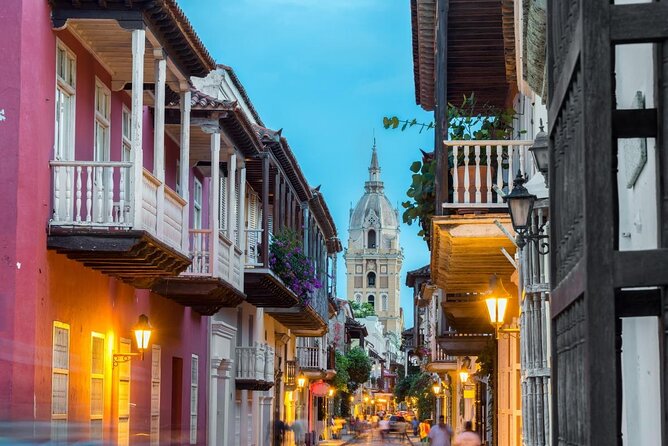
- You get both old stone and modern Cartagena, with Getsemaní graffiti, music culture, and street life
- Short stops, smart sequencing, so you see many areas without feeling rushed
- A cooler morning can help if your schedule allows it, since early hours can mean fewer street crowds
A 2-Hour Private Walk Through the Walled City and Getsemaní
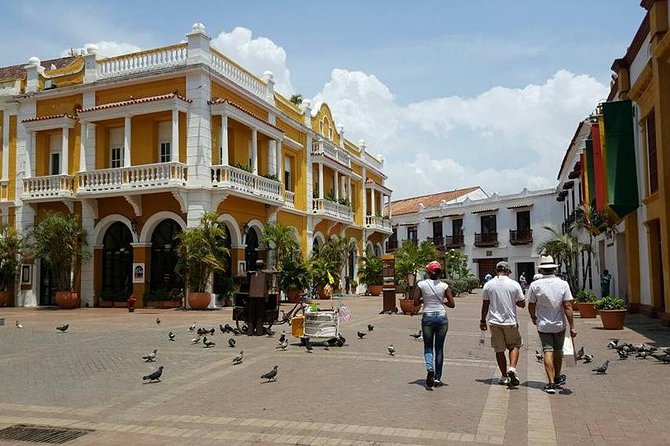
This is the kind of tour that makes Cartagena feel less like a postcard and more like a living neighborhood. You start inside the story-heavy core, within the symbolic stone enclosure locals call the Corralito de Piedra, then continue into Getsemaní, where street culture takes the foreground.
The best value here is the mix of eras. You are not only looking at pretty buildings. You are walking through conquest, colony, and republic chapters that are still visible in plazas, churches, bastions, and even in the daily rhythms of the streets.
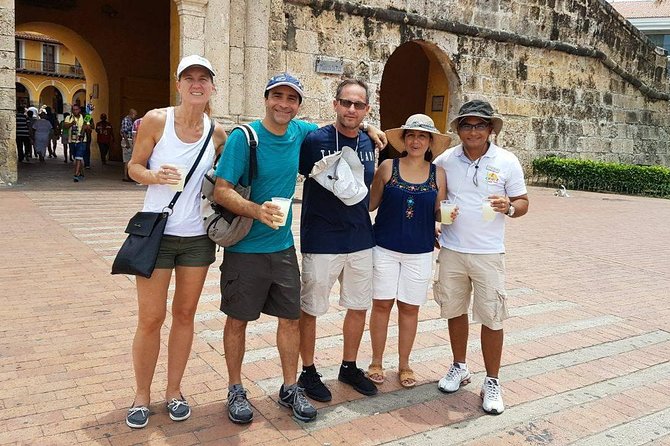
It runs about 2 hours and is designed as a private walking tour for you and your party, with a maximum of 15 travelers. That small scale matters. It keeps the group from feeling like a moving tour conveyor belt, and it makes questions actually possible.
More Walking Tours in Cartagena
- Cartagena: Historic Center and Getsemaní Shared Walking Tour
★ 4.9 · 2,716 reviews - Private Walking Tour in Cartagena Walled City & Getsemaní
★ 5.0 · 1,357 reviews - Cartagena: Walled City and Getsemani Shared Walking Tour
★ 4.5 · 352 reviews
Starting at the Clock Tower, Then Getting Oriented Fast
The meeting point is at the Monumento Torre del Reloj, Boca del Puente, El Centro. From there, you begin with the guide verifying your reservation and helping you get geographically grounded before you start moving.
That first orientation step sounds small, but it pays off. Cartagena’s Walled City can feel like a puzzle of plazas and lanes, and it is easy to wander in circles if you go solo. Having someone point out where you are, and why that spot matters, changes how you experience everything that comes next.
The route also tees you up thematically right away. You are not just told facts. You are guided into a bigger narrative about who built this city, who suffered in it, and how the culture that followed shaped daily life.
Camellón de los Mártires to the Torre del Reloj: Indigenous Roots and Colonial Control
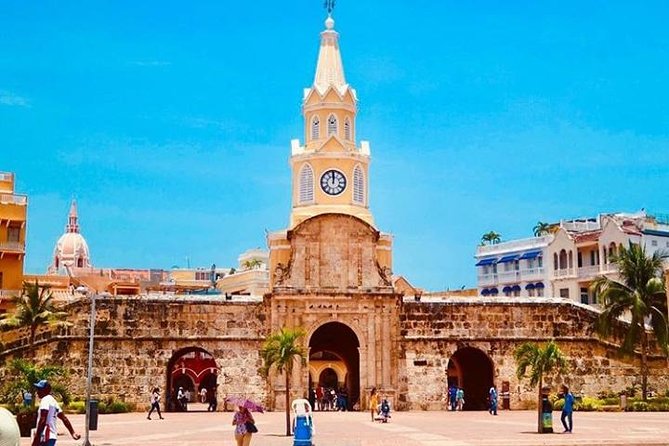
Your first major stop is Camellón de los Mártires, Plaza de Cervantes. Here the guide focuses on the indigenous presence before and during the Spanish arrival. You learn how those early layers shaped what Cartagena became, not just what Spanish power replaced.
Then you move to the Torre del Reloj, also discussed as the Golden Key of Cartagena. You pass through Plaza del Ecuador and the area leading toward Plaza del Esclavo, which sets up what comes later: the routes and systems tied to enslavement. The tour frames these locations as part of Cartagena’s physical geography, not as vague background.
If you like walking tours that connect dots instead of flipping slide after slide, this sequencing is a win. You see a place, then you understand its role.
Pedro de Heredia and Portal de los Dulces: Names, Literature, and Daily Traditions
Next up is Monumento a Pedro de Heredia. This stop ties the city to Miguel de Cervantes and explains his relationship with Cartagena, plus the importance of Cervantes in Colombian literature. It is a reminder that this city is not only about military history and trade, it also feeds culture.
Right after that, you reach Portal de Los Dulces. This is one of those stops where a “small” structure turns into a meaningful one. The tour explains the portal as a symbol of female activity during slavery times, with traditions still continued by descendants. In other words, you are watching history survive through family work and community habits.
This is exactly the kind of stop I like because it turns the tour from past-only into past-and-present.
A few more Cartagena plans worth comparing
- Playa Morena Beach Club Whith Lunch And Walking tour of fort San Fernando
★ 5.0 · 218 reviews - Historic and Movie Bike or Walking Tour
★ 5.0 · 189 reviews - Private Walking Tour in Walled City and Getsemani Cartagena
★ 5.0 · 130 reviews - Walking Tour of Cartagena Including a Colombian Cup of Coffee
★ 5.0 · 30 reviews
Plaza de la Aduana and the Market System: Where Commerce Included Enslavement
At Plaza de la Aduana, the tour focuses on commercialization of merchandise, including enslaved people, in the old Plaza de la Aduana. You also get a look at important nearby buildings such as the Municipal Hall.
This stop can feel heavy, but it is also one of the most important for understanding Cartagena honestly. If you want Cartagena without sugarcoating, this is part of the route that does that work.
It also gives you context for why the city developed the way it did. Trade routes, administrative centers, and street-level life were connected to the systems that moved people and goods.
Museo de Arte Moderno Cartagena: Art Museums With a Trade-Era Connection
Then the walk pauses in a way that is worth it: Museo de Arte Moderno Cartagena. The tour links this museum visit to Caribbean and Latin American art from the 1950s, plus related collections like the Gold Museum and the Emerald Museum.
The museum stop also connects back to indigenous influence through samples of indigenous pieces from the Colombian Caribbean. It is an interesting contrast: you are going from plazas tied to commerce and enslavement to a space that houses art and objects.
One practical upside, too. If the sun hits hard, you are getting a break while still moving through the story.
Plaza de San Pedro Claver: Religion and Human Rights in One Complex
At Plaza de San Pedro Claver, the tour turns to faith and service. You visit the church and the Museum-Monastery that bear his name, described as the headquarters of human rights.
It is a powerful stop because it shows another layer of Cartagena’s character. The city’s history includes cruelty, and it also includes organized belief systems and humanitarian work that later shaped public memory.
Even if you are not a museum person, this is the kind of site where the architecture plus the theme makes you slow down.
Baluarte de San Ignacio and Plaza Bolívar: Bastions, Pirates, and Strategy
Next you reach Baluarte de San Ignacio, a bastion built to defend the Bay of Souls from pirate attacks. Walking around a defensive structure is one of the best ways to understand why Cartagena looked the way it did. You start to see the city as a fortified system, not just pretty walls.
Then you head to Plaza Bolívar. The tour brings pirate and corsair stories into the discussion while continuing the theme of Spanish military construction and strategy. You also get a built-in moment to refresh, which matters because the walking adds up, especially in warmer weather.
If you love stories of the sea and the military chess match behind ports and cities, this portion is a standout.
Plaza de la Proclamación and the Inquisition Palace Area: Famous Spots Mentioned, Not Fully Included
The route continues to Plaza de la Proclamación. Here you are pointed toward several places of interest, including the palace of the Inquisition, a passage connected with beauty queens, and references to the Gold Museum.
Important detail: entrance tickets for these specific places are not included during the tour. The guide covers them as part of the discussion, but you would need separate tickets if you want to enter those sites in depth.
This approach can be smart if you hate running out of time. You still learn why these places matter, and you have options to return later if you want to go deeper.
Barrio Getsemaní: Umbrellas, Graffiti, Champeta, and Real Street Life
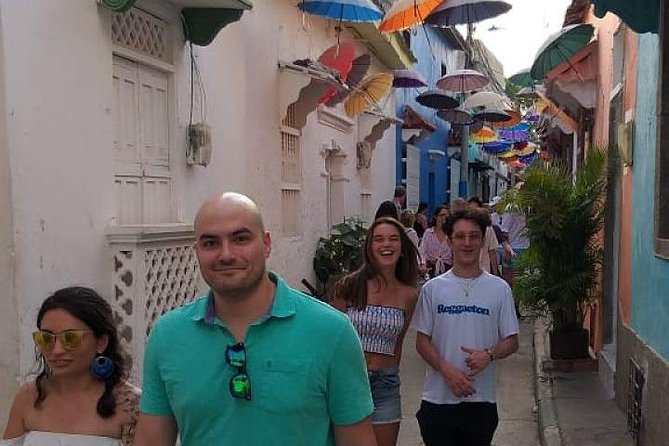
After the fortress and formal plazas, you enter Barrio Getsemaní. This is where the tour shifts from stone and defenses to everyday culture: graffiti, music, customs, folklore, trade, and architecture.
You also notice umbrellas described as a symbol connected to advertisement, along with graffiti and the architecture that gives the neighborhood its recognizable feel. The tour frames Getsemaní as one of Cartagena’s most colorful cultural corridors, and it makes sense once you are walking there.
If you want a Cartagena that includes street art and the sound of people living their lives, this neighborhood section is exactly what you are looking for.
Parque Centenario and Calle de San Juan: A Green Break and a Music-Laced Walk
At Parque centenario you get a break in Centennial Park, described as the lungs of Cartagena and a former railway station. The tour says it is a relic of the Tropical Dry Forest, with shade from large trees.
The guide also points out animals you might see, including sloths, squirrels, and iguanas. Even if you do not spot them every time, the point is that you are getting a pause from hard surfaces and hot plazas.
Then you head to Calle de San Juan. This stop links graffiti and local cafés to recognizable cultural names, including Blas de Lezo, Gabriel García Márquez, Mister Black, and Joe Arroyo. It is a fun way to connect literature and music to the physical streets you are actually walking.
Callejón Ancho, Holy Trinity, and the Final Salsa Step in Plaza de La Trinidad
The tour ends at Plaza de La Trinidad. To get there, you walk through Callejón Ancho and toward the end of the route along Calle San Juan, where the tour notes salsa and African champeta.
You also pass by the church and square of the Holy Trinity before finishing. The closing moment feels like a letdown only if you want your tour to stop earlier. Otherwise, it is a good final reminder that Cartagena is not only a history lesson, it is also a music-and-community city.
Price and Value: What $74 Covers, and Where Time-Savers Matter
At $74 per person for about 2 hours, this is priced like a focused private city introduction, not a bargain group bus-and-bite. The value comes from three things:
First, it is genuinely structured as a route through major Cartagena zones. You are not just getting a guide’s opinions. You are hitting a sequence of squares, portals, defensive walls, religious spaces, and Getsemaní culture.
Second, bottled water and a local tour guide are included. That small comfort matters in a warm climate and keeps your head clear during the walking.
Third, admission tickets are included at most stops listed on the route. You see ticketed moments at key landmarks, plus multiple stops are free. The one notable caveat is that some referenced attractions at Plaza de la Proclamación are not included for entrance. So if you want to step inside everything, plan for extra tickets on top of the tour price.
In plain terms: for $74, you are paying for a guided route plus a meaningful share of entry fees, which usually saves both time and decision-making.
Who This Tour Suits Best (and Who Might Want Something Else)
This Cartagena walking tour is a strong fit if you want:
- A first-time introduction to both the Walled City and Getsemaní
- A guide to explain the city’s layers, including slavery-era landmarks and later cultural influences
- A manageable length that still covers many key stops
It may not be ideal if:
- You have extremely tight timing tied to cruise ship departure windows, especially on arrival days with heavy traffic
If you are doing Cartagena as a quick port stop, I recommend you treat meeting time as strict. Build in extra margin so you do not get stuck in taxi lines. One guest experienced that problem after multiple cruise ships arrived at once, and it turned the start into a stressful scramble.
Practical Tips That Make It Smoother
- Wear comfortable sports clothes, and keep your shoes broken-in. The tour is mostly walking and it adds up.
- Bring sunscreen and take the water break seriously, even if the guide is helping you find shade at certain moments.
- If your schedule is cruise-tight, plan your ride early. Heavy arrival traffic can delay everything, even when you leave on time.
Also, if you care about language and flow, the tour has served English-speaking visitors with guides like Henri, Alvaro, Jhon, Rafael, and Andris in the stories you provided. And there is mention of an associate named Miguel Cuenca who helped one party with an alternative plan when timing got complicated, which is reassuring if you ever hit a hiccup.
Should You Book This Cartagena Walking Tour?
I think you should book it if you want a smart, compact way to learn Cartagena without spending the whole day decoding the city yourself. The private format, the strong stop sequence, and the heavy-hitting sites from Plaza de San Pedro Claver to Baluarte de San Ignacio make it a great first or second day activity.
Skip it only if your itinerary is so tight that missing a meeting point would derail your whole schedule. For everyone else, it is one of the more efficient ways to go beyond a quick walk through pretty streets.
FAQ
How long is the Cartagena Walking Tour?
The tour lasts about 2 hours.
Is the tour private?
Yes. It is a private tour for just you and your party.
Where do we meet?
You meet at the Monumento Torre del Reloj Boca del Puente, El Centro, Cartagena de Indias.
Does the tour return to the meeting point?
Yes, it ends back at the meeting point.
What is included in the price?
Bottled water and a local tour guide are included. Admission tickets are included at multiple listed stops.
Are food and drinks included?
No. Food and drinks are not included unless specified.
Are tickets included for all attractions mentioned?
Tickets are included for many stops, but some places referenced around Plaza de la Proclamación are not included for entrance during the tour.
How many people are in the group?
The tour has a maximum of 15 travelers.
Is the tour suitable for most people, and are service animals allowed?
Most travelers can participate, and service animals are allowed.
Can I cancel and get a refund?
Yes, you can cancel for a full refund up to 24 hours in advance of the experience start time.
Hot off the list in Cartagena
- SkyKitchen 2-Hour Cocktail Class in Cartagena★ 5.0 · 23 reviews
- Private Baru Aviary Tour with Lunch Included★ 4.5 · 26 reviews
- Rosario Islands Private Day – Exclusive VIP Escape★ 5.0 · 21 reviews
- CITY WALLED CITY SEGWAY SKATEBOARD TOUR and GETSEMANI★ 5.0 · 30 reviews
- Shore Excursion private Luxury City tour of Cartagena★ 5.0 · 8 reviews
- Cartagena Culinary Private Tour: Local Flavors & Hidden Gems★ 4.0 · 6 reviews
- Zip Through Walled City and Barrio Getsemani by Segway★ 5.0 · 4 reviews
- Shore Excursion Mangroves tour★ 4.5 · 3 reviews
Walking Tours, compared.
Historic Center and Getsemaní Shared Walking Tour
Read our review →
Private Walking Tour in Cartagena Walled City & Getsemaní
Read our review →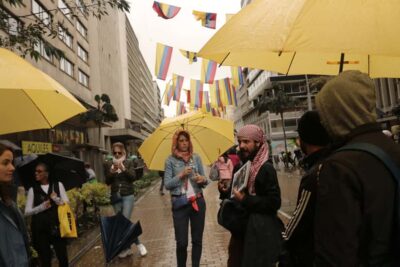

Graffiti Tour: a fascinating walk through a street art City
Read our review →
Medellin Historic Walking Tour with Expert Guide
Read our review →
Bogotá Tour: Monserrate, Food, City Walk & Botero Museum
Read our review →Browse the lists this tour appears in