
REVIEW · WALKING TOURS
Comuna 4 Walking Tour Medellin
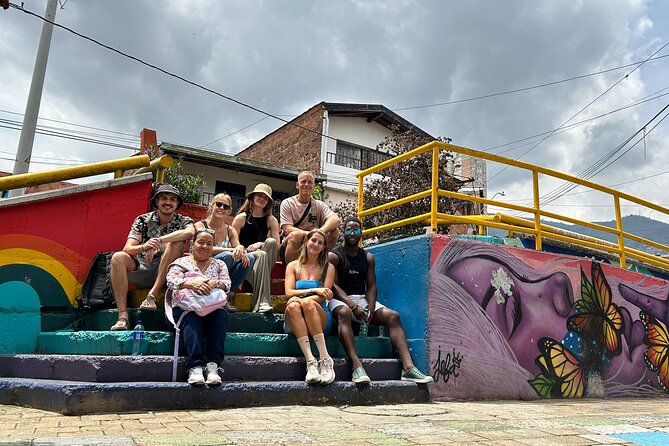
Garbage became a neighborhood, and stories followed. This Comuna 4 walking tour in Medellín, led by bilingual guide Toto and community ambassador Gladys, is interesting because it explains Barrio Moravia’s origins in the 60s and the complicated, two-sided meaning of Medellín’s transformation. I especially like how you move stop to stop through the places people actually use, and how the tour keeps the focus on lived experience, not stage-managed history. One possible drawback: the themes are serious, including resistance to a government reallocation plan and gaps in health access, so it is not a casual “pictures only” outing.
Plan for a real walk and real context. You get a lot of ground covered in about 3 hours 30 minutes with no hotel pickup, and you’ll want comfortable shoes and a calm mindset going in. If you hate emotional conversations or you are expecting a light, touristy stroll, this may feel heavy. If you can handle truth with heart, this tour is exactly the point.
In This Review
- Key things I’d mark on your mental map
- How Comuna 4 tells Medellín’s transformation story differently
- Meeting near the metro and walking with a small group
- Stop 1: Estación Metro Caribe, the origin and the first transformation version
- Stop 2: Morro de Moravia and La Resistencia de Moravia
- Stop 3: Centro de Salud Moravia El Bosque and the health care reality check
- Stop 4: cigarreria la plaquita and football graffiti as identity
- Fundación Oasis Urbano: education and the strata system
- Stop 5: the tiny empanadas you’ll actually want to remember
- Stop 6: the synthetic pitch Moravian and a local ambassador’s story
- Stop 7: Moravia Cultural Center and how infrastructure gets built
- Price and value for a community-led, bilingual experience
- Pacing, atmosphere, and who will enjoy this most
- Practical tips before you go
- Should you book the Comuna 4 Walking Tour in Medellín?
- FAQ
- How much does the Comuna 4 Walking Tour cost?
- How long is the tour?
- Where does the tour start?
- What is included in the price?
- Is hotel pickup or drop-off included?
- What group size should I expect?
- What is the cancellation policy?
Key things I’d mark on your mental map
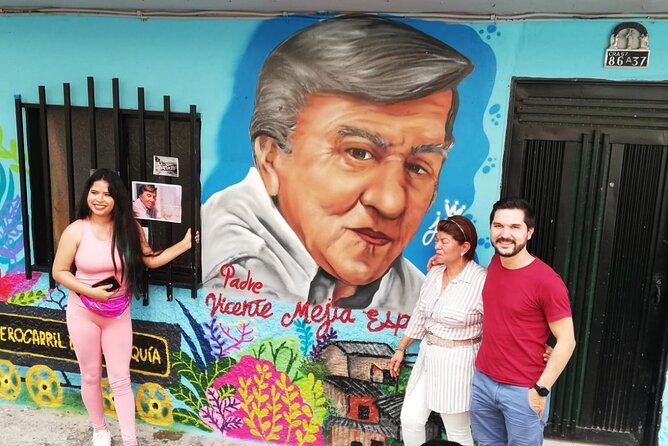
- Gladys and Toto bring first-hand context, turning big Medellín headlines into human-scale stories.
- La Resistencia de Moravia shows the other side of the city’s transformation, including why families resisted a reallocation plan for more than a decade.
- Health care in the real world is discussed at Centro de Salud Moravia El Bosque, including why street vending still looks so common despite the welfare system.
- Football graffiti and local culture at cigarreria la plaquita connects sport to identity and community meaning.
- Education and the strata system get explained at Fundación Oasis Urbano, linking everyday opportunity to Colombia’s structure.
- Food and daily life details show up fast, including the tiny, delicious empanadas and a visit to the neighborhood synthetic pitch.
How Comuna 4 tells Medellín’s transformation story differently
Medellín’s reputation for transformation often gets told as a clean before-and-after. In Comuna 4, you get a messier, more honest version. Barrio Moravia is explained as an illegal neighborhood in the 60s, and then you hear one version of Medellín’s change. But the tour keeps going, and that is the key. You also hear the version most people avoid, including how some residents resisted a government reallocation plan for over a decade.
That balance is what makes the tour valuable. You are not just collecting history dates. You are learning how policy, housing, services, and community power can pull in different directions at the same time. And because you’re walking inside the neighborhood, you see how decisions show up on the street, in community spaces, and in daily routines.
More Walking Tours in Medellin
- Medellin Historic Walking Tour with Expert Guide
★ 5.0 · 399 reviews - Medellin Historic Walking Tour
★ 4.9 · 86 reviews - 2-Hours Street Art Walking Tour in Medellin Comuna 13
★ 5.0 · 54 reviews
Meeting near the metro and walking with a small group
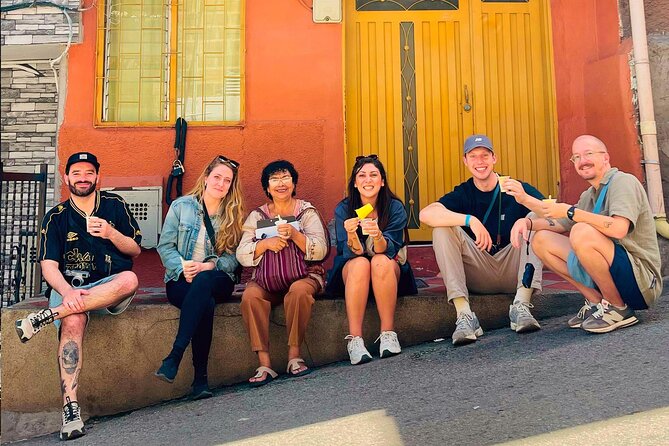
The tour starts at Estación Metro Caribe, where your guide and a community ambassador meet you. From the start, it is clear this is built around local voice, not just a standard sightseeing route. The group is kept small, up to 8 travelers, so there is room for questions instead of one long lecture.
A bilingual, professional guide is part of the package, and that matters here. The neighborhood story is detailed and emotional. Being able to follow it closely, without guessing at meaning, is part of the comfort level.
Important practical note: there is no hotel pickup or drop-off. You’ll need to make your own way to the meeting point using nearby public transportation. The payoff is that you start right where local life begins, instead of spending time on a van transfer.
Stop 1: Estación Metro Caribe, the origin and the first transformation version
At Estación Metro Caribe, you begin with history. You get context about Barrio Moravia and how it formed in the 60s as an illegal neighborhood. This stop also frames a first version of the transformation of Medellín.
Why this matters: if you only look at the neighborhood today, it is easy to miss the cause-and-effect. This opening gives you the timeline that later stops will challenge and complicate.
This is also a good “warm-up” moment. It keeps the first 30 minutes focused on understanding the background before you go deeper into the community.
Stop 2: Morro de Moravia and La Resistencia de Moravia
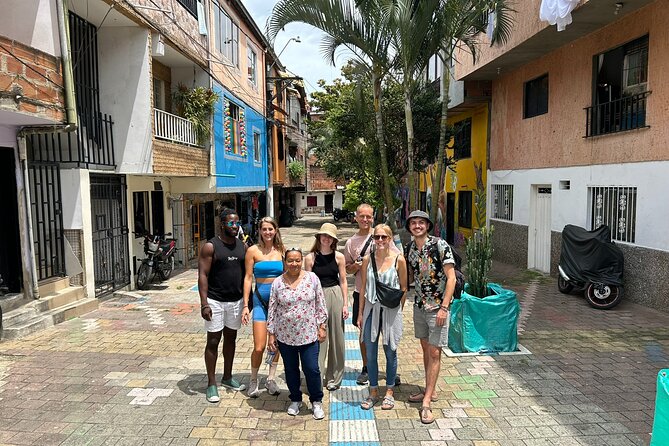
Next you head toward Morro de Moravia, where you visit La Resistencia de Moravia. This is where the tour turns. You meet the other side of Medellín’s transformation story, the one that explains why hundreds of families resisted for more than a decade the reallocation plan set by the government.
This stop is emotionally charged, and that is not an accident. The tour is built to show that “progress” can look different from inside the affected community. When you hear the reasons behind resistance, you start to understand that relocation is not just a physical move. It is a disruption to networks, livelihoods, and stability.
You should plan to listen closely here. This is the kind of stop where the details can stick with you longer than the photos.
A few more Medellin plans worth comparing
- Arvi Park Walking tour and city views from Metrocable.
★ 4.6 · 13 reviews - Medellín: Walking Tour with Cable Car and Botero Plaza
★ 4.7 · 6 reviews - Cartagena: Historic Center and Getsemaní Shared Walking Tour
★ 4.9 · 2,716 reviews - Private Walking Tour in Cartagena Walled City & Getsemaní
★ 5.0 · 1,357 reviews
Stop 3: Centro de Salud Moravia El Bosque and the health care reality check
Once you’re deeper in the neighborhood, you pause at Centro de Salud Moravia El Bosque. Here you sit and talk about Colombia’s health care and welfare system. The tour connects that system to an uncomfortable question: why are there so many street vendors, if there is supposed to be a welfare system in place?
The explanation offered during the conversation points to a gap in access, including that almost half of Colombians do not have access to the system. That is a big concept, but the way it’s handled is practical. Instead of treating it like an abstract statistic, the tour ties it to what you see around you.
In one part of the tour experience, you may also meet long-time residents who can add even more personal context. For me, the most helpful feeling was that the topic stayed grounded, not accusatory, and not vague.
Stop 4: cigarreria la plaquita and football graffiti as identity
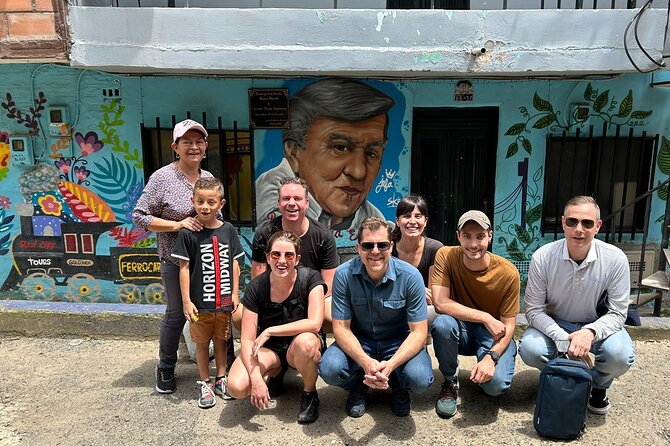
At cigarreria la plaquita, you get a short visit to graffiti dedicated to Medellín’s most important football teams. You also talk about why soccer carries cultural weight in Colombian society.
This stop is only about 10 minutes, but it changes the mood. After heavy topics like housing and health access, the tour gives you something people care about daily. Football becomes a way to talk about belonging, pride, and neighborhood voice.
It’s also a reminder that culture is not an extra. It is part of how communities explain themselves to the world.
Fundación Oasis Urbano: education and the strata system
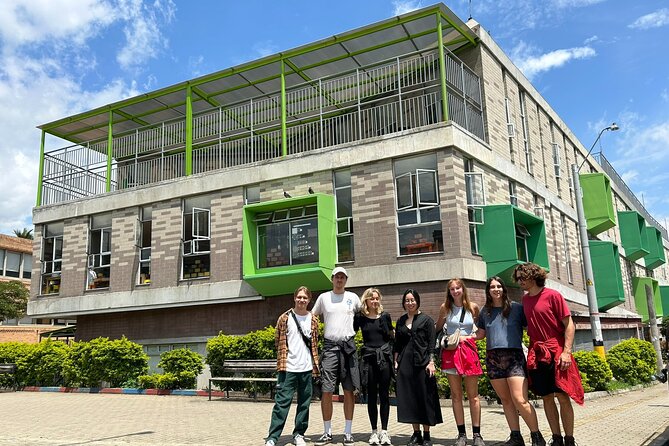
In the middle of the walk, you stop again and enjoy the shade of the trees in front of Fundación Oasis Urbano. Here the tour explores education and the strata system in Colombia.
I like this portion because it shifts from what residents lost or resisted to what they are building and planning for. Education and access matter, and the strata system is one of the structural pieces that shapes outcomes. You’ll hear the tour’s explanation of how that system connects to everyday life.
Even if you only catch the main ideas, you’ll leave with a clearer sense of why change is slow and uneven, even when improvements are visible.
Stop 5: the tiny empanadas you’ll actually want to remember
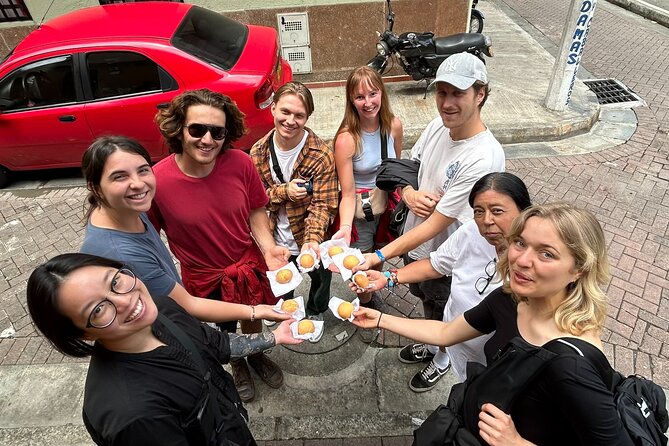
At E.I. Fe y Alegría – Luis AmigÓ, you get a snack stop. The highlight is described as the tiniest empanadas in the whole city, and the key word is delicious.
This is not a tourist snack. It’s included in the tour, and it gives you a real break in the middle of walking. It also helps you slow down and treat the neighborhood like a place where people live, work, learn, and eat, not just a place you pass through.
Stop 6: the synthetic pitch Moravian and a local ambassador’s story
Next you visit the synthetic pitch Moravian, the football field of the neighborhood. You meet the local ambassador and hear her story of resilience, resistance, and hope.
I love the way sports show up again here, but in a different format. Earlier, graffiti explained identity. Here, the field is about community life and persistence. It makes the neighborhood feel less like a “case study” and more like a place with ongoing energy.
Short stop, big impact, especially if you care about how youth spaces and community programs survive difficult conditions.
Stop 7: Moravia Cultural Center and how infrastructure gets built
Finally, you visit the Moravia Cultural Center. With the community ambassador, you see the Centro Cultural and hear the story of how the community built such an infrastructure.
This is a strong closing note. After learning about the neighborhood’s origin and the resistance to change, you end with what residents created and maintained. It reframes the idea of transformation as something residents shape, not something that happens to them.
If you remember one thing, it’s the feeling that the community is not only surviving. It is also organizing, teaching, and building.
Price and value for a community-led, bilingual experience
The price is $35 per person for about 3 hours 30 minutes. All admission tickets for the stops listed are free, and the tour includes a snack. You also get a local community leader plus a professional bilingual guide.
Here is where I think the value lands. Many tours in big cities charge similar prices for guides who point at buildings. This tour spends your time with locals and lets them explain what matters to them, including resistance, access, and local culture. With a maximum group size of 8, you also tend to get more conversation and less time wasted waiting your turn.
Is $35 cheap? It is hard to compare directly to a city bus ride. But for what you get, it is solid value, especially if you care about understanding Medellín beyond the postcard layer.
Pacing, atmosphere, and who will enjoy this most
This is a walking tour, so pacing matters. You’ll cover multiple stops, and each one has a purpose. Some are reflective and seated, others are more visual, like the graffiti and community spaces.
The atmosphere is warm because it is community-led, and it can also be intense because the topics are real. Expect to hear about an illegal origin in the 60s, a reallocation plan that people resisted for more than a decade, and structural gaps tied to health access.
Who this is best for:
- You want an honest picture of Medellín that goes beyond the headline version.
- You like tours where local people do the explaining, especially guides like Toto and ambassadors like Gladys.
- You can handle a conversation that mixes history with present-day concerns.
Who might want to skip it:
- You want light entertainment and you dislike serious discussions.
- You need hotel pickup and easy doorstep logistics, because there is none here.
Practical tips before you go
- Wear comfortable shoes. This is a neighborhood walk with multiple stops.
- Bring a little patience for emotional topics.
- Use the metro to get to the meeting point at Estación Metro Caribe, since there’s no hotel pickup.
- Since all admissions are listed as free, focus your budget on just your time and any extra snacks or drinks you want after.
Should you book the Comuna 4 Walking Tour in Medellín?
I’d book it if you want meaning, not just movement. The tour’s strength is the balance: it explains the transformation story, then it confronts the part that residents had to fight for. With Toto and a community ambassador such as Gladys guiding you, you get clarity and heart in the same route.
I would hesitate only if you are looking for a relaxed, sightseeing-only experience. This is not built for that. It is built for learning, listening, and seeing what community resilience looks like on the ground.
If your goal is to understand Medellín in a way that actually lasts, this tour is one of the best ways to do it.
FAQ
How much does the Comuna 4 Walking Tour cost?
It costs $35.00 per person.
How long is the tour?
The duration is about 3 hours 30 minutes.
Where does the tour start?
The meeting point is Estación Metro Caribe in the area of Av. Regional #Calle 78, Castilla, Medellín, Antioquia, Colombia.
What is included in the price?
The tour includes a local community leader, a professional bilingual tour guide, and a snack.
Is hotel pickup or drop-off included?
No. Hotel pick up / Drop off is not included.
What group size should I expect?
The tour has a maximum of 8 travelers.
What is the cancellation policy?
You can cancel for a full refund if you cancel up to 24 hours in advance of the experience start time. Free cancellation is allowed up to that cutoff.
Hot off the list in Medellin
- Tour Medellín: Pablo Escobar and Commune 13★ 5.0 · 3 reviews
- Tour Guatapé – Piedra del Peñol with departure from Medellín★ 5.0 · 24 reviews
- Tour Guatapé con visita a Granja de las Llamas y las Alpacas★ 3.5 · 11 reviews
- Shared Tour to Comuna 13 & Aurora Cable Car in Medellin★ 5.0 · 4 reviews
- Medellín: Flower Farm & Silletero History Tour★ 4.3 · 23 reviews
- Shared Tour Medellin’s Violence & Post-conflict after Pablo★ 4.1 · 3 reviews
- Comuna 13 Neighborhood & Street Art Private Tour★ 4.7 · 12 reviews
- From Medellín: El Retiro Private Tour with Food Tastings★ 4.4 · 8 reviews
Walking Tours, compared.
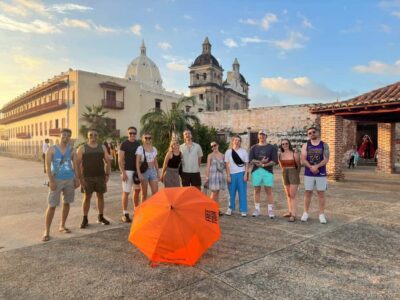
Historic Center and Getsemaní Shared Walking Tour
Read our review →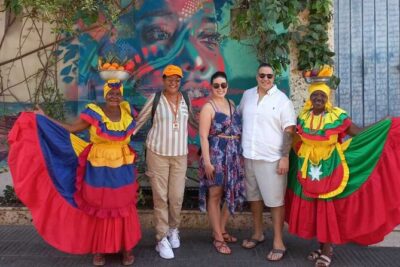
Private Walking Tour in Cartagena Walled City & Getsemaní
Read our review →
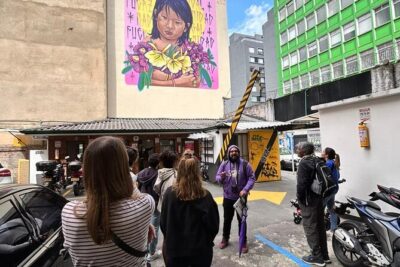
Graffiti Tour: a fascinating walk through a street art City
Read our review →
Medellin Historic Walking Tour with Expert Guide
Read our review →
Bogotá Tour: Monserrate, Food, City Walk & Botero Museum
Read our review →Browse the lists this tour appears in