
REVIEW · HISTORICAL TOURS
Private Half Day Cultural Tour of Historic Mompox
Mompox history hits fast on this tour. A private half-day walk lets you set the pace, and guides such as Carlos turn UNESCO-listed streets, churches, and monuments into a clear story.
I love how the route mixes museum rooms with real-life architecture you can stand in front of. I also like the customizable pace, so you can pause for photos or slow down when the heat hits.
One thing to plan for: extra costs and access limits. Casa de la Cultura (3,000 COP) and the Santa Bárbara tower fee (3,000 COP) are not included, and some church entrances are not open every day.
In This Review
- Key Things to Know Before You Go
- A Private Half-Day That Turns Mompox Into a Story
- Price and Value: Why $25 Can Still Make Sense
- Getting Picked Up and Staying Comfortable (Walking Is Part of the Deal)
- Stop 1: Casa de la Cultura Historia de Mompox
- Stop 2: Freedom Square in Front of San Carlos
- Stop 3: Palacio Municipal de San Carlos (Former Jesuit Convent)
- Stop 4: Iglesia de San Juan de Dios
- Stop 5 and 6: Plaza San Francisco and Iglesia de San Francisco
- Stop 7: Plaza del Moral and the Black Poet Candelario Obeso
- Stop 8: Iglesia de la Inmaculada Concepcion (La Plaza Fundacional)
- Stop 9: Plaza Real de La Concepción and the Old Market Building
- Stop 10: Calle de La Sierpe and the Legend of the Three Christs
- Stop 11: La Piedra de Bolívar
- Stop 12: Basilica de San Agustín and the Miraculous Christ
- Stop 13: Callejón de las Tres Cruces and Portales de la Marquesa
- Stop 14 and 15: Santa Bárbara Square and the Baroque Santa Bárbara Church
- Stop 16: Cementerio de Mompox (Del Rosario)
- Stop 17 and 18: Plaza de Santo Domingo and the Church of Guzmán
- Stop 19: Colegio Nacional Pinillos and the Role of Education
- Stop 20: Bolívar Park and the City’s Moving Center
- Should You Book This Mompox Half-Day Cultural Tour?
- FAQ
- How long is the Private Half Day Cultural Tour of Historic Mompox?
- Is pickup included?
- Is the tour private?
- What language is the tour offered in?
- What is included in the price?
- Are entrance fees included?
- Is lunch included?
- Do I need to bring money for extra stops?
- What is the cancellation policy?
Key Things to Know Before You Go
- Private, customizable pacing that works well if you want more time in squares or less time at stops
- A strong mix of museum rooms and walking landmarks, so you understand Mompox, then see it
- Many spots are free, but a couple key entrances cost extra (cash helps)
- Magdalena River viewpoints show up more than once, giving you context for why this city matters
- Religious Mompox is front and center, with notable churches, legends, and sacred objects
- Short on time? This half-day layout fits the must-sees without feeling like a sprint
A Private Half-Day That Turns Mompox Into a Story
This is the kind of tour that helps you actually read Mompox. You are not just checking boxes, you are walking through the places that explain how the city grew, why the colonial churches look the way they do, and how the river shaped life.
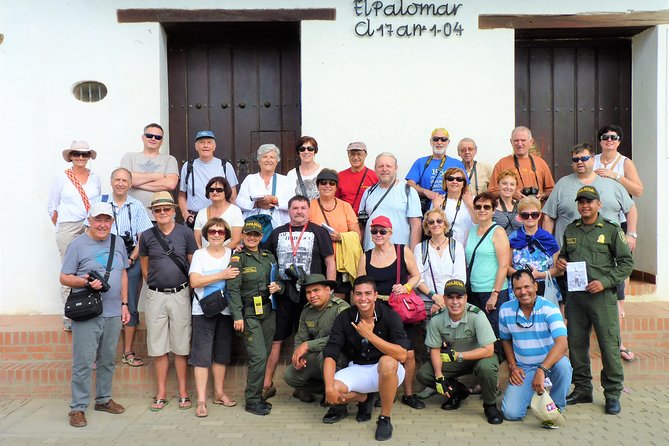
What makes it work is the pacing. It is designed as a private experience, so you can stop for questions, linger when something catches your eye, and take breaks when you want, not when a big group decides.
And if you are thinking, this is only four hours, can it cover enough? Yes, because the focus stays tight on historic core streets and the most meaningful monuments.
A few more Caribbean Coast plans worth comparing
- Cartagena: Historic Center and Getsemaní Shared Walking Tour
★ 4.9 · 2,716 reviews - Shared Tour of the Historic Candelaria in Bogotá
★ 5.0 · 1,551 reviews - Pablo Escobar Tour : Museum, History and Beer
★ 5.0 · 867 reviews
Price and Value: Why $25 Can Still Make Sense
At $25 per person for a private half-day, the value depends on one detail: the tour covers guiding and most entrances are free, but not everything is included.
Here is what you should expect:
- The tour includes hydration and a biosecurity kit.
- Pickup is generally from your hotel reception at an agreed time.
- A mobile ticket is included.
- Many stops have free entry, but a few do not.
The two main add-ons to budget for are:
- Casa de la Cultura Historia de Mompox: 3,000 COP per person
- Torre (tower) of Iglesia Santa Bárbara: 3,000 COP per person
If you are also hoping to go inside every church, keep in mind that access is not guaranteed every day for certain stops. That does not ruin the tour, but it can change what you physically get to enter.
Bottom line: if you want a guided walk through UNESCO-listed Mompox in a short window, this price is fair. Just carry a little cash for the few ticketed spots and be ready for occasional “closed that day” doors.
Getting Picked Up and Staying Comfortable (Walking Is Part of the Deal)
Pickup is generally at your hotel reception, and the tour runs in the daytime window listed as 8:00 AM to 7:00 PM. The pace is flexible, but you should still assume you will be walking a good bit on uneven historic streets.
A practical tip: Mompox can feel hot and humid. In my opinion, you should wear breathable clothing, bring sun protection, and plan your photos for the shaded moments. Some people prefer breaking up the walking with a motorcycle taxi or tuk-tuk between clusters of sites. Even if you do not use it, it helps to think in “short sections” rather than “one long walk.”
You should also know that private transportation is not included. So if you want rides between distant stops, you will pay for that separately.
Stop 1: Casa de la Cultura Historia de Mompox
This is where the tour starts with context. The House of Culture is a restored 18th century house, built with features you can point to immediately: a central patio, galleries, a gazebo, a backyard, and a cistern.
Inside, you get two permanent exhibition rooms:
- The Malibú Room, focused on pre-Columbian pieces tied to the Malibu indigenous culture that lived in Mompox before the Spanish conquest.
- The colonial Momposina room, showing elements like images of prominent people, clothing, weapons, publications, and even craft tools used in filigree work.
Why I like this start: it gives you a mental map before you head out into the city. After you see what life looked like before and during Spanish influence, the churches and civic spaces start making more sense.
Ticket note: Casa de la Cultura costs 3,000 COP, and admission is not included.
Same city, a completely different day:
- Tour 5 islands of the rosary with drinks included
★ 4.5 · 54 reviews - Walking tour of the magical city of Cartagena.
★ 5.0 · 46 reviews - UTV Thrills & Horseback Ride at Wildlife Paradise Near Cartagena
★ 5.0 · 44 reviews - UTV Safari in a Wildlife-Filled Nature Reserve Near Cartagena
★ 5.0 · 36 reviews
Stop 2: Freedom Square in Front of San Carlos
Freedom Square is small but meaningful. You are standing near the San Carlos Convent area, and you will see the Monument to Freedom of French origin, made of bronze, with explanatory plaques about the independence of the city.
What to look for here is the story link. Independence is not just a date on a plaque. The city built monuments and public messaging to make sure people remembered.
This stop is brief, but it helps you connect the later Bolívar-related points to a bigger narrative.
Stop 3: Palacio Municipal de San Carlos (Former Jesuit Convent)
This building started as a convent of San Carlos, built in 1643, when the Society of Jesus settled in the city. It also served as a school for teaching sciences connected to the Jesuits.
Today, it functions as the mayor’s office. That matters for your experience, because you see colonial architecture still used in daily life, not frozen in time for tourists.
Access note: it is enabled Monday to Friday. If your tour falls on a weekend, you might not get the same access here.
Stop 4: Iglesia de San Juan de Dios
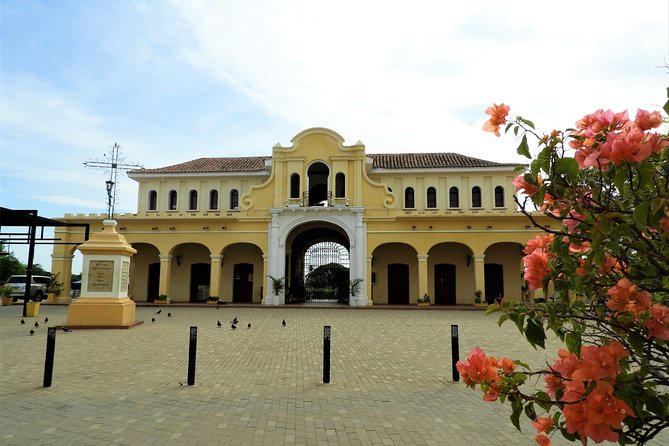
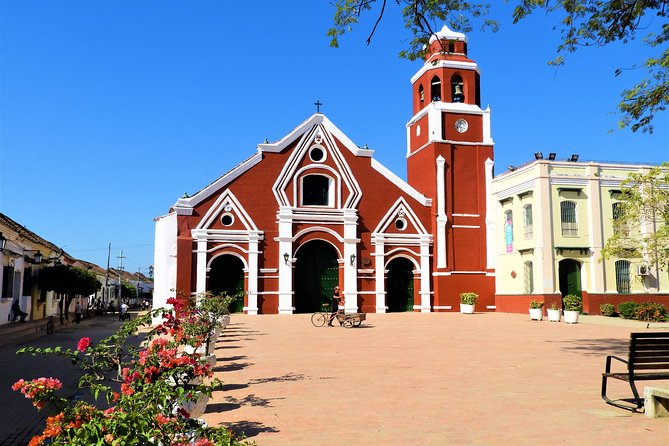
Built in 1545, Iglesia de San Juan de Dios is known for colonial architecture and especially its bell tower shaped like a belfry, decorated with Doric and Corinthian motifs.
Your guide’s explanation is the key part. If you are the kind of traveler who likes architecture details, this is a good one, because you can connect the style to the era that produced it.
Access note: the church entrance is not enabled every day, so you may only get what is possible on your date.
Stop 5 and 6: Plaza San Francisco and Iglesia de San Francisco
These two stops are ideal for letting Mompox breathe. Plaza San Francisco is a wide open square in front of the Church of San Francisco, with the Sucre Monument and a Filigrana Monument, plus views of the Magdalena River.
Then you move to the church itself, built in 1580 by the Franciscan order. If you like unusual architectural lines, pay attention to the church’s central pediment finished at an acute angle with a broken line, described as having no known antecedents in the country. You can also visit the interior with your guide.
Drawback: you do not control which kind of light you get on the façade or if interior access happens smoothly. So if photos matter, ask your guide when the best angles are.
Stop 7: Plaza del Moral and the Black Poet Candelario Obeso
This stop balances culture and colonial-era logistics. Plaza del Moral sits on Calle de la Albarrada, and it is associated with:
- The House of Candelario Obeso, known as the Black Poet and a precursor of Momposina black poetry.
- The Old Customs Building, where taxes were paid during the colonial period.
- El Puerto del Moral, where Simón Bolívar disembarked when he first arrived in Mompox.
If you want the “why this city exists” answer, this is one of the best places to hear it. River life, trade, and power overlap here.
Stop 8: Iglesia de la Inmaculada Concepcion (La Plaza Fundacional)
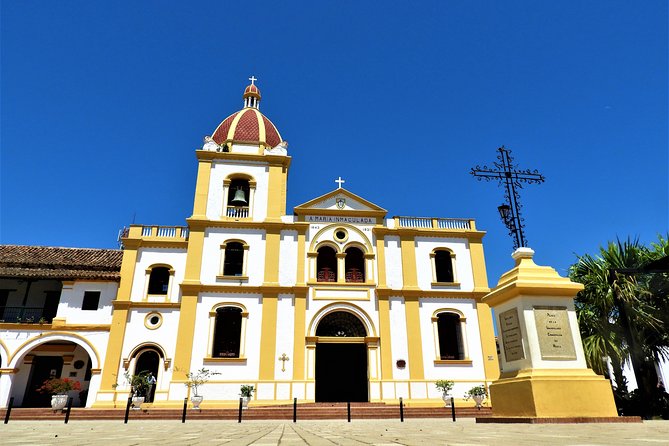
This is one of Mompox’s anchors. The Church of the Immaculate Conception, built in 1540, is the largest and oldest in Mompox and was restored in 1931 with neoclassical architecture.
Inside, you can see traditional images linked to Holy Week. With your guide, you can visit the different spaces and hear how the architecture and interior elements connect to the city’s style.
A good strategy: when you enter, pause for a moment and let the room organize itself in your mind. Then follow your guide through the key points, because it is easier to remember once you mentally “map” the interior.
Stop 9: Plaza Real de La Concepción and the Old Market Building
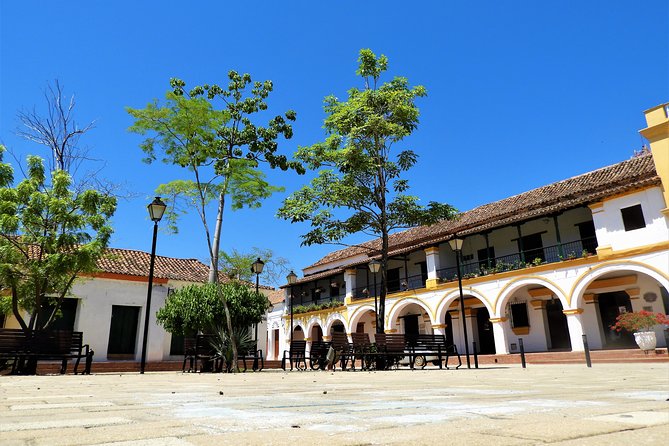
This plaza sits right in the historic center and feels like the city’s heart because of what surrounds it. You have the Church of the Immaculate Conception nearby, and the Old Market Building, where you can browse and buy local crafts.
This is where filigree, cabinetmaking, basketry, fabrics, and other traditional work show up in physical form. If you care about crafts more than monuments, this is your moment.
There is also a terrace view that lets you appreciate the cultural setting of Mompox and the Río Magdalena. For photos, it is a strong place to stop and reset.
Stop 10: Calle de La Sierpe and the Legend of the Three Christs
This is a street stop that feels like a detour into story, and that is why it works. The Callejón de la Sierpe is Andalusian-style and lined with colonial and Republican houses.
You will visit Casa de los Ángeles, where you can hear the Legend of the Three Christs. It highlights the Catholic influence of the city and the role of oral tradition in shaping how people understand their faith and culture.
If you like myths with a location attached, you will enjoy this. It turns narrow streets into living memory.
Stop 11: La Piedra de Bolívar
This monument ties Bolívar directly to Mompox during the independence process. It marks the close relationship between Simón Bolívar and the city, including his visits to receive help from wealthy Creole families residing in Mompox.
Your guide should connect this point to what you already heard in Freedom Square, so the story feels like one line instead of separate facts.
Stop 12: Basilica de San Agustín and the Miraculous Christ
This church, built in 1606, houses one of Mompox’s most important Catholic elements: the Miraculous Christ of Mompox.
You can also see major interior features:
- The Holy Sepulcher built in France in 1880
- The elaborate carpentry of the pulpit, altarpiece, and coffered ceiling
For architecture lovers, this is a standout stop because woodwork and sacred art blend into the same space. Take a slow minute here, even if you usually keep moving. The details are the point.
Stop 13: Callejón de las Tres Cruces and Portales de la Marquesa
Here you see opulence in built form. In Callejón de las Tres Cruces (Calle 15 # 2_66), you find Portales de la Marquesa, with houses built around 1700. These were linked to wealthy Momposina families and the mayorazgos of the Marquises of Santa Coa and Torre Hoyos.
This is also one of the city’s most photogenic street moments, especially because the river-facing street section gives you strong composition lines.
If you want a “postcard angle,” ask your guide where the best view is from the river side.
Stop 14 and 15: Santa Bárbara Square and the Baroque Santa Bárbara Church
Santa Bárbara Square sits at the southern end of the historic center, with abundant vegetation. It is also known for hosting the traditional Mompox Jazz Festival.
From the square you move to the Church of Santa Bárbara, built in 1613. This church is described as an icon of Momposina architecture due to its marked Baroque style and syncretism of Catholic and non-Catholic elements. The Barandaje Salomónico balcony is specifically called out as unique in America.
Then there is the tower. You can climb it for a panoramic view of the city, with the tower entrance costing 3,000 COP (not included).
My advice: if you are paying that tower fee, make it count. Bring your best camera settings and pick a moment when the sky is clear. It is worth building in time here.
Stop 16: Cementerio de Mompox (Del Rosario)
This stop changes the mood on purpose. The municipal cemetery, built in 1831, is considered the second most beautiful in Colombia for its elaborated architecture and mysticity, and it is a favorite for the peace visitors feel.
Your guide will explain the cemetery symbols and elements. If you feel uneasy about cemeteries, you do not have to rush. The narration helps keep the tone respectful and grounded.
It is a reminder that Mompox is more than churches. Even memorial spaces belong to the city’s cultural language.
Stop 17 and 18: Plaza de Santo Domingo and the Church of Guzmán
Plaza de Santo Domingo de Guzmán is described as the soul of the city, where residents meet to talk and share. In the center you will see the monument to the Nazarene, and nearby is the Church of Santo Domingo.
The church was built in 1544. Inside rests the Virgin of the Rosary, patron saint of the city, and you can see an altarpiece made with very elaborate armed carpentry.
This is one of the best places for the “daily life meets sacred art” feeling. You are not in a museum room. You are in a neighborhood square.
Stop 19: Colegio Nacional Pinillos and the Role of Education
This is not the usual “sightseeing classroom,” and that is why it is useful. The National Pinillos College was completed in 1809 for teaching science in Mompox. The building is a double rectangular structure with characteristics of Sevillian architecture.
You can learn about daily life of young people, the building’s uses over time, and the role education played in independence.
A practical note: you may be asked for a request contribution or donation to help maintain the house. It is not listed as included, so bring a small amount if you want to support ongoing upkeep.
Stop 20: Bolívar Park and the City’s Moving Center
The Plaza de Bolívar was built in 1910 and holds a bronze monument to Simón Bolívar created by the Italian sculptor Pietro Tenerani.
This square is the heart of daily city movement. With your guide, you can connect trades, crafts, and routine life back to the city’s historical identity.
It is a good ending because it gives you a final “now you get it” feeling. You finish with something alive, not a dead end.
Should You Book This Mompox Half-Day Cultural Tour?
Book it if:
- You want a private guide and a flexible pace in a short window
- You care about religious architecture, independence-era landmarks, and cultural legends tied to specific streets
- You are happy to pay a small amount extra for Casa de la Cultura and possibly the Santa Bárbara tower
Skip or switch if:
- You hate walking or you want everything fully accessible every day, because some church entrances and the Jesuit-era site can be limited by day
- You do not want any extra ticket costs, since at least two major stops have entrance fees
- You are expecting lunch or snacks, because the tour does not include food beyond water
If you want a city you can understand fast, this is a strong way to do it. You leave with a mental map of Mompox, not just photos of old buildings.
FAQ
How long is the Private Half Day Cultural Tour of Historic Mompox?
It runs for about 4 hours.
Is pickup included?
Pickup is generally included and is typically arranged at the hotel reception at the agreed time.
Is the tour private?
Yes. It is a private tour/activity, and only your group participates.
What language is the tour offered in?
The tour is offered in English.
What is included in the price?
Hydration and a biosecurity kit are included, plus the tour itself with a private guide and a mobile ticket.
Are entrance fees included?
No. Entrance to Casa de la Cultura costs 3,000 COP per person, and the Torre Iglesia Santa Bárbara costs 3,000 COP per person. Many other listed stops are free, but some church access is not enabled every day.
Is lunch included?
No lunch or other food is included. The tour does not include snacks, drinks other than water, or other products.
Do I need to bring money for extra stops?
Yes, it is smart to budget for the ticketed entrances (Casa de la Cultura and possibly the Santa Bárbara tower), and be ready that some places may ask for a contribution or donation.
What is the cancellation policy?
Free cancellation is available up to 24 hours in advance for a full refund. If you cancel less than 24 hours before the start time, the amount paid is not refunded.
Hot off the list in Caribbean Coast
- 4 Rosario Islands Adventure with entrance to the oceanarium included★ 3.5 · 3 reviews
- Full Day At the best Vip Beach Club in Tierra Bomba★ 5.0 · 4 reviews
- The Native Expedition – Sierra Nevada (2 days Discovering Chorrerón waterfall)★ 5.0 · 7 reviews
- UTV Safari in a Wildlife-Filled Nature Reserve Near Cartagena★ 5.0 · 36 reviews
- Monkey Volunteer Work in Wildlife Reserve Near Cartagena★ 5.0 · 3 reviews
- Tour 5 islands in Cartagena with snorkeling, lunch Charm Island★ 3.5 · 3 reviews
- Playa Blanca Barú Tour with Lunch and hotel pick up★ 3.0 · 8 reviews
- Tour Isla del Encanto Cartagena★ 3.5 · 4 reviews
Historical Tours, compared.
Historic Center and Getsemaní Shared Walking Tour
Read our review →
Shared Tour of the Historic Candelaria in Bogotá
Read our review →
Historic Center & Getsemaní Shared Tour in Cartagena
Read our review →
Shared Tour Historic Center of Medellin with Audio System
Read our review →
Medellín Essential: history & local life on E-bike
Read our review →
Medellin Historic Walking Tour with Expert Guide
Read our review →
Browse the lists this tour appears in